

















Members of Parliament have questioned the valuation and governance safeguards surrounding the National Social Security Fund’s (NSSF) Shs185 billion investment in Marriott Hotel Kampala, raising concerns about the protection of workers’ savings in a business where the Fund holds a minority stake.
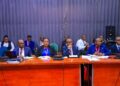
The concerns emerged on Wednesday during an interface between NSSF Managing Director Patrick Ayota and the Committee on Commissions, Statutory Authorities and State Enterprises (COSASE), where legislators sought explanations about the Fund’s decision to invest USD50 million for a 30 percent stake in CS Hospitality, the company that owns the hotel.

The investment was made at an exchange rate of approximately Shs3,700 to the US dollar. Ayota told the committee that although NSSF holds a minority stake in CS Hospitality, it negotiated governance safeguards that give the Fund influence over critical decisions.
He explained that the remaining 70 percent shareholding is held by a group associated with businessman Ngabirano, while NSSF has two representatives on the company’s five-member board of directors.
According to Ayota, the Fund’s 30 percent stake comes with veto powers over certain strategic decisions, preventing the majority shareholder from independently pushing through critical resolutions. He cited provisions in the shareholders’ agreement and the company’s memorandum and articles of association that require higher voting thresholds for particular decisions.
Ayota defended the arrangement, saying it was consistent with corporate governance principles and comparable to Uganda’s investment in Kenya Pipeline Company, where the government acquired a 20 percent stake.
He explained that although Uganda held a minority shareholding in the Kenyan company, it negotiated provisions requiring the participation of its representatives in important decisions, including matters relating to tariffs and the replacement of the chief executive.
However, legislators questioned whether the safeguards were sufficient, particularly given that NSSF does not control the majority of shares or board seats.
Elgon North MP Gerald Nangoli observed that under ordinary company law, shareholders holding more than 50 percent of a company’s shares generally exercise control through their voting rights.
Nangoli challenged NSSF to explain how it would protect workers’ savings in circumstances where the majority shareholder could potentially influence the company’s management and operations.
He also questioned whether the agreements negotiated by NSSF could override statutory provisions governing companies, warning that contractual arrangements must remain consistent with the law.
The committee said it wanted to establish the legal and financial safeguards surrounding the investment, given that the Fund had already committed workers’ savings to the project.
Legislators also questioned how the hotel was valued before NSSF committed its money, who conducted the valuation, and whether the investment was based on the property’s replacement cost or projected future earnings.
In response, Ayota said the Marriott investment was part of NSSF’s broader strategy to participate in Uganda’s tourism and hospitality sector.
He noted that the Fund already owns a 20 percent stake in Serena Hotel, another major investment in the hospitality sector, although he could not immediately recall the amount invested or when the acquisition was made.
The committee consequently asked NSSF to provide details of its investment in Serena Hotel, including the initial capital committed, returns earned over the years and its current financial performance.
The information is expected to help legislators assess the commercial viability of NSSF’s investments in the hospitality sector and establish whether they are delivering value to the Fund’s members.











 English
