

















The Commercial Division of the High Court in Kampala has ordered Roko Construction Limited to pay Assa Abloy (U) Limited US$1.39 million (approximately Shs5.7 billion) in outstanding payments for doors, accessories and ironmongery supplied and installed at Mulago National Referral Hospital.
In a judgment delivered by Justice Stephen Mubiru, the court awarded Assa Abloy US$1,391,667.58, together with interest at nine per cent per annum from August 20, 2020, until payment in full, and the costs of the suit.


However, the court dismissed the case against the Attorney General, ruling that the government was not a party to the supply contract between Assa Abloy and Roko Construction.
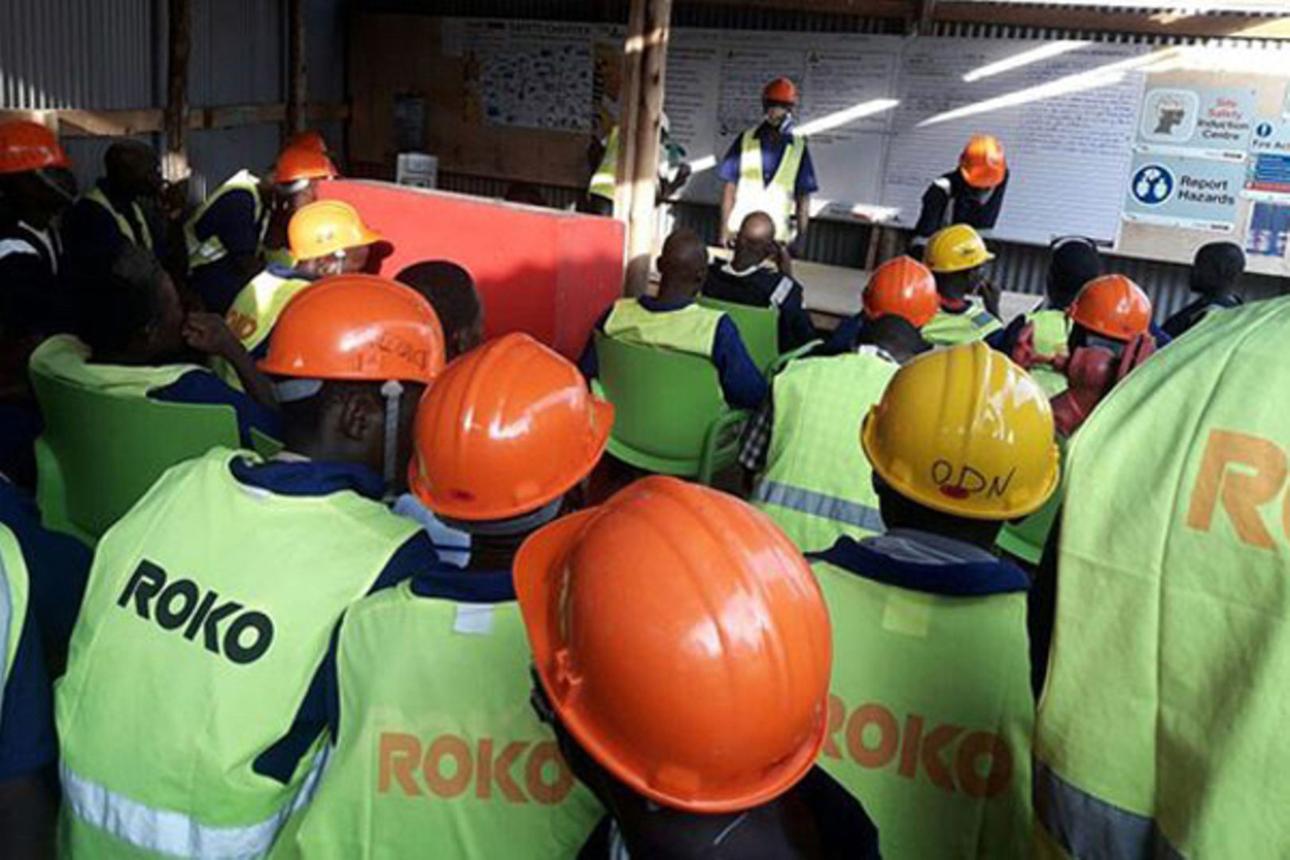
The dispute arose from supplies made for construction works at Mulago Hospital, where Roko was the contractor responsible for executing the project.
According to court records, Roko placed an initial order in June 2017 for 2,398 steel door sets, frames, wooden leaves, transom panels and fixing accessories valued at US$1.57 million.
The quantities were subsequently revised, increasing the total number of door sets to 2,716.
A separate purchase order issued in January 2019 covered additional ironmongery valued at US$365,342.97, bringing the total value of the supplies and installation to US$2,581,667.58.
Assa Abloy told the court that the goods were supplied and installed at the hospital between 2017 and 2019, but Roko failed to clear the outstanding balance despite repeated demands for payment.
The company sought to recover US$1,391,667.58, arguing that it had received only US$1.19 million in payments against the total contract value.
Roko disputed the claim, arguing that it had ordered only 1,784 doors and that the quantities allegedly supplied and installed had not been adequately proved.
The construction firm also challenged the absence of formal delivery notes and goods-received notes, questioned the reliability of the supplier’s records and claimed that some doors were defective or had been repossessed.
The Attorney General, who was sued as the second respondent, maintained that the government had no contractual relationship with Assa Abloy and had fulfilled its obligations to Roko under a separate construction contract.
Justice Mubiru found that a valid and binding contract existed between Assa Abloy and Roko, based on the quotation, Roko’s requisition, the subsequent performance of the contract and partial payments.
The judge noted that Roko’s own witnesses acknowledged that Assa Abloy had supplied and installed doors and door frames at the hospital.
The court also relied on shipping documents, correspondence from the Uganda Revenue Authority indicating that 63 consignments had been cleared during the relevant period, and a project progress report showing that Assa Abloy had achieved 85 per cent completion.
Justice Mubiru further considered a joint physical verification exercise conducted on August 20, 2020, and subsequent emails from Roko’s Operations Manager, Beyers Strydom, confirming that 2,716 doors had been installed, with the supplies valued at US$2,581,667.58.
The judge rejected Roko’s argument that the verification records could not bind the company because its representatives had not signed the checklist.
He held that Strydom’s emails independently confirmed the findings and that the operations manager had, at the very least, apparent authority to communicate the company’s position.
The court also dismissed Roko’s argument that the absence of formal delivery notes invalidated the claim, finding that delivery could be established through admissions and the conduct of the parties.
Justice Mubiru observed that Roko’s witnesses had described the installation process, while the company’s partial payments and subsequent assurances of further payments supported the existence of the contractual relationship.
The court also rejected Roko’s defence that some doors were defective or failed to meet the required specifications.
Justice Mubiru noted that the allegations had not been included in Roko’s formal defence but were introduced through testimony during the trial.
He also questioned the evidential value of an unsigned report relied upon by the construction firm, noting that the witness who presented it had not authored the document and could not confirm whether the alleged defects had been rectified by 2020.
Citing Section 43(1)(c) of the Sale of Goods and Supply of Services Act, the judge explained that a buyer may be deemed to have accepted goods if, after a reasonable period, it retains them without notifying the seller of its rejection.
The court found that Roko had installed and retained the doors for an extended period, made partial payments and failed to communicate a clear rejection of the goods to Assa Abloy.
It also dismissed the allegation that Assa Abloy had repossessed 1,358 doors, finding no evidence that the installed doors had actually been removed from the hospital.
The judge said the supplier’s earlier warning that it would withhold unpaid goods did not establish that repossession had taken place.
On the Attorney General’s liability, Justice Mubiru applied the doctrine of privity of contract, which generally prevents a person who is not a party to an agreement from being held liable under it.
The judge found that the supply agreement was between Assa Abloy and Roko, with the government benefiting from the arrangement because the doors were installed at a public hospital.
He ruled that Section 64(3) of the Contracts Act, which allows certain third parties to enforce contractual terms intended for their benefit, does not provide a basis for imposing contractual obligations on a party that did not sign the agreement.
The court also found that the government had not directly engaged Assa Abloy or been given an opportunity to accept or reject the goods in a manner that would establish liability under Section 57 of the Contracts Act.
Consequently, the suit against the Attorney General was dismissed with costs.
Although Assa Abloy also sought general damages in addition to the unpaid contract sum, the judge declined to award them, reasoning that the company’s loss was financial and could be adequately compensated through interest on the outstanding amount.
The court accordingly entered judgment against Roko Construction for US$1,391,667.58, with interest at nine per cent per annum from August 20, 2020, until payment in full, together with the costs of the suit.
The judgment was delivered electronically.
Assa Abloy was represented by Arcadia Advocates, while Roko Construction was represented by Newmark Advocates.











 English
