









The Ministry of Health has advised mourners from the eastern Democratic Republic of Congo (DRC) against travelling to Uganda to attend the burial of Tooro King Oyo Nyimba Kabamba Iguru IV, citing the ongoing Ebola outbreak in the neighbouring country.
The directive comes as Tooro Kingdom prepares for the burial of the 31-year-old monarch, who died while receiving treatment for a rare form of brain cancer.
King Oyo will be laid to rest on September 12 at the Karambi Royal Tombs in Fort Portal, with thousands of mourners expected to attend the ceremonies.
Charles Olaro, the Director General of Health Services, said the Ministry was particularly concerned about the anticipated movement of people from eastern DRC, where an Ebola outbreak is currently being reported.
He said the government was taking precautionary measures to prevent a possible importation of the virus, even though Uganda currently has no active Ebola cases.
The Health Ministry has indicated that people from eastern DRC will not be allowed to cross into Uganda for the burial, citing existing restrictions on movement along the Uganda-DRC border.
“The Uganda-DRC border remains closed and travel remains restricted,” the ministry said in its advisory.
Instead, the government plans to provide an official online link through its communication channels to enable Tooro subjects and other mourners in the DRC to follow the burial proceedings virtually.
The restrictions come amid expectations of a major international turnout for the funeral. Tooro Prime Minister Calvin Armstrong Rwomire said mourners are expected from different parts of the world, including members of several royal families.
According to Rwomire, monarchs from Nigeria, the DRC and Eswatini have already expressed interest in attending the burial.
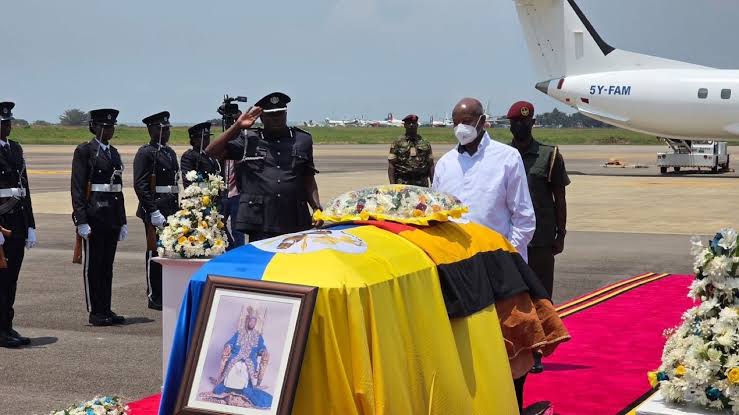
Since King Oyo’s body arrived at Entebbe International Airport on Friday, large crowds have gathered along the route to Fort Portal and at the royal palace to pay their respects.
The Ministry of Health says the precautionary measures are necessary because of the continued risk posed by Ebola in the region.
Uganda was recently declared Ebola-free by the World Health Organization after completing the required 42-day period without recording a new case.
The country recorded 20 cases during the outbreak that was declared in May. The outbreak was linked to an imported case from the DRC, whose patient was treated at a private hospital in Kampala.
Although Uganda has since been declared free of the disease, Olaro said health authorities remain on high alert and continue to conduct surveillance at points of entry and across communities.
He said the measures are intended to prevent another cross-border transmission of Ebola and protect mourners and the wider population during the large gatherings expected in Tooro.






 English