


















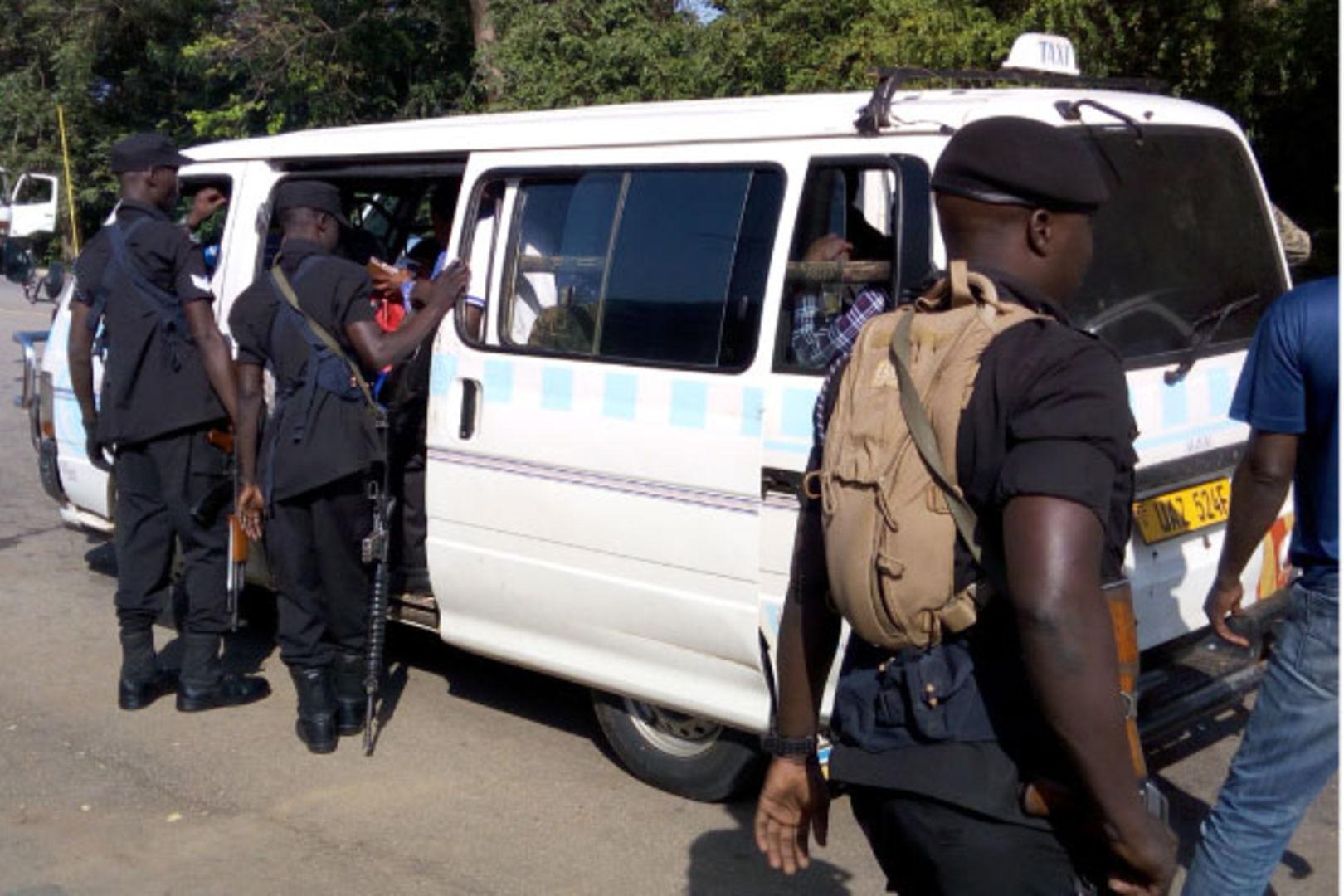
Police have impounded 178 commuter taxis during the first enforcement operation under the newly launched 100-day Operation Ganyegenya, a nationwide campaign targeting public service vehicles operating in dangerous mechanical condition.
The crackdown, which began on August 24, followed a directive by the Ministry of Works and Transport ordering tougher action against unroadworthy public transport vehicles.

However, despite the campaign being expected to run for 100 days, Traffic Police Spokesperson Michael Kananura said enforcement operations have not been conducted daily because police do not have enough space to hold the large number of vehicles likely to be impounded.
Kananura said police had adopted a phased approach in which vehicles are impounded, inspected and released to owners for repairs before another enforcement operation is mounted.
“It would have been a challenge to continue impounding vehicles every day when we don’t have space to put them because there are very many,” Kananura said.
“So we have decided to impound, carry out inspections, release them, and then go back to carry out another enforcement.”
The first operation resulted in the impounding of 53 taxis in Kampala Metropolitan East, covering the Jinja Road-Mukono corridor. Another 62 vehicles were impounded in Kampala Metropolitan South along the Katwe-Entebbe route, while 63 were seized in Kampala Metropolitan North, particularly around Kawempe.
The Ministry of Works and Transport announced the 100-day campaign on August 20, initially directing enforcement agencies to focus on dilapidated 14-seater commuter taxis operating within the Kampala Metropolitan Area before extending the operation to other parts of the country.
State Minister for Works and Transport Fred Byamukama said government had previously faced difficulties in removing unroadworthy taxis from the roads because of pressure and threats from some transport operators.
According to Byamukama, concerns about possible strikes and political consequences had in the past weakened efforts to enforce standards against dangerous vehicles.
He said, however, that the condition of some commuter taxis had deteriorated to unacceptable levels.
Byamukama cited vehicles with torn and unhygienic seats, defective doors, worn-out tyres and improvised repairs to critical parts, saying passengers were being exposed to unnecessary danger.
Meanwhile, Kananura said 106 of the 178 impounded taxis have so far undergone inspection at gazetted vehicle inspection centres, while 72 are still awaiting examination.
The inspections are being conducted at centres including Naguru, Wankulukuku, Natete and Gayaza.
Police and transport inspection teams are checking a wide range of mechanical and safety requirements, including dangerous or illegal bull bars, cracked windscreens, worn-out tyres and defective braking systems.
Other areas under scrutiny include damaged vehicle bodies, faulty or missing seat belts, the availability of first-aid kits, fire extinguishers and warning triangles, as well as the condition of passenger doors and interior fittings.
Inspectors are also examining whether passenger doors can lock properly, the condition of seats and interiors, vehicle cleanliness, rooftop signage, headlights, rear lights and other components considered critical to passenger safety.
Kananura said vehicles found with defects are returned to their owners for repair before undergoing another inspection.
Under the procedure, an impounded vehicle that fails the initial assessment is released to its owner without its number plate to allow the necessary repairs to be carried out. It must then be returned for a more detailed mechanical inspection.
Vehicles that pass the required tests have their number plates returned and are allowed back on the road.
Kananura said the approach was necessary to free up space at police facilities and enable enforcement teams to conduct further operations.
Police are also planning to adjust their strategy to deal with operators who may attempt to evade enforcement by operating dangerous vehicles at night.
Kananura warned that increased patrols and night-time operations would be introduced to ensure unroadworthy public service vehicles do not escape the crackdown.
He said police would deploy patrol teams on various roads as part of the next phase of enforcement.
Police have also rejected allegations that some drivers are able to recover impounded vehicles by bribing traffic officers.
Kananura said it would be risky for any officer to release a vehicle found to be in dangerous mechanical condition in exchange for money, noting that traffic officers are under increased monitoring.
According to police, officers are being monitored through surveillance systems and covert operatives deployed on the roads.
Traffic officers found engaging in corruption risk disciplinary proceedings before the Traffic Disciplinary Court at Natete Police Station, where bribery-related misconduct is treated as a serious offence.
Operation Ganyegenya is expected to be expanded to other parts of the country after the initial phase targeting the Kampala Metropolitan Area.
The campaign is intended to remove dangerous and mechanically defective public service vehicles from the roads as government intensifies efforts to improve passenger safety and reduce crashes linked to unroadworthy vehicles.









 English