














The Local Council II chairpersons across the country were elected yesterday, August 10, 2026, completing an important stage in rebuilding Uganda’s grassroots leadership structure.
I congratulate all Ugandans who participated in these elections and, in particular, the National Resistance Movement (NRM) for once again recording an overwhelming victory, as was the case with the LC1 polls.

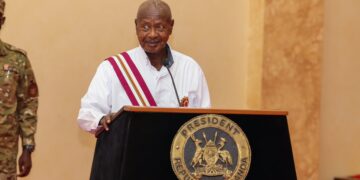
This victory is not merely a political achievement. It presents us with an opportunity and, more importantly, a responsibility. We now have elected grassroots leaders who are in direct contact with the wananchi and who can work closely with the NRM leadership and President Yoweri Kaguta Museveni, the country’s champion of wealth creation and socio-economic transformation.
The time has therefore come for our Local Council leaders to move beyond elections and politics and get down to the serious business of transforming the lives of our people.
Why LCs are important
As I have written earlier in these pages, Local Council leaders occupy a unique position in Uganda’s governance structure because they are the first point of contact between Government and the ordinary citizen.
When Government launches a programme in a village or parish, it is the LC leader who is expected to know who the beneficiaries are, where they live, what they are doing and whether the intervention is producing the intended results.
Of particular importance is the fact that the Parish/LC2 is the key implementation structure for Government’s wealth-creation programmes, most notably the PDM. This means the success or failure of Government’s efforts to move households into the money economy will, to a significant extent, depend on what happens at the parish level.
Therefore, LC2 leaders must understand that their role is much bigger than presiding over meetings, settling local disputes or mobilising people for community activities. They must become active agents of socio-economic transformation and honestly tell Government what is working and what is not.
Their work ethic must also reflect Government’s current working message, i.e. “No sleeping, no corruption.”
Government introduced PDM, Emyooga, GROW and related programmes to help Ugandans, especially those at the lower end of the economic ladder, access capital without cumbersome conditions. LC leaders must therefore help wananchi understand that such money is not consumption tokens, but development capital.
When a household receives PDM funds, the leader’s responsibility does not end when the money reaches the beneficiary’s account. The leader should follow up to establish what happens next and ensure that both Government and the beneficiary obtain maximum value from the intervention. The ultimate measure of Government’s success is not the amount of money released, but the number of households whose lives and incomes have been transformed.
LC2s can help solve unemployment
Government’s wealth-creation programmes were introduced, among other objectives, to tackle unemployment. This is where the work of the LC2 becomes even more important because wealth creation and employment creation go hand in hand.
Uganda’s labour challenge is simply too large for Government to solve through public-sector recruitment alone.
According to the Uganda Bureau of Statistics, Uganda’s working-age population aged 15 years and above was estimated at 26.4 million in 2025, representing 58.1% of the population.
In contrast, the Auditor General’s report of December 2025 showed that there are only 681,000 established jobs across the public sector. This means that very few Ugandans can work in Government even if all these positions were filled.
We, therefore, cannot tell every young Ugandan that their future lies in waiting for a Government job. Our young people must be encouraged to see themselves not only as job seekers, but also as job creators.
This is why we should appreciate the millions of Ugandans who have already taken the initiative to create economic activity for themselves and others. According to UBOS, roughly 11.8 million Ugandans hold jobs, although nearly 88% to 90% of these jobs are informal, with only 12.4% being formal.
A boda boda rider, carpenter, tailor, mechanic, farmer, shopkeeper, food vendor, builder, hairdresser, artisan or small trader who has created an income stream is already earning a living and contributing to the economy. That is a good starting point.
Our responsibility is to help such people grow. This is why Government is pursuing formalisation through initiatives such as the Trade Order and interventions by institutions such as the Uganda Registration Services Bureau and Uganda Revenue Authority.
The objective is to help small enterprises graduate from survival businesses into stronger, formal and sustainable enterprises that can access finance, markets, technology and larger opportunities.
Solemn appeal to our youth
I appeal particularly to Uganda’s young people, including university graduates, to understand that while education remains extremely important, a university degree should not become a certificate for waiting indefinitely for a white-collar job.
Every year, our universities produce thousands of graduates, but it is obvious that all of them cannot work in Government. Public-sector jobs are few, and even those who obtain them may remain in their positions for many years before retiring, given that Uganda’s average retirement age is 60 years.
We must therefore change the mindset from “I am looking for a job” to “What can I do with the opportunities and resources available to me?”
If Government provides capital, use it productively. If it provides skills, use them. Those with land should use it maximally, and where Government creates a market opportunity, seize it.
If you have acquired a degree, combine your knowledge with enterprise. The country needs engineers who can establish engineering firms, accountants who can establish businesses, agricultural graduates who can commercialise farming, ICT graduates who can build digital enterprises and teachers who can establish education-related enterprises.
I commend President Museveni for consistently emphasising vocational and technical education, including through the industrial hubs and other skilling initiatives.
This addresses one of the weaknesses in our education system: producing large numbers of academic certificate holders without necessarily equipping all of them with practical skills that can immediately translate into economic activity.
Industrial hubs and other skilling programmes provide young people with practical skills they can use to earn a living, establish enterprises and employ others.
This complements university education rather than competing with it. Uganda needs lawyers, doctors, engineers, teachers and other professionals, but it also needs welders, electricians, mechanics, builders, tailors, plumbers, farmers, technicians, artisans and entrepreneurs.
President Museveni has spent decades articulating his socio-economic transformation vision for Uganda, and Government has established programmes to actualise this vision. Now that the grassroots implementation structure is in place through LC1s and LC2s, what we need are results.
My monitoring work continues
As Minister for the Presidency, I will continue with my monitoring tours of PDM and other Government programmes, resuming with other parts of Buyende District before extending the exercise to other districts across the country.
These tours are not intended to replace the work of local leaders. Rather, they are intended to strengthen accountability, identify challenges and ensure that Government programmes reach the people for whom they are intended.
I wish to re-emphasise to all Ugandans that now that elections are over, the real work begins.
Let us make PDM and other Government programmes work. Let us promote production, enterprise and employment, and also protect Government resources and fight corruption. With this, we shall all build the Uganda we desire for ourselves and future generations.
The author is the Minister for the Presidency and MP for Budiope West.





 English