












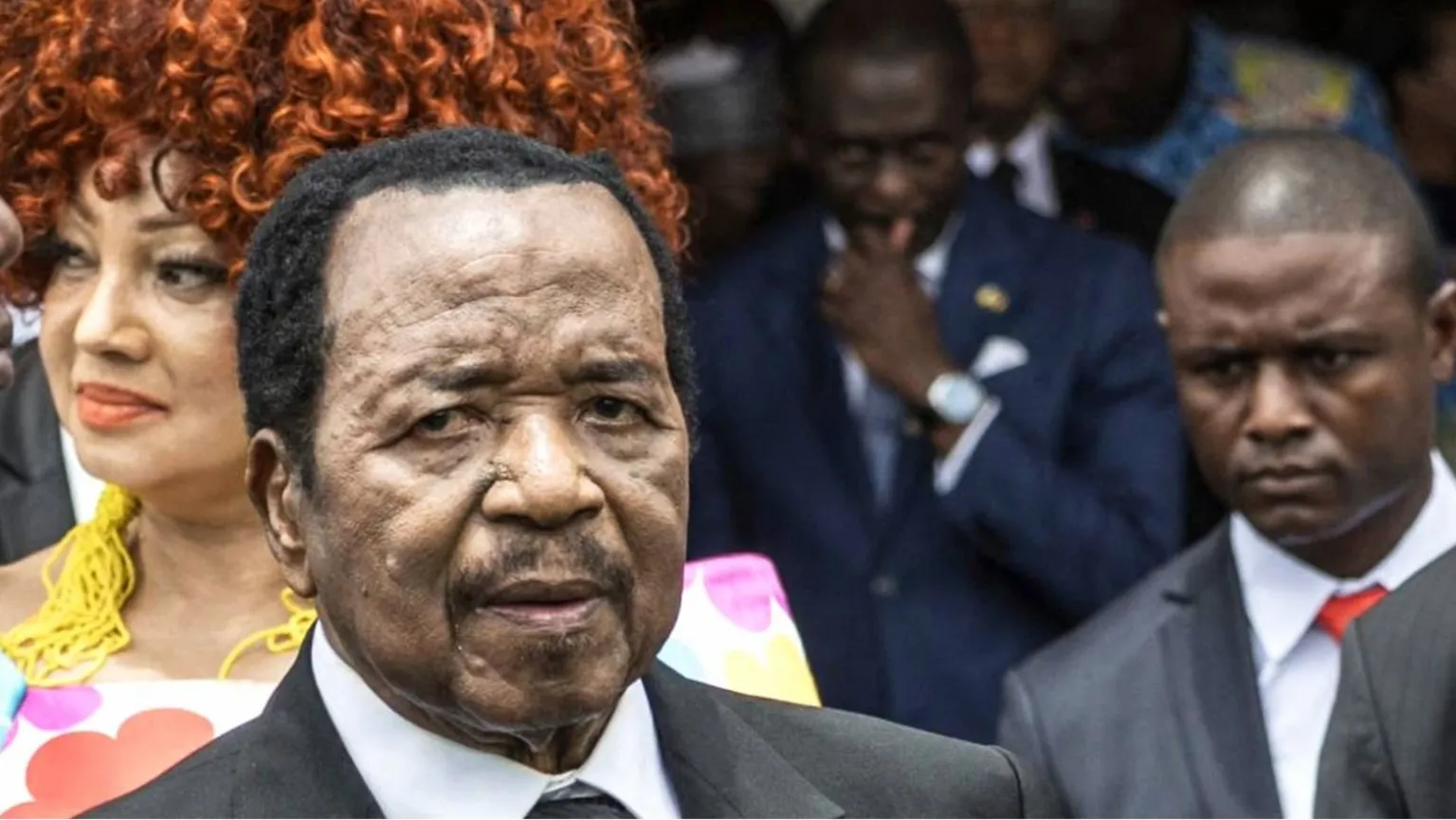
Cameroon President Paul Biya has carried out another reshuffle of the country’s military leadership as concerns continue to grow over his prolonged absence from the country.
The 93-year-old leader, who has not appeared in public for nearly two months, appointed officers to several senior military positions and promoted five colonels to the rank of brigadier general.

Among those elevated was Brig. Gen. Raymond Jean Charles Beko’o Abondo, who was immediately reappointed commander of the elite Presidential Guard, a unit responsible for the president’s security. He has led the force since 2013.
Military reshuffles have become a familiar feature of Biya’s administration, particularly during periods of political uncertainty. Following the 2023 military coup in neighbouring Gabon, which ended the decades-long Bongo family’s rule, Cameroon also reorganised its military command.
The president again made changes to the armed forces while seeking another term in last year’s disputed presidential election and promoted several senior defence and security officers in June this year.
The latest appointments have attracted widespread attention because they were signed from the Swiss city of Geneva, where Biya has remained since leaving Cameroon on June 7 for what his office described as a short private visit.
His continued stay abroad has fuelled speculation about his health and raised questions over the functioning of government, as officials have provided little information about when he intends to return.
Despite being outside the country for nearly two months, Biya has continued to issue presidential decrees, including approvals allowing the government to enter into loan agreements with international financial institutions.
The president had also pledged to appoint a new cabinet after last year’s election, but no changes have been announced. In addition, the position of vice president, created through constitutional reforms in April, remains vacant.
Government officials have repeatedly denied reports suggesting Biya has been hospitalised, insisting he remains in good health and continues to discharge his constitutional duties from Geneva.
Communication Minister René Emmanuel Sadi recently told French broadcaster RFI that the president is alive, actively working, and expected to return to Cameroon soon. He also rejected opposition claims that the country is effectively without leadership during Biya’s absence.
However, opposition figures argue that governing from abroad has created an institutional leadership gap. Mamadou Mota, vice president of the opposition Cameroon Renaissance Movement (CRM), has maintained that executive authority should be exercised from within the country rather than from overseas.



 English