


















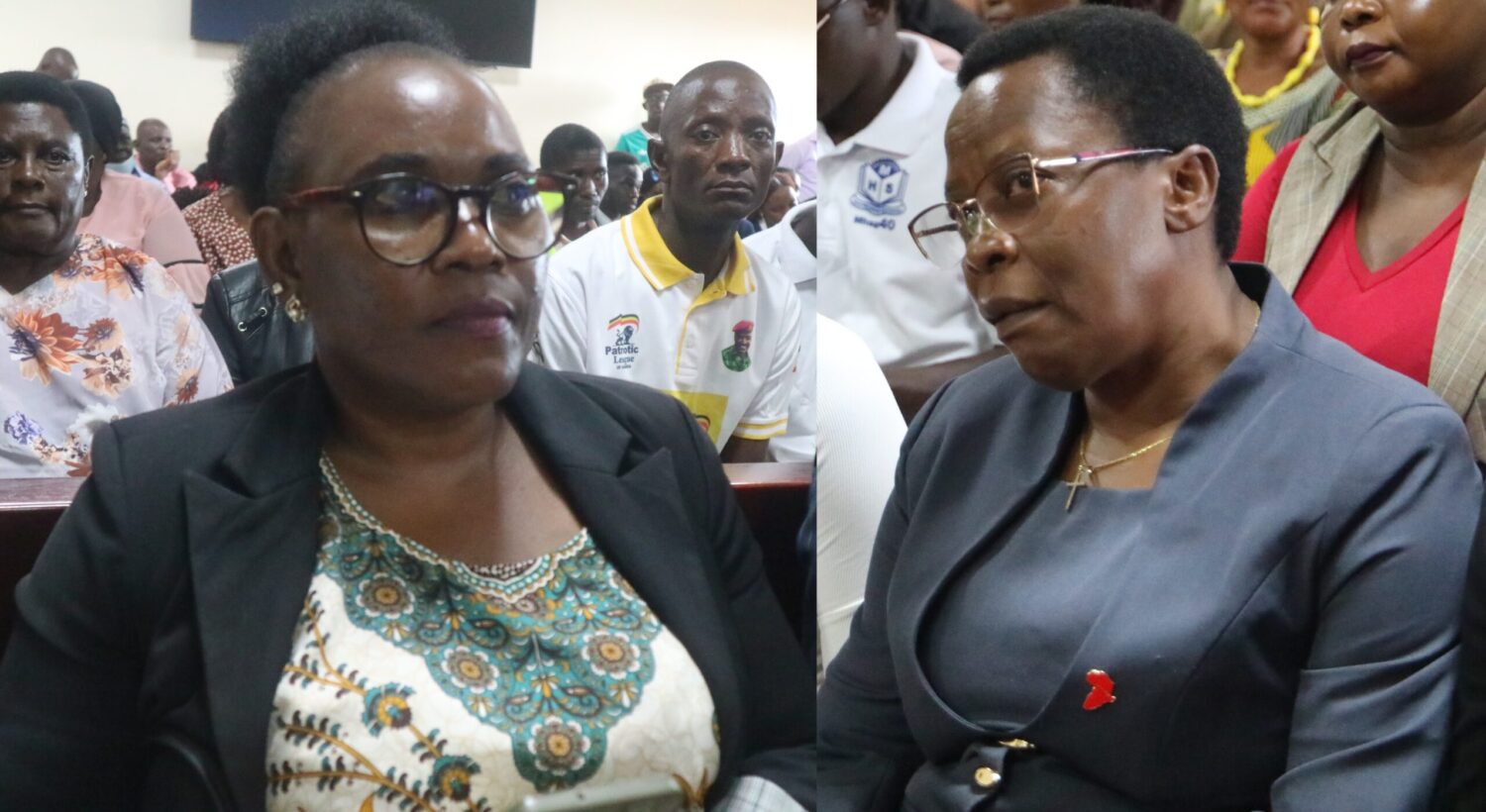
The High Court in Mukono has partially upheld preliminary objections raised in a petition challenging the election of Betty Nambooze as Mukono Municipality Member of Parliament, striking out video evidence and several annexures filed by the petitioner.
Justice Godfrey Himbaza, in a ruling dated October 1, 2026, ordered that video recordings, transcriptions and translations attached to affidavits by petitioner Daisy Ssonko Nabatanzi, as well as witnesses Musoke Patrick and Nalubowa Faridah, be removed from the court record for failing to meet requirements under the Electronic Transactions Act.


The judge also struck out Musoke’s entire affidavit, finding that it was not relevant to the petition and did not comply with requirements governing documents translated for illiterate persons.
The petition was filed by Nabatanzi challenging the January 15, 2026 parliamentary election for Mukono Municipality, in which the Electoral Commission declared Nambooze the winner with 21,070 votes. Nabatanzi says she obtained 6,683 votes.
She alleged that Nambooze, either personally or through her agents and campaigners acting with her knowledge or approval, committed electoral offences and illegal practices, including bribery, undue influence, violence, intimidation and interference with voters’ freedom to exercise their franchise.
Nabatanzi is seeking to have Nambooze’s election and return set aside, a fresh election ordered and the relevant persons prosecuted for alleged offences.
The preliminary objections were raised when the petition came up before Justice Himbaza on September 24, 2026.
Nambooze’s lawyers argued that several affidavits had been filed contrary to court directions, contained new claims that had not been pleaded in the original petition, and had defective annexures.
They also challenged video recordings downloaded from YouTube and material attributed to BBS Telefayina, arguing that Nabatanzi and some of her witnesses had failed to explain how the electronic material was obtained, stored and preserved.
The lawyers further argued that some documents attached to the affidavits had not been properly commissioned and sealed by the Commissioner for Oaths.
Justice Himbaza agreed that some of the annexures had not been securely sealed as required by the Commissioner for Oaths rules.
The judge, however, rejected the argument that defects in annexures automatically rendered the corresponding affidavits invalid.
Relying on the Supreme Court decision in Busonya Jamada and Others v Daudi Giruli, Justice Himbaza held that failure by a Commissioner for Oaths to seal and identify annexures does not, by itself, make an affidavit fatally defective.
He nevertheless ruled that the affected annexures could not be admitted as exhibits in their existing form.
The court also examined the electronic evidence under the Electronic Transactions Act, which places the burden on a party seeking to introduce an electronic record to establish its authenticity.
Justice Himbaza noted that Nabatanzi had not stated that she personally recorded the videos, nor explained the devices used, how the recordings were stored or how their integrity was preserved.
The judge further observed that the persons identified as having transcribed or translated some of the recordings had not sworn affidavits explaining the authenticity and reliability of the material.
“In this era and age of cybercrime and artificial intelligence (AI), it is very possible to admit an electronic record that is either doctored, or generated through artificial means,” the judge said.
Justice Himbaza referred to an earlier decision involving video evidence downloaded from BBS Telefayina’s YouTube channel, where the evidence was admitted after the person who obtained it explained how it was downloaded, stored and preserved, and provided supporting transcription and translation.
The judge found that the same evidentiary foundation had not been established in Nabatanzi’s case.
“The petitioner in her affidavit falls short of revealing how the videos were generated and stored and on what gadgets,” Justice Himbaza ruled.
The court also struck out Musoke Patrick’s affidavit after finding that much of its contents concerned incidents involving supporters of another candidate, Nabukeera, who was not a party to the petition.
Justice Himbaza found that this raised a question about the affidavit’s relevance to Nabatanzi’s challenge.
The judge further found that Musoke’s affidavit did not comply with the Illiterates Protection Act because the person identified as having translated the affidavit did not provide the required particulars.
The court cited Supreme Court precedent holding that the statutory requirements governing documents prepared or translated for illiterate persons are substantive safeguards rather than mere technicalities.
However, the court rejected the broader objection that all additional affidavits filed by Nabatanzi should be struck out because they contained incidents of alleged bribery and other electoral offences that were not specifically detailed in the original petition.
Justice Himbaza held that once a general ground such as bribery has been pleaded, subsequent affidavits may provide evidence of particular incidents supporting that ground.
The judge relied on a Court of Appeal decision which recognised that petitioners may not be able to gather all evidence at the time of filing an election petition and may file additional affidavits before the scheduling conference.
The court also rejected the argument that the Civil Procedure Rules strictly governed the filing of affidavits in the pre-trial stage of an election petition.
Justice Himbaza noted that election petitions are special proceedings and that the Civil Procedure Rules apply with necessary modifications. He cited Supreme Court and Court of Appeal authorities holding that the application of ordinary civil procedure rules is limited in the context of election petitions.
The judge found that, contrary to Nambooze’s lawyers’ argument, the court record from September 14, 2026 showed that Nabatanzi had been granted leave to file additional affidavits by September 17.
“The record shows is that the petitioner was granted unconditional leave to file additional affidavits by 17th September 2026, which they did,” Justice Himbaza said.
As a result, the court declined to strike out the additional affidavits merely because they were filed several months after the respondents had filed their answers to the petition.
In the final orders, the court partially sustained the preliminary objections.
Justice Himbaza struck out the annexures to the affidavits of Nabatanzi, Musoke and Nalubowa for failure to comply with the requirements governing exhibits attached to affidavits.
He separately struck out the video evidence, transcriptions and translations attached to their affidavits for failure to meet the requirements of the Electronic Transactions Act.
Musoke’s entire affidavit was also struck out on grounds of relevance and failure to comply with the Illiterates Protection Act.
However, the court retained all the other affidavits filed by Nabatanzi and her witnesses in support of the petition.
Justice Himbaza made no order as to costs.
The substantive petition challenging Nambooze’s election therefore remains on record, with the court’s ruling affecting specific evidence rather than disposing of the entire election challenge.











 English