


















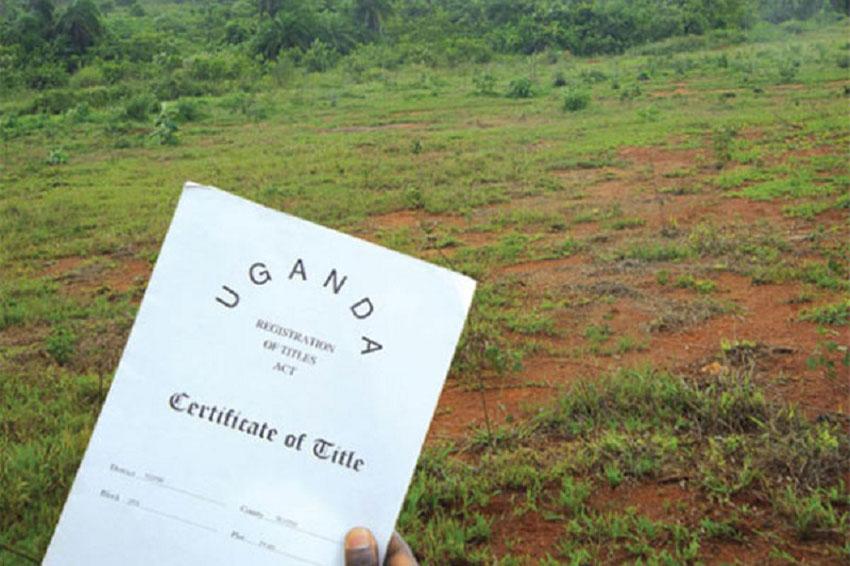
The High Court has dismissed an application by SP Avito Begira seeking to stop his criminal prosecution over an alleged theft linked to a disputed land transaction, ruling that the courts cannot use judicial review proceedings to interfere with an ongoing criminal case unless there is clear evidence of abuse of power by prosecutors.
In a ruling delivered on July 22, 2026, Justice Bernard Namanya found that Begira had failed to prove that the Director of Public Prosecutions (DPP) acted illegally, irrationally or with procedural impropriety in sanctioning charges against him.


The application arose from criminal proceedings registered as Katwe SD 20/10/02/23, in which Begira challenged the DPP’s decision to prosecute him for theft. He argued that the criminal case was an abuse of legal process because it stemmed from a land ownership dispute that is already the subject of a pending civil suit before the High Court.
Begira sought declarations that the prosecution was contrary to public interest and the administration of justice, asked the court to quash the DPP’s decision to prosecute him, and requested an order prohibiting the continuation of the criminal proceedings until the civil case over the land is determined. He also sought general damages.
According to affidavits filed in support of the application, Begira maintained that he and his wife lawfully purchased the disputed land from beneficiaries of the estate of the late Angelo Ssewamala.
He claimed another individual, Kato Bumali, later entered the land without authority, attempted to fence it off and placed a container and iron sheets on the property, prompting reports to police.
Begira further relied on a forensic document examiner’s report, which allegedly found strong evidence that disputed handwriting attributed to the late Kigongo Joseph was not authentic. He argued that despite this evidence, and despite pending civil proceedings concerning ownership of the land, the DPP selectively chose to prosecute him while declining to proceed against the complainant.
Although the Attorney General, representing the respondent, appeared before court, no replying affidavit was filed despite earlier directions from the court. Nevertheless, Justice Namanya noted that the burden of proving illegality remained with the applicant.
In his judgment, the judge emphasized that judicial review is intended to examine whether public authorities have acted lawfully and fairly, rather than determining whether criminal charges are supported by sufficient evidence.
He observed that courts exercising judicial review jurisdiction do not determine guilt or innocence, weigh competing evidence or resolve disputed questions of fact that properly belong before criminal or civil trial courts.
Justice Namanya cited established principles of judicial review, noting that courts may only intervene where administrative decisions are tainted by illegality, irrationality or procedural impropriety. He explained that judicial review is not an avenue for reassessing evidence or substituting the court’s opinion for that of public officials legally mandated to make prosecutorial decisions.
The judge also relied on previous Supreme Court and High Court decisions, including Charles Harry Twagira v Attorney General and Dan Alinange v Director of Public Prosecutions, which held that accused persons cannot ordinarily use civil proceedings to halt ongoing criminal prosecutions.
Those decisions established that the existence of parallel civil litigation does not automatically prevent criminal proceedings from continuing and that disputes over the sufficiency of evidence should be determined by the criminal trial court.
Applying those principles to the present case, Justice Namanya concluded that Begira’s complaints largely related to disputed ownership of the land, the authenticity of documents, the value of forensic evidence and whether he was criminally liable for theft.
He ruled that such issues are matters of evidence and fact that should be resolved during the criminal trial and, where necessary, in the pending civil proceedings over ownership of the land.
“The mere existence of a pending civil suit, and the applicant’s assertion that the dispute is civil in nature, do not by themselves render the prosecution unlawful or an abuse of process,” the judge held.
Finding no proof that the DPP had acted outside constitutional authority or abused prosecutorial discretion, Justice Namanya dismissed the application and allowed the criminal proceedings in Katwe SD 20/10/02/23 to continue.
Because the Attorney General had not filed a replying affidavit, the court made no order as to costs.









 English