















By Ambrose Musasizi
More than four decades after Uganda recorded its first HIV cases at Kasensero Landing Site in present-day Kyotera District, the community that became synonymous with the country’s AIDS epidemic continues to battle new infections.

Uganda has won global recognition for its response to HIV, reducing new infections, expanding access to life-saving treatment and moving closer to the UNAIDS 95-95-95 targets. National HIV prevalence has fallen to about 4.9 percent, while AIDS-related deaths have declined significantly over the past decade.
Yet the picture in Kyotera tells a different story.
According to the Uganda AIDS Commission, the district’s HIV prevalence stands at 13.2 percent, nearly three times the national average, making it one of Uganda’s highest-burden districts. Health experts attribute the persistent infections to a complex mix of behavioural, economic and social factors that continue to challenge prevention efforts.
Awareness Without Behaviour Change
HIV prevention messages are difficult to miss across Kyotera. Billboards encourage regular testing, radio stations broadcast awareness campaigns, and health facilities provide free HIV testing, condoms and Pre-Exposure Prophylaxis (PrEP) for people at substantial risk of infection.
Despite these interventions, consistent condom use remains remarkably low.
Research conducted among young people aged between 15 and 24 years in Kasensero and neighbouring communities revealed that only 4.2 percent of HIV-negative youths consistently used condoms, while less than one percent of HIV-positive youths reported regular condom use.
The same study found HIV prevalence among young people at about 20 percent, increasing to more than 25 percent in Kasensero itself. Young women were disproportionately affected, recording an HIV prevalence of approximately 26 percent compared to 12 percent among young men.
Health workers say these findings continue to reflect the realities on the ground.
Although government health facilities distribute condoms free of charge, residents say supplies are not always reliable.
“When health centres run out of stock, many people simply choose not to buy condoms from private shops,” says a community health volunteer in Kasensero.
However, health professionals argue that access is only part of the challenge.
“Even when condoms are available, many people deliberately choose not to use them,” says a clinician involved in HIV prevention programmes in the district.
High-Risk Lifestyles
Fishing communities remain among the populations most vulnerable to HIV.
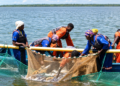
Fishermen often spend several days on Lake Victoria, facing dangerous storms, drowning risks and occasional attacks by pirates. Against such daily threats, many perceive HIV as a less immediate danger.
Health officials say this mindset contributes to multiple sexual partnerships and inconsistent condom use.
The mobility of fishermen, fish traders, transporters and long-distance truck drivers travelling along the Kampala-Mutukula highway further complicates prevention efforts. Their movements create sexual networks that extend across districts and international borders, increasing opportunities for transmission.
Alcohol consumption also plays a significant role.
Bars around landing sites and trading centres operate throughout the night, with health workers reporting that many new HIV infections are linked to sexual encounters that occur after excessive drinking, when people are less likely to make safe decisions.
Cultural And Religious Influences
Health experts also point to cultural attitudes and religious beliefs as factors influencing HIV prevention.
While many religious leaders actively encourage HIV testing and treatment, discussions about condom use remain sensitive in some faith communities.
Messages promoting abstinence before marriage and faithfulness within marriage continue to dominate.
Public health specialists acknowledge the importance of these values but argue they do not adequately address the realities of communities where transactional sex, migration and multiple sexual partnerships are common.
“There are people who will not abstain, and there are people whose partners are unfaithful,” says an HIV counsellor. “For those individuals, condoms remain an essential form of protection.”
Persistent misconceptions about condoms continue to undermine prevention efforts.
Some men believe condoms reduce sexual pleasure, while others wrongly claim they frequently burst or contain harmful chemicals. Among younger people, suggesting condom use is sometimes interpreted as a sign of mistrust or infidelity, making couples reluctant to discuss protection.
Science Has Advanced, But Prevention Lags
Uganda’s HIV response has changed dramatically over the past four decades.
People living with HIV who consistently take antiretroviral treatment and achieve viral suppression cannot sexually transmit the virus. PrEP is increasingly available for HIV-negative individuals at high risk, while emerging long-acting prevention medicines such as Lenacapavir are raising hopes of further reducing infections globally.
Despite these scientific advances, experts caution that medicine alone cannot end the epidemic.
Behavioural change remains the biggest challenge.
Studies conducted in neighbouring Rakai have shown that although HIV incidence has declined across many occupations, women working in bars and restaurants and men employed in the transport sector continue to face disproportionately higher risks, suggesting that key populations remain difficult to reach with effective prevention services.
Looking Beyond Traditional Campaigns
District health officials say future HIV interventions must address the underlying drivers of infection rather than relying solely on awareness campaigns and condom distribution.
They argue that tackling alcohol abuse, poverty, gender inequality, high population mobility and risky social norms is essential if new infections are to decline.
The district is expanding community-based HIV testing, increasing access to PrEP and strengthening prevention programmes that specifically target men, who often seek health services less frequently than women.
A Community Still Carrying The Burden
For many residents of Kasensero, HIV is not just a public health issue but part of their lived history.
The community that first drew global attention to Uganda’s AIDS epidemic has lived with the virus for more than two generations. Children who lost parents during the height of the epidemic are now raising families of their own.
Treatment has transformed HIV from a fatal disease into a manageable chronic condition, but preventing new infections remains an unfinished task.
Forty years after Uganda became internationally recognised for confronting HIV with openness and determination, Kyotera remains a stark reminder that awareness alone is not enough.
The science is available. Treatment works. Prevention tools exist.
The challenge now lies in overcoming the social, cultural and behavioural barriers that continue to fuel new infections in the very communities where Uganda’s fight against HIV first began.









 English