
















Cabinet has approved the Food and Agriculture Regulatory Authority Bill, 2026, a key legislative proposal aimed at establishing a single institution to regulate food safety, agricultural inputs, veterinary medicines and related products across Uganda.
The decision was taken during the Cabinet meeting held at State House Entebbe on Monday and announced during the weekly Cabinet briefing at the Uganda Media Centre on Tuesday.

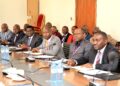
Minister for ICT and National Guidance Justine Kasule Lumumba said the proposed law seeks to streamline the regulation of food and agricultural products by replacing the current fragmented system with a unified regulatory framework.
Under the existing arrangement, oversight responsibilities are shared between the National Drug Authority (NDA) and the Uganda National Bureau of Standards (UNBS), a structure government says has created overlapping mandates, duplication of duties and regulatory gaps.
Once enacted, the law will establish the Food and Agriculture Regulatory Authority, which will oversee the regulation of veterinary medicines, vaccines, veterinary devices, laboratory reagents, veterinary cosmetics, agricultural chemicals, food products and animal feeds under a single institution.
According to the government, the new authority will improve coordination among regulators, strengthen enforcement of standards and enhance oversight of products used in agriculture and animal health.
Lumumba said the proposed legislation is intended to strengthen food safety systems by ensuring that food, animal feeds, plants and the environment are adequately protected. She added that the authority will ensure agricultural and veterinary products placed on the market meet the required standards for safety, quality and effectiveness.
Government believes the new regulatory framework will contribute to improved human, animal and plant health while boosting public confidence in locally produced agricultural products.
Officials also expect the reforms to increase Uganda’s competitiveness in regional and international markets by improving product quality, reducing counterfeit agricultural inputs and veterinary medicines, and enhancing compliance with international standards.
The government further projects that farmers will benefit from improved quality assurance, leading to better market access and higher incomes, while the country strengthens its contribution to global food safety and health security.
Agriculture remains Uganda’s largest employer, supporting more than 70 percent of the population and serving as a major source of export earnings. The government has in recent years prioritized reforms aimed at increasing agricultural productivity, promoting value addition and improving food safety under the Fourth National Development Plan.
In a separate decision, Cabinet approved the appointment of a new Governing Board for the National Building Review Board, the body responsible for overseeing compliance with national building standards and coordinating building control activities.
Engineer Andrew Kitaka was appointed chairperson of the board. Other members include RSU Irene Kitara, Architect Henry Kigundu, PP Irene Achola, Benon Yiga, Engineer Chris Opuch, Richard Adrole and Engineer Betty Nabbosa.
The National Building Review Board was established under the Building Control Act to promote adherence to building regulations, review construction standards and strengthen enforcement of safety requirements.
The appointments come as government seeks to reinforce oversight of the construction sector following several fatal building collapses that have raised concerns about compliance with building standards and professional supervision.











 English