
















Uganda’s insurance regulator is proposing a new method for financing the proposed National Health Insurance Scheme (NHIS), replacing the previously contested fixed-percentage contribution model with a graduated system based on income levels.
The new approach, championed by the Insurance Regulatory Authority of Uganda (IRA), would mirror the Uganda Revenue Authority’s Pay As You Earn (PAYE) framework, where contributions increase according to earnings brackets instead of applying the same percentage to all workers.


The proposal is intended to resolve concerns that prompted President Yoweri Museveni to withhold assent to the National Health Insurance Scheme Bill in 2021, potentially clearing the way for the legislation to return to Parliament.
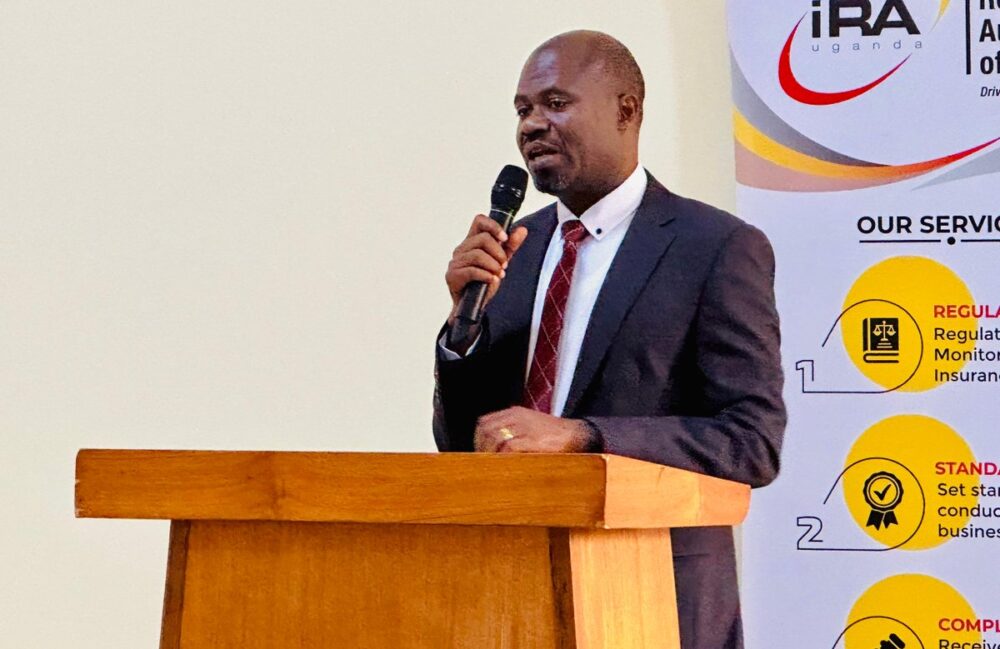
Dr. Protazio Sande, the Acting Chief Executive Officer of IRA, said discussions are already underway with government officials on possible revisions to the Bill before it is tabled again.
Under the suggested arrangement, employees would be categorized into different salary bands, with contributions determined by their respective income ranges. Sande believes the model would distribute the financial burden more equitably and address objections previously raised by employers and workers.
He noted that Uganda has delayed implementing a national health insurance system for too long, arguing that many households continue to face devastating medical expenses whenever illness strikes.
Sande explained that pooling resources through a national insurance fund would also enable the government to better estimate the level of public funding required to guarantee access to quality healthcare services for all citizens.
Parliament passed the National Health Insurance Scheme Bill in March 2021 with the objective of expanding affordable healthcare coverage through contributions from employees, employers and the state.
The original proposal required employers to remit four percent of each employee’s salary, matched by an equivalent four percent deduction from workers, while informal sector participants would pay an annual contribution of Shs100,000.
However, the legislation was returned to Parliament after private sector groups and employers argued that the mandatory payments would increase operational costs and make doing business more expensive.
Although government announced in 2023 that it planned to revisit the Bill after consulting stakeholders, the legislation has not yet been reintroduced.
IRA officials are now preparing to submit the income-band proposal for consideration by government and other interested parties as part of efforts to revive the stalled reforms.
Health advocates have repeatedly called for the swift establishment of the NHIS, describing it as a crucial step toward improving access to affordable medical care.
Rev. Fr. Emmanuel Katabaazi, the Health Coordinator for Masaka Diocese, said the scheme would provide much-needed relief to elderly citizens and vulnerable families struggling to meet healthcare expenses.
“If implemented, the scheme will save thousands of elderly people who are currently unable to afford treatment,” he said.
While the government has not formally adopted the proposal, it marks the first publicly known effort to redesign the contribution structure that has delayed one of Uganda’s most ambitious healthcare financing initiatives.







 English