













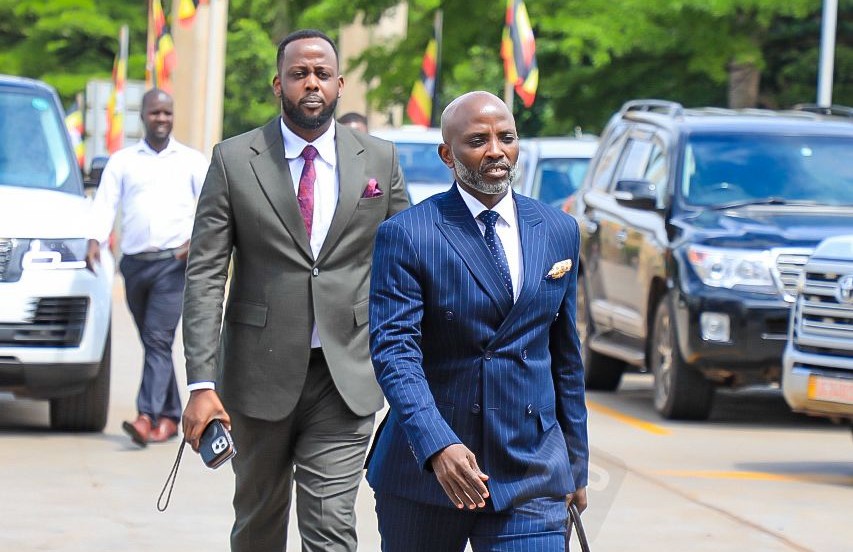
Fresh controversy has emerged surrounding the citizenship status of Dr. Lawrence Muganga after documents surfaced showing that the academic formally declared the renunciation of his Rwandan citizenship through a statutory declaration sworn in Kampala.
The declaration, sworn before authorities on May 17, 2024, details Dr. Muganga’s background, including his birth in Seeta, Mukono Municipality, his studies at Makerere University, and his relocation to Rwanda in 2002 where he later acquired Rwandan citizenship.

According to the declaration, Dr. Muganga obtained Rwandan nationality as a requirement for employment opportunities while working with institutions including the Rwanda Revenue Authority, the Public Sector Capacity Building Program, and the Rwanda Institute of Administration and Management.
The document further states that he later moved to Canada in 2009 for further studies before returning to Uganda in 2019, where he says he has permanently resettled.
In the statutory declaration, Dr. Muganga states that his Rwandan passport expired in 2014 and that he returned both the passport and national identity card to Rwandan authorities. He also declared allegiance to Uganda, citing possession of a Ugandan national identity card and participation in Ugandan elections.
“I am voluntarily renouncing my Rwandese citizenship and all my allegiance to the Republic of Rwanda and the Rwandese Government,” part of the declaration reads.
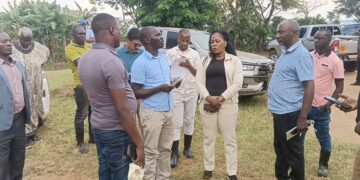
The development has sparked mixed reactions in his home area, with Abasi Mukwaya, the LCI Chairperson of Gwafu Central, expressing concern over what he described as unfair targeting of a person widely known to have been born in Uganda.
“Muganga was born here, his parents were buried here and actually he votes from this very area specifically at Ssekatawa Junction,” Mukwaya said. He added that he is concerned that people are fighting a person well known for having been born in Uganda, urging calm as the matter unfolds.
However, the declaration has sparked legal and political debate after Daudi Kabanda questioned the legality of the process used.
In a statement posted on his X account, Kabanda argued that renouncing Rwandan citizenship requires a formal application to Rwanda’s Director General of Immigration and Emigration, cabinet approval, issuance of a certificate of renunciation, and publication in the official gazette.
“To renounce your Rwandan citizenship, you must submit a formal written application to the Director General of Immigration and Emigration of Rwanda, which requires cabinet approval,” Kabanda wrote.
He further claimed that the process undertaken through the Uganda Registration Services Bureau (URSB) was invalid.
“What he did was like marrying someone’s daughter before your lawyer without visiting the parents,” Kabanda added, describing the process as fraudulent.
The matter also attracted comment from Prof. Venansius Baryamureeba, who argued that Parliament should strictly enforce laws governing dual citizenship during vetting processes.
“All this is irrelevant. What Parliament should have done is to follow the law,” Baryamureeba said.
“It does not matter whether one has two, three or even 100 citizenships. At the time of vetting by the parliamentary appointments committee all those that were dual citizens should have been rejected,” he added.
Baryamureeba further questioned the legality of approving individuals before foreign governments formally process and confirm renunciation applications.
“Parliament cannot take decisions in anticipation of Canada, USA or Rwanda accepting the application for renunciation of citizenship,” he noted.
The controversy is likely to intensify debate over dual citizenship, public office eligibility, and the legal requirements for renouncing foreign nationality in Uganda and across the region.




 English