




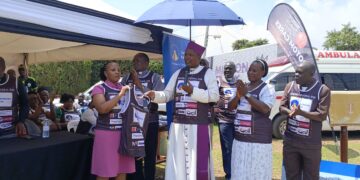













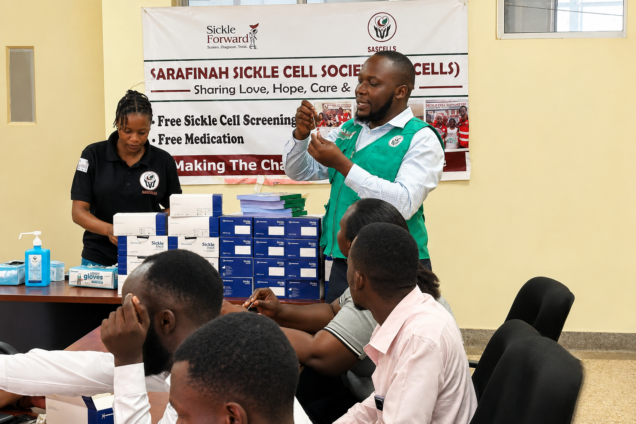
More than 30 healthcare workers at Kawolo Hospital in Buikwe District have undergone specialized training aimed at strengthening sickle cell care services in the area.
The training program was supported by Sarafinah Sickle Cell Society (SASCELLS) in partnership with Sickle Forward as part of ongoing efforts to improve screening, diagnosis, treatment, and management of sickle cell disease in communities.


According to Joel Mugwanya, a Field Officer at Sarafina Sickle Cell Clinic, the trained personnel included seven nurses from the Chronic Care Sickle Cell Ward, eight clinical officers, and 15 laboratory personnel. Staff from the Maternity, Antenatal, and Young Child Clinic (YCC) departments also participated in the training.
Mugwanya said the initiative is intended to improve the quality of care offered to sickle cell patients, especially children, while also strengthening early detection and newborn screening services.
In addition to the training, 500 sickle cell kits were redistributed to support newborn screening programs and testing for children aged between zero and five years.
Rehama Abigail, the Clinical Officer and Focal Person for the Sickle Cell Clinic at Kawolo Hospital, revealed that the facility continues to register a growing number of patients every two weeks, largely due to the availability of free screening services.
“Thank you so much for your sickle scan donations that have really impacted our community because we are able to carry out free screenings for all children below five years,” Abigail said.
She explained that the clinic’s patient numbers have increased from 190 to 230 clients within just eight months.
“That is a great increase in numbers and we would not have achieved this without the free screening services,” she added.
However, Abigail noted that despite the growing number of patients, the clinic is struggling with severe shortages of essential medicines and medical equipment.
She said the facility urgently requires a chemistry machine and an additional Gazelle machine to improve screening and diagnosis services.
Abigail also appealed for support in the supply of essential drugs, including folic acid, hydroxyurea, and penicillin for children under five years. She further highlighted the need for stronger analgesics such as Cocodamol to help manage pain crises among sickle cell patients.
“Out of the 230 clients, 150 are on hydroxyurea, but we cannot afford to give them enough medication for a full month. Most of them receive doses for only one week and are asked to buy the rest,” she said.
She warned that many families cannot afford the medication, resulting in increased hospital admissions due to sickle cell crises.
The clinic currently has 107 children under the age of five on Penicillin-V, but at least 20 of them cannot afford the medication at all.
“With our current budget, Penicillin-V is supplied quarterly, and we receive around 3,000 tablets per quarter, which is still insufficient for the clinic’s needs,” Abigail explained.
She added that more than 100 children living with sickle cell disease in the district also require mobility support services, including wheelchairs, crutches, and other assistive devices.
Meanwhile, Buikwe District Health Officer Dr. Allan Ssemakula Katamba applauded Sarafinah Sickle Cell Society (SASCELLS) and Sickle Forward for their consistent support to communities affected by sickle cell disease.
“They remain the only organizations consistently reaching communities on the ground to provide services, support, and care to sickle cell patients and families,” Dr. Katamba said.
He commended the organizations for complementing government efforts in improving healthcare access and raising awareness about sickle cell disease in underserved communities.









 English