









How could a promise so pure fracture so completely, and how could a nation’s brightest dawn dissolve so rapidly into the familiar, haunting twilight of African political tragedy? For months, a profound sense of worry and deep concern has hung over Senegal, as warning signs of a catastrophic rift at the highest level of the state have manifested for all to see. Genuine observers of African sovereignty have watched with a growing sense of wonder and anxiety, hoping against hope that the experimental architecture of a presidency built entirely upon the immense popularity of an unyielding revolutionary would not fall prey to the historical forces of subversion. Yet those fears have been realized in the most devastating manner imaginable.
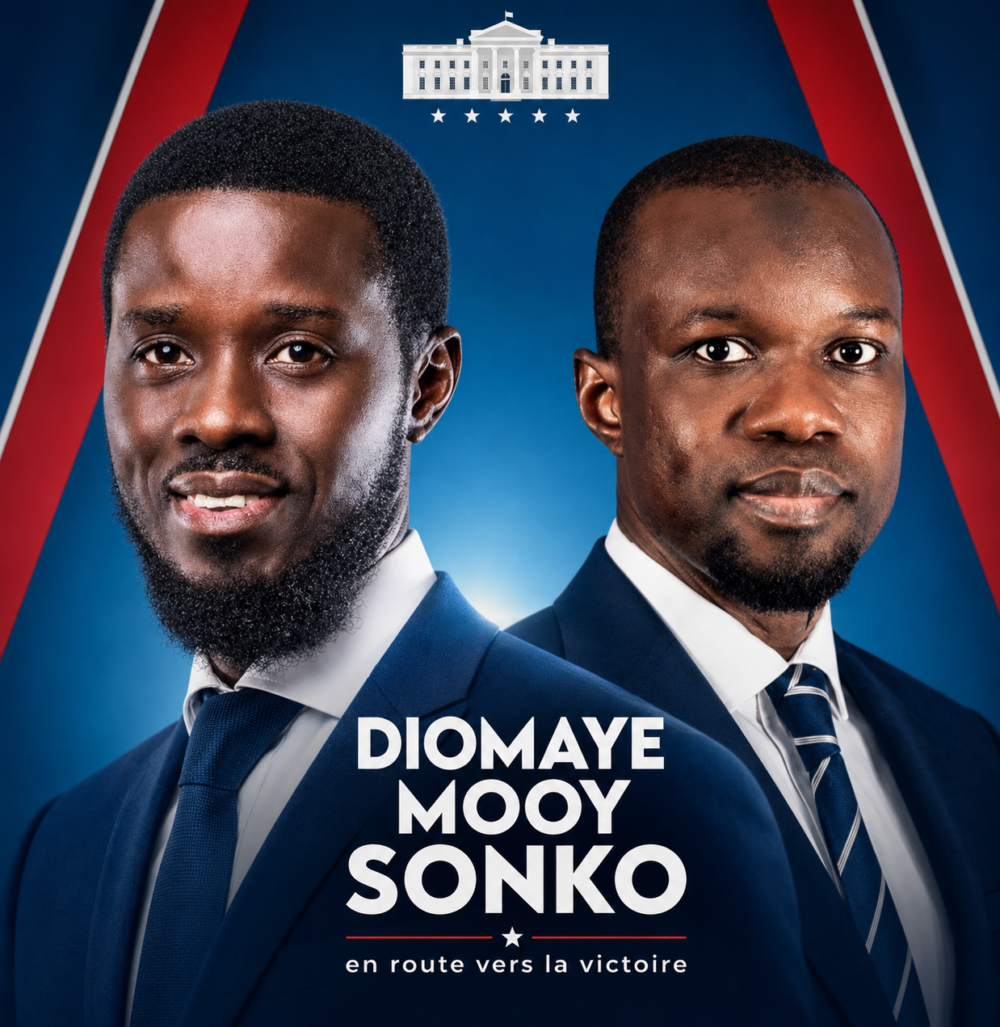
With a stubbornness that defies political reason, President Bassirou Diomaye Faye has proceeded down an irresponsibly destructive path, executing a decisive blow that shatters a generational hope. By signing an executive decree to summarily dismiss Prime Minister Ousmane Sonko and completely dissolve the government, Faye has done something far worse than initiate a routine cabinet reshuffle. He has committed a monumental act of political betrayal, fracturing a sacred pan-African promise of total liberation and plunging Senegal directly into an engineered crisis of economic and civil instability.


One cannot help but wonder at the sheer speed with which the ink on the nation’s brand-new democratic contract was smeared by the oldest, most predictable machination in imperial history: the systematic purging of an uncompromising leader. When the collective gasp echoed across Dakar following the late-night announcement on state media, it signaled a profound and deeply agonizing heartbreak for millions of young Africans who bled, protested, and faced lethal crackdowns to secure a mandate for structural change.
To comprehend the sheer gravity of this rupture, one must remember the foundational philosophy of the PASTEF movement, which proclaimed across every corner of the country that Diomaye and Sonko were fundamentally one. When Sonko, the charismatic and unbribable architect of an authentic economic revolution, was legally barred from the presidency through an establishment defamation conviction, he performed an act of profound selflessness by transferring his massive political capital to Faye, his quiet lieutenant.
They were brothers-in-arms, former tax inspectors who exposed elite corruption, and cellmates who walked out of prison together just ten days before sweeping the elections. Faye did not ascend to the presidency on his own wings; he was carried into office on the shoulders of Ousmane Sonko and the backs of a youth population willing to sacrifice everything for Sonko’s vision of true independence.
To remove the master strategist who literally helped manufacture your presidency, and to do so under the pretext of fiscal management, is a profound disappointment that reveals Faye’s tragic vulnerability to the pressures of office. It suggests that he has fully succumbed to the intoxicating allure of state authority and the subtle influence of external handlers. He has forgotten, with terrifying speed, that his authority belongs structurally to the aspirations of the street, not the validation of international banks.
The undeniable hypothesis framing this fallout is that the entire execution was orchestrated from the shadows by foreign powers that cannot tolerate an uncompromised African state. The structural alignment of events leaves little room for coincidence, as this purge appears to have been polished in Washington, whispered in Paris, and enforced through the financial corridors of Brussels and the International Monetary Fund.
Sonko was removed because he refused to back down on his foundational promise to renegotiate colonial-era oil, gas, and mining contracts that have systematically drained Senegal’s wealth for generations. He was sidelined because he stood like an iron wall against the IMF, which froze a crucial $1.8 billion lending program after the government uncovered massive hidden debts left by the previous regime.
While Faye and his compliant finance technocrats sought to appease global creditors by preparing to slash domestic fuel subsidies and raise consumer prices, Sonko resisted those measures, refusing to pass the burden of an elite-driven crisis onto ordinary citizens. Sonko chose absolute resource sovereignty, while Faye, unfortunately, chose the predictable path of global financial capitulation. What has happened to Sonko would likely have happened even if he had been the titular president, because global power structures often deploy their influence against any African leader who challenges their hegemony.
But critically, Sonko does not need the title of head of state to command the loyalty of his people. He is the true messenger of Senegalese aspirations, and the global machinery understands this. This is the same catastrophic mechanism that was used in the overthrow and brutal assassination of Patrice Lumumba in the Congo sixty-six years ago. The terrifying parallel lies in how both Patrice Lumumba and Ousmane Sonko approached national sovereignty and raw patriotism.
For both men, patriotism was not a theatrical political slogan; it was an uncompromising demand for absolute economic freedom. Just as Patrice Lumumba insisted that the vast mineral wealth of the Congo belonged to its citizens and not Belgian mining cartels, Sonko demanded that Senegal’s oil, gas, and fishing waters serve local youth rather than foreign multinational conglomerates. This pure, unyielding definition of patriotism—one that threatens the profit margins of neo-colonial networks—is precisely what brought them into confrontation with powerful interests.
Had Sonko been the actual president with this same rigid stance against modern forms of colonialism, he would likely be dead by now. The global system has a history of removing heads of state who attempt to dismantle entrenched imperial structures. By remaining in the prime ministerial position, Sonko retained a political buffer, but his uncompromised vision still made him a target.
The global order knows it cannot bribe or break a leader like Sonko, so it often seeks a more malleable surrogate within the inner circle to wield influence. Faye has, in this interpretation, chosen to play that role, trading the soul of Senegal’s resource revolution for a frozen IMF lifeline and the fleeting approval of Western institutions that demand compliance in exchange for capital.
Because of this historical reality, Ousmane Sonko must immediately establish a serious and impenetrable buffer around his personal safety. History shows that when external forces fail to stop a revolutionary through defamation, legal barriers, or imprisonment, they may resort to more extreme measures.
The forces Sonko is confronting do not operate strictly within democratic rules, and since he is no longer within the protective structure of the state, his personal security becomes paramount. The global orchestration of internal division to suppress anti-colonial resistance is a recurring pattern across the African continent.
Apart from the tragic martyrdom of Patrice Lumumba, history shows that whenever African leaders positioned themselves firmly against global power structures, external forces worked to remove them. When Uganda’s Milton Obote adopted a firm stance against the apartheid regime in South Africa and pursued a socialist economic direction through his Common Man’s Charter, foreign powers moved against him.
The 1971 military coup that overthrew Obote and brought Idi Amin to power was widely alleged to have involved foreign intelligence interests, who viewed Obote’s pan-Africanism and opposition to Western arms sales to apartheid South Africa as a threat to strategic interests in East Africa.
Similarly, the overthrow of Ghana’s Kwame Nkrumah in 1966 was widely attributed to Western intelligence operations, as his pursuit of continental unity and economic independence threatened neo-colonial interests. In 1975, Nigeria’s Murtala Muhammed was assassinated just months after delivering a defiant speech at the Organization of African Unity, declaring that Africa had come of age and would no longer take orders from foreign powers.
The pattern is consistently presented as one in which African leaders who refuse to conform are destabilized from within, often through trusted insiders whose ambition outweighs their loyalty to the continent. The immediate reaction across Senegal has been an eruption of fury, devotion, and mass unrest, confirming that the streets remain deeply loyal to their perceived champion.
Mass gatherings have formed as thousands of supporters flooded the streets of Dakar, rallying outside Sonko’s residence in the Keur Gorgui neighborhood to form a human shield of solidarity. Simultaneously, clashes have erupted at Cheikh Anta Diop University, where pro-Sonko student groups have staged protests, transforming the campus into an ideological battleground.
Amid tear gas and chaos, chants of solidarity have echoed through the air as crowds repeatedly use the Wolof phrase Sonko jërëjëf to express gratitude for his anti-colonial stance. For these youths, the dismissal is seen as an act of political rupture, and they openly condemn Faye, describing his actions as reckless and compromised by external influence.
They see a leader who grew distant the moment he entered state power, choosing to abandon his political mentor in order to satisfy international creditors. Yet from this rupture, a new political reality is emerging.
For Sonko’s base, the dismissal is viewed not as a defeat but as an opportunity. Supporters argue that being removed from Faye’s administration frees him from responsibility for the country’s inherited economic crisis.
Faye has effectively placed himself in a difficult position, as he must now personally absorb the consequences of IMF-driven reforms, including price increases and subsidy cuts that may alienate the population. Sonko, meanwhile, retains ideological purity, and his statement on social media that he would “sleep with a light heart” has been interpreted by supporters as a sign of readiness for the next phase of political struggle.
The 2029 presidential campaign, they argue, begins now. In their view, this move has positioned Sonko as the central anti-establishment figure in Senegal, strengthening his political capital. This moment is therefore seen as both a national tragedy and a political turning point.
It raises broader questions about Africa’s ongoing struggle with sovereignty, economic dependency, and external influence. The age of overt military coups has evolved into more subtle forms of pressure, where financial systems, debt structures, and institutional leverage shape political outcomes.
From Patrice Lumumba and Kwame Nkrumah to Thomas Sankara, and now in the political fallout surrounding Sonko, the pattern of neo-colonial tension remains deeply contested across the continent.
Across Africa, from Gabon and Guinea to Mali and Burkina Faso, youth movements continue to demand resource sovereignty and political dignity. The tensions in Dakar reflect a wider continental moment of political awakening.
The youth are demanding dignity, yet many leaders continue to rely on external validation and financial systems that constrain sovereignty. Faye may retain the presidency and international backing, but by sidelining Sonko, he risks weakening the political foundation that brought him to power.
He has stabilized the machinery of state while potentially weakening its moral center. The consequences of this rupture will continue to unfold in Senegal’s political landscape for years to come.






 English