




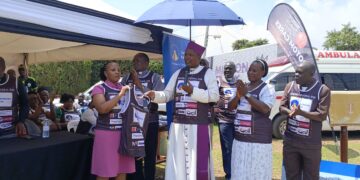

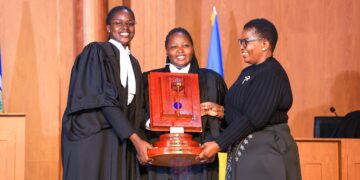











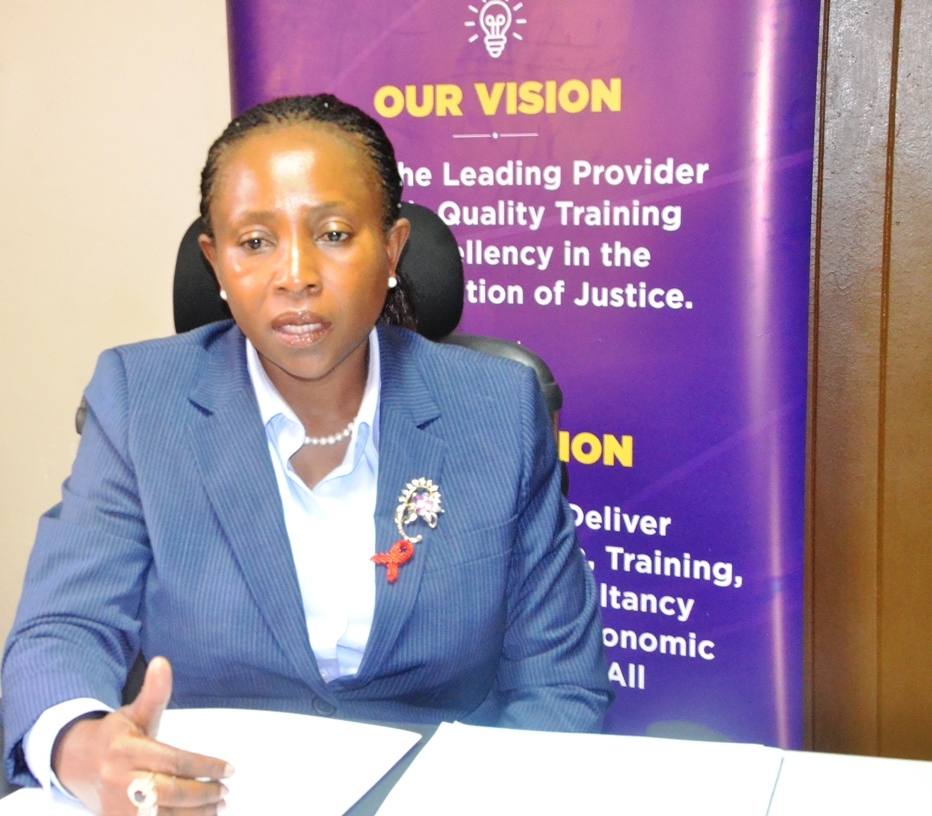
The Judiciary in Masaka has launched a specialised training programme under the Justice for Her project to enhance the handling and fast-tracking of Sexual and Gender-Based Violence (SGBV) cases in the Greater Masaka region.
Lady Justice Victoria Nakintu Katamba, Senior Resident Judge Masaka High Court Circuit, officially opened the session on March 2,2026, emphasising the need for reflection on institutional practices in the criminal justice system to deliver timely, respectful, and effective justice for survivors.
The training, facilitated by the Judicial Training Institute (JTI), brings together judicial officers, magistrates, court clerks, interpreters, prosecutors, police, prisons, probation officers, and other stakeholders from the four magisterial areas of Masaka, Sembabule, Rakai, and Kalangala.
In her opening remarks, Lady Justice Katamba welcomed the JTI faculty and highlighted that the initiative builds on previous trainings and a comprehensive GBV case census.
“This has enabled the preparation of a focused cause list for March 2026, with 36 cases scheduled for hearing. Each presiding judge will handle 18 cases, with hearings set to commence on March 9 following a debrief on March 3,” she said.
She described the training as an opportunity to examine how justice actors operate in practice, rather than merely how procedures are ideally meant to be followed. Drawing from the Lenten season’s scriptural call in Micah 6:8 to “act justly, love mercy, and walk humbly,” she stressed the importance of culturally sensitive principles in judicial work.
Hon Justice Prof. Andrew Khaukha, Executive Director of the JTI, underscored the project’s alignment with the Judiciary’s Training for Results Model. This approach extends beyond the training room through post-training follow-up, evaluation, and performance monitoring to ensure skills translate into measurable improvements in case disposal.
He noted that SGBV cases constitute a significant portion of the criminal caseload—often over 60 percent in High Court circuits—and suffer high attrition rates due to delays, which can amount to a “second injustice” for victims.
Justice Khaukha cited successful interventions in other courts, such as Kasese, Luwero, Lira, Moroto, Amuru, Arua, and Apac, where targeted SGBV management achieved a 100 percent clearance rate for 348 cases and secured 256 convictions.
The training focuses on practical skills, including early identification and tagging of SGBV cases, prioritised cause listing, diary management, adjournment control, witness coordination, and continuous monitoring from filing to conclusion.
Justice Khaukha thanked UN Women for their financial and technical support, which has enabled the initiative, and praised the leadership of the Chief Justice and the focal judge, Lady Justice Alice Komuhangi, as well as Assistant DPP Samalie Wakhooli for their contributions.
The Justice for Her project, supported by UN Women and partners including the Austrian Development Cooperation, aims to strengthen institutional capacity for gender-responsive justice, reduce delays in SGBV matters, and boost public confidence in the Judiciary by ensuring survivor-centred handling of cases.
Participants are drawn from across the criminal justice chain to foster coordinated efforts in addressing the unique challenges of these sensitive cases, where women remain disproportionately affected according to national data.
Lady Justice Katamba declared the training open, expressing confidence that it will lay a strong foundation for improved justice delivery in the region.













 English