

















For more than two years, thousands of women in parts of Uganda have waited for financial support under the government’s Generating Growth Opportunities and Productivity for Women Enterprises (GROW) project, despite registering for the programme and opening bank accounts as instructed.
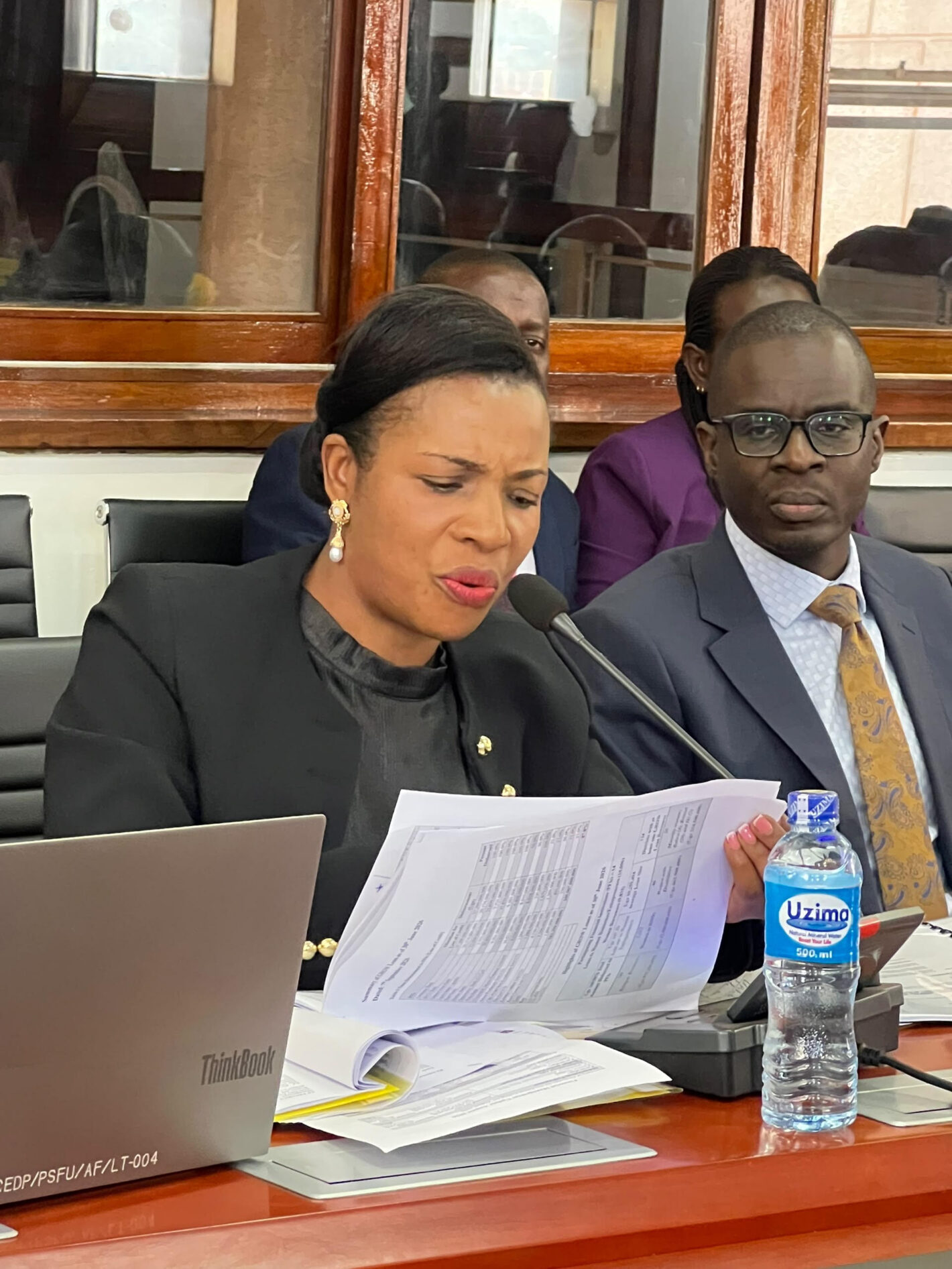
Their frustration came under scrutiny this week when officials responsible for implementing the project appeared before Parliament’s Public Accounts Committee to respond to queries arising from the Auditor General’s report.


The hearing exposed a troubling gap between the ambitious promise of GROW and the experience of some of the women it was created to support.
Bunyaruguru Member of Parliament Benjamin Cadet told the committee that more than 30,000 women in Rubirizi District had been mobilised and registered through Centenary Bank but had not received the financial support they were expecting.
He said many of the women had gone through the process at considerable personal cost, travelling long distances and spending money on transport and bank account opening fees, only to remain without the promised financing.
“The women came, walked, used boda bodas, opened bank accounts, and for over two years, nothing,” Cadet told the committee.
For the women involved, the issue is not simply about a delayed government programme. It is about expectations created by a project that promised to provide them with capital to expand businesses, increase household incomes and move from small-scale economic activity into more sustainable enterprises.
Instead, many have been left asking why they were mobilised, registered and required to complete banking procedures if the funds were not going to reach them.
The concerns raised by Cadet were not isolated.
Other members of Parliament told the committee that women in Kabarole, Busia and Kagadi districts had encountered similar difficulties accessing GROW financing.
The accounts presented to the committee suggest that the problem is not necessarily a complete absence of money within the programme, but difficulties in getting the financing through the system and into the hands of intended beneficiaries.
GROW Project Coordinator Dr Ruth Aisha Kasolo acknowledged that some women had encountered problems while dealing with participating financial institutions.
In Kabarole, she said, some women were reportedly told by banks that the money was unavailable. In Busia, some beneficiaries had become discouraged after finding the process so difficult that they eventually gave up.
Kasolo also acknowledged that some women in Kagadi had not received the funds.
In one case raised before the committee, women only began accessing the financing after an MP invited GROW officials to explain the programme and its requirements to the beneficiaries.
The intervention points to another challenge facing programmes that depend on beneficiaries understanding complicated eligibility and banking procedures. Where information does not reach communities clearly, even available funding can remain inaccessible.
Kasolo said some women had initially submitted their documents through Pride Bank but later needed to retrieve them and apply through Centenary Bank, which she said was more flexible in handling their applications.
The committee was not satisfied with general explanations.
Members demanded detailed beneficiary lists to establish who had actually received GROW financing, how much had been disbursed and where applications had stalled.
The scrutiny became particularly important when MPs began questioning the project’s overall financial position.
Officials told the committee that GROW received Shs75.4 billion from the World Bank in 2025, while about Shs76 billion had been disbursed under the relevant component.
The figures prompted further questions about how much money was actually reaching women and how much was being spent on other parts of the programme.
Officials explained that the funds received by GROW are distributed across several components, including loans, grants and operational expenses. As a result, the total amount received by the project cannot simply be treated as money available for women borrowers.
But for MPs, the central question remained straightforward: if government has mobilised women, registered them and encouraged them to establish banking relationships in anticipation of financing, where exactly is the money getting stuck?
The committee’s concern reflects a broader problem that has repeatedly affected public programmes in Uganda.
Government projects are often launched with ambitious targets to create employment, increase household incomes and stimulate economic activity among vulnerable groups. Yet the distance between policy design and the final beneficiary can be considerable.
For a woman running a small shop, tailoring business, food enterprise or agricultural venture, a delayed loan is not merely an administrative inconvenience. It can mean a missed business opportunity, lost customers or an inability to purchase stock at the right time.
The cost of delay can also undermine confidence in government programmes.
Women who spend money travelling to registration centres, opening bank accounts and preparing documents may reasonably expect that the next stage will be access to financing. When that does not happen for months or years, the programme risks being viewed as another government initiative that promises more than it delivers.
Committee chairperson Patrick Oshabe Nsamba said the problem should be viewed in the wider context of government interventions intended to improve livelihoods.
He warned that government programmes may be created with the objective of creating jobs and improving household incomes, but ordinary citizens can fail to benefit when implementation does not work as intended.
The GROW project was established to address a specific economic challenge: helping women entrepreneurs move beyond subsistence and micro-level enterprises and develop businesses capable of growing into small and medium enterprises.
Funded by the World Bank and implemented through the Ministry of Gender, Labour and Social Development and the Private Sector Foundation Uganda, the programme is built around the idea that access to finance and business support can help women expand their enterprises and contribute more substantially to the economy.
That objective, however, depends on the money reaching the intended beneficiaries.
The parliamentary hearing has therefore shifted attention from how much money GROW has received to a more fundamental measure of success: how many women have actually benefited.
In Kagadi, officials told MPs that Centenary Bank had disbursed 53 loans, Pearl Bank eight, Pride Bank two and UGAFORD 14. The figures provide a starting point for Parliament’s attempt to establish the scale of actual access compared with the number of women mobilised and registered.
The committee has now demanded detailed beneficiary and disbursement records from GROW officials.
The records are expected to help MPs trace the journey of the money from the project to participating financial institutions and ultimately to individual women.
For the women who have waited for years, that scrutiny comes after the damage caused by uncertainty has already been felt.
Their experience raises a critical question for GROW and other government programmes: is success measured by the amount of money allocated and the number of people registered, or by whether the intended beneficiary actually receives the support?
Until that question is answered with clear records and evidence of disbursement, the parliamentary investigation is likely to continue focusing on the gap between government spending and the people that spending is supposed to transform.










 English