

















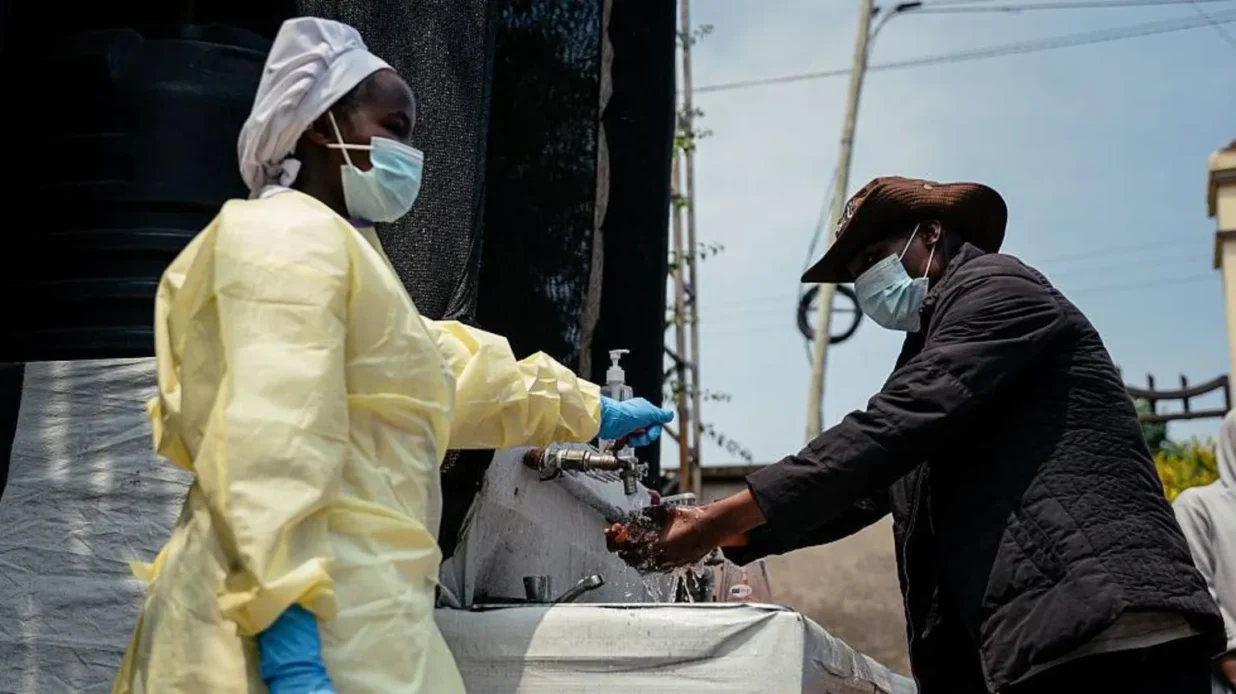
The Africa Centres for Disease Control and Prevention (Africa CDC) has pushed back against recent travel restrictions imposed by the United States in response to the ongoing Bundibugyo Ebola outbreak, warning that such measures could undermine efforts to contain the disease across the region.
The US government recently placed Uganda, the Democratic Republic of the Congo, and South Sudan under a Level Four travel advisory, cautioning citizens against travel to the affected countries.

Rwanda was meanwhile placed under a Level Three advisory, with travellers advised to reconsider travel. The restrictions also affect non-US citizens who have recently travelled to the impacted countries.
In a statement issued Wednesday, Africa CDC said it was concerned that the travel measures risk creating fear and economic disruption at a time when regional health authorities are intensifying coordinated response efforts.
The continental health body said it had acted swiftly after confirmation that the outbreak had spread beyond one country, declaring the situation a Public Health Emergency of Continental Security on May 15, 2026.
Africa CDC noted that since the outbreak was confirmed, it has maintained regular communication with member states, development partners, health experts, and the media in an effort to ensure transparency and timely information sharing.
While acknowledging the longstanding partnership between the United States and African countries in areas such as disease surveillance and emergency response, the agency argued that blanket travel advisories and entry restrictions are not the most effective tools for managing outbreaks.
According to the statement, effective public health responses should instead focus on science-based interventions, international cooperation, rapid outbreak control, and support for frontline health systems.
Africa CDC warned that broad travel bans and border restrictions can discourage transparency, disrupt economies, complicate humanitarian operations, and force people to use unofficial border crossings that are harder to monitor.
Director General Jean Kaseya said the quickest way to protect global populations is to strengthen outbreak control measures at the source rather than relying primarily on border restrictions.
He added that global health security depends on trust, collaboration, and investment in preparedness systems.
The agency also expressed frustration over the lack of approved vaccines and treatments specifically targeting the Bundibugyo strain of Ebola, nearly 20 years after it was first identified.
Africa CDC argued that diseases affecting African populations have historically received less urgency in global medical research, noting that major international investment in Ebola vaccines accelerated only after outbreaks threatened regions outside Africa.
The organization called on the international community to increase support for affected countries through funding, laboratory capacity, surveillance systems, infection prevention measures, and deployment of medical and emergency response teams.
It also appealed for greater investment in research aimed at developing vaccines and therapeutics for all Ebola strains, including the Bundibugyo variant.
Africa CDC emphasized that its emergency declaration was intended to mobilize resources and political action, not to trigger panic or isolation of affected countries.
The agency reaffirmed its commitment to supporting Uganda, DRC, South Sudan, Rwanda, and other countries considered at risk, while urging governments worldwide to avoid unnecessary travel and trade restrictions that could inflict economic harm without significantly improving public health outcomes.









 English