

















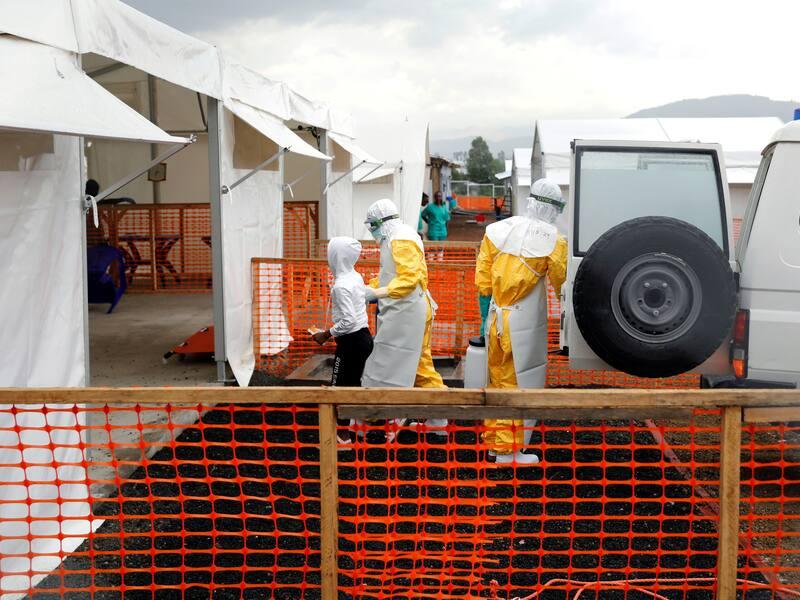
Authorities in western Uganda have suspended movement across parts of the Uganda–Democratic Republic of Congo frontier in response to a renewed Ebola outbreak reported in eastern Congo.
The temporary closure targets the Ishasha and Kyeshero border crossings in Kanungu District, key transit routes commonly used by traders and travelers moving between the two countries.


District leaders announced the measure after an emergency meeting of the Kanungu Ebola surveillance task force held on Monday. Officials said the move is intended to strengthen prevention efforts and reduce the risk of the virus entering Uganda.
Kanungu Resident District Commissioner Ambrose Amanyire said all cross-border movement through the affected entry points has been suspended until health authorities are satisfied that the outbreak is under control.
Local authorities have also intensified public awareness campaigns in border communities, with health teams educating residents on Ebola signs, transmission, and preventive measures.
Neighboring Kisoro District is meanwhile considering similar action. Resident District Commissioner Badru Ssebyala said district officials are expected to convene later this week to review the situation and determine whether restrictions should be introduced at the Bunagana and Busanza-Kitagoma border posts.
Across the border in the Democratic Republic of Congo, rebel-controlled areas in North Kivu remain under heightened health surveillance after confirmation of an Ebola case in Goma City.
Lawrence Kanyuka, spokesperson for the M23/AFC rebel alliance, said a woman diagnosed with Ebola is receiving treatment in Goma, while another suspected case reported in Bukavu later tested negative.
According to officials in Congo, health teams have traced nearly 200 contacts linked to the confirmed patient as investigations continue. Samples collected from suspected cases have been submitted for laboratory testing, with some already returning negative results while others remain under analysis.
Health workers continue urging residents in border areas to remain alert and observe preventive guidelines, including regular handwashing, avoiding physical contact with suspected patients, and reporting symptoms early.
Medical experts say Ebola symptoms commonly include high fever, headache, vomiting, diarrhoea, fatigue, muscle pain, and in severe cases unexplained bleeding.










 English