














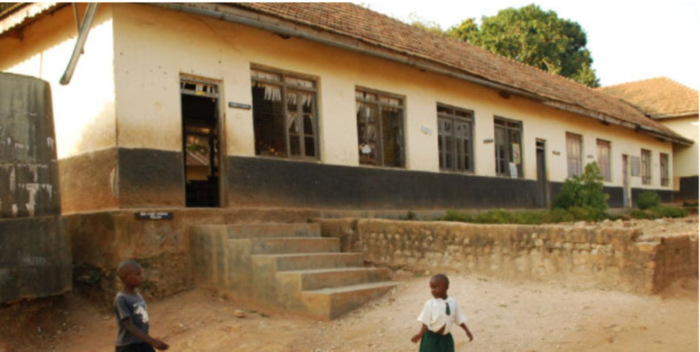
The government’s ambitious programme to refurbish and expand some of Uganda’s oldest secondary schools has stalled over unresolved land ownership issues involving foundation bodies.
For more than two decades, authorities have been planning to modernise over 120 traditional secondary schools under the Uganda Learning Acceleration and Enhancement Programme (ULEARN), a project financed by the World Bank and the Global Partnership for Education (GPE).


However, implementation has hit a snag after several religious institutions and community trustees reportedly declined to transfer or subdivide land titles in favour of the affected schools.
Sources familiar with the project revealed that many foundation bodies remain unwilling to issue independent certificates of title required before government-funded construction can begin.
Under the project guidelines, schools must hold land titles registered in their own names before funds for rehabilitation and expansion can be released. Yet many of the targeted institutions sit on land controlled by churches, dioceses, or private trustees rather than the state.
The delays were highlighted in a report by Parliament’s Committee on Education and Sports during scrutiny of the Ministerial Policy Statement and Budget Estimates for the 2026/2027 financial year.
According to the committee report, the signing of Grant and Credit Financing Agreements for the project, expected in December 2025, was not completed in time, slowing down the rollout of the programme.
The report further noted that by the close of December 2025, actual rehabilitation works had not commenced despite completion of several preparatory activities because the financing agreements had not yet become effective.
Speaking on the matter, Ministry of Education and Sports spokesperson Dr Denis Mugimba confirmed that negotiations are ongoing to resolve the land ownership impasse. He said the ministry is engaging relevant stakeholders at high executive levels because the issue is affecting implementation timelines.
Dr Mugimba warned that prolonged delays could jeopardise the programme due to strict timelines attached to funding from development partners. He added that government may seek Cabinet guidance as options for extending deadlines remain limited.
Uganda has previously faced similar conflicts between government and foundation bodies, particularly during the construction of seed secondary schools in different districts. In several cases, projects stalled after landowners resisted issuing separate land titles to schools.
That earlier standoff was eventually resolved following intervention by President Yoweri Museveni, who directed that schools acquire independent land titles while original documents were to be secured under the custody of the Bank of Uganda.
The delayed renovation programme comes at a time when many traditional schools are struggling with aging infrastructure, overcrowded classrooms, and inadequate dormitory space due to increasing enrolment under Universal Secondary Education (USE).
While a few institutions have benefited from support by strong alumni associations, many schools without active old students’ networks continue to operate in deteriorating facilities that have gone decades without major renovation.
Besides secondary schools, the ULEARN initiative is also expected to finance the rehabilitation of more than 65 primary schools nationwide.
The five-year programme is projected to mobilise over US$563.7 million, approximately Shs2.11 trillion, through a combination of grants and loans aimed at improving learning conditions, teacher effectiveness, and foundational education outcomes across Uganda’s primary and secondary school system.









 English