












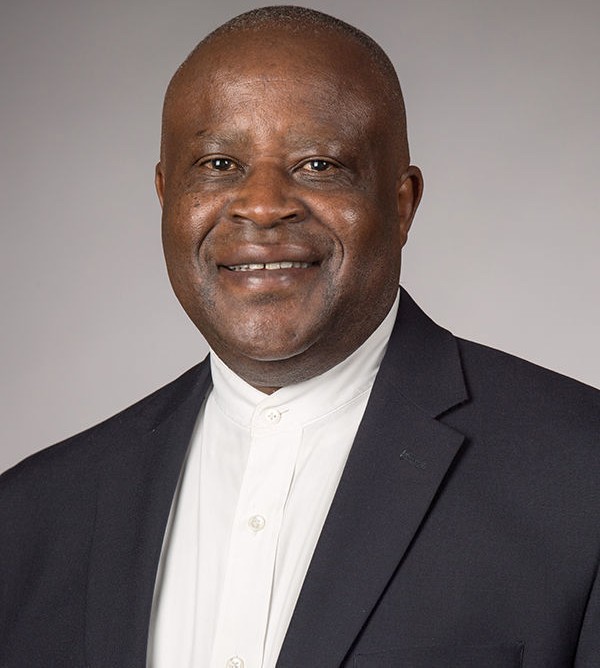
Pope Leo XIV has appointed Ugandan Catholic priest Fr Emmanuel Katongole as a consultor to the Vatican’s Dicastery for Promoting Integral Human Development, a body responsible for guiding the Church’s work on peace, migration, healthcare, social justice and environmental protection.
The appointment was announced by the Holy See Press Office on August 18, 2026, among a list of 12 new consultors selected by the Pope. The appointees are scheduled to begin their five-year mandate on September 1.
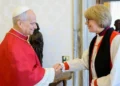
Fr Katongole, a priest of the Kampala Archdiocese, is Professor of Theology and Peace Studies at the University of Notre Dame in the United States, where he also directs the Ansari Institute for Global Engagement with Religion.
He becomes the second Notre Dame faculty member appointed to the new group of consultors, alongside Prof Clemens Sedmak, director of the university’s Nanovic Institute for European Studies.
Consultors provide specialist advice to the dicastery’s leadership on matters within its mandate. Vatican guidelines state that they are selected from among Catholics distinguished by expertise, proven ability and prudence.
The Dicastery for Promoting Integral Human Development was established by Pope Francis in 2016 through the merger of four pontifical councils. Its responsibilities include promoting justice and peace, supporting migrants and refugees, advancing healthcare initiatives and coordinating the Church’s charitable and ecological efforts.
The dicastery is also undergoing a leadership transition, with Sr Alessandra Smerilli appointed Prefect and Cardinal Fabio Baggio named Pro-Prefect. Both are expected to assume their new responsibilities on September 1.
Other consultors appointed alongside Fr Katongole include Msgr Peter Klasvogt, Fr Francesco Coluccia, Fr Joseph Jeyaraj Swaminathan, Omer S. Combary, Lucy Afandi Esipila of Caritas Africa, Paolo Foglizzo, Peter G. Kirchschläger, Kathryn A. Koch, Jacqueline Remond and Caren Rodrigues.
From Kampala To Global Academia
Fr Katongole was ordained a priest of the Kampala Archdiocese in 1987 and began his pastoral ministry as an assistant parish priest at Christ the King Parish in Kampala.
He served there for about a year before entering seminary formation and beginning an academic career.
In 1988, he joined National Seminary Katigondo in Masaka as a lecturer. He spent more than a decade at the seminary, eventually rising to the rank of Assistant Professor of Philosophy.
His academic journey later took him to Rome and Belgium, where he studied philosophy and obtained a doctorate from the Catholic University of Louvain.
In 2000, he left Katigondo to pursue further studies and teaching opportunities abroad, eventually joining Duke University Divinity School in the United States.
At Duke, he became a founding co-director of the Duke Center for Reconciliation, further establishing his academic work around theology, peace, politics and reconciliation.
He later joined the University of Notre Dame, where his work has focused on theology, peace studies, religion and public life, particularly in relation to Africa.
Katongole is also an author whose publications include The Sacrifice of Africa and Born From Lament, works that examine questions of theology, politics, violence, reconciliation and Africa’s social challenges.
Work With Young Ugandans
Beyond academia, Fr Katongole has maintained a strong connection to Uganda through the Bethany Land Institute, a training centre in Kasana-Luweero Diocese that he co-founded with two other priests.
Established in 2012, the institute provides training in regenerative agriculture, environmental conservation and economic entrepreneurship, with a focus on empowering young people.
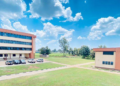
The institute has since expanded into a 400-acre campus combining agricultural training, forest restoration and pastoral formation.
His appointment to the Vatican dicastery adds another dimension to his longstanding work on peace, human development, environmental stewardship and social transformation.
As a consultor, Fr Katongole will contribute his academic and practical experience to the dicastery as it addresses some of the Catholic Church’s major global concerns, including human dignity, migration, healthcare, poverty, peacebuilding and care for the environment.




 English