


















Parliament has begun consideration of a new proposal aimed at strengthening Uganda’s lower courts in a bid to speed up the delivery of justice and reduce the growing backlog of cases in the country’s judicial system.
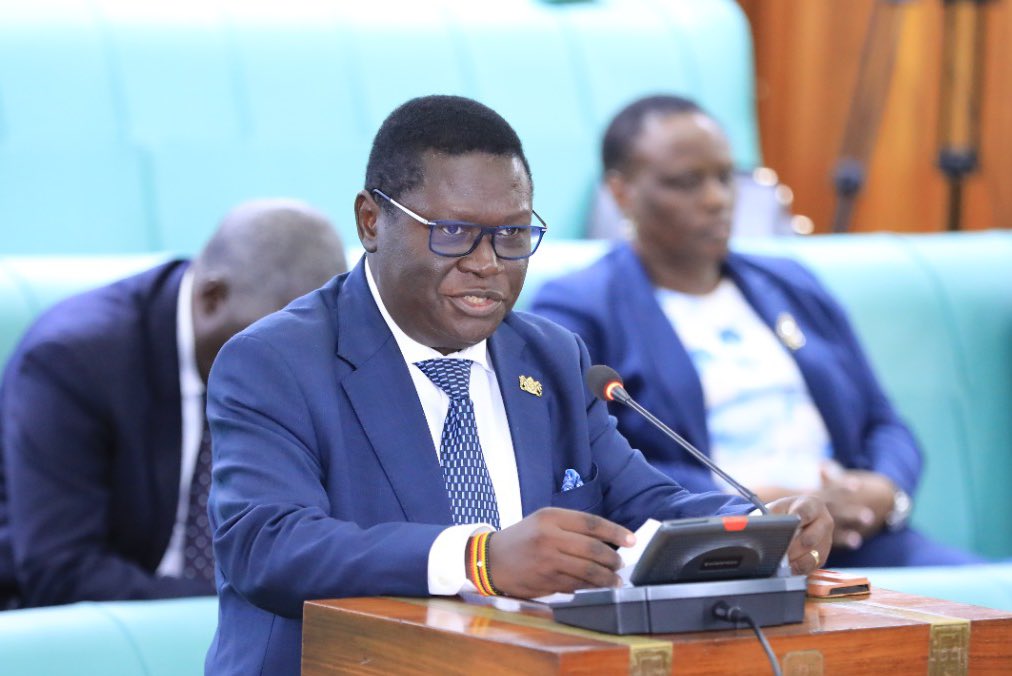
The Magistrates’ Courts (Amendment) Bill, 2026, presented for its first reading on Thursday by Justice and Constitutional Affairs Minister Norbert Mao, seeks to widen the financial jurisdiction and operational authority of magistrates’ courts across the country.


Shortly after the bill was introduced, the Speaker of Parliament, Anita Among, referred the proposed legislation to the Committee on Legal and Parliamentary Affairs.
The committee, chaired by Stephen Baka Mugabi, has been given seven days to examine the bill and report back to the House.
The reforms target the current Magistrates’ Courts Act, which was last substantially revised in 2007.
Government argues that the existing law limits the ability of lower courts to handle many cases, forcing litigants to seek justice in higher courts that are already overstretched.
Under the proposed amendments, Chief Magistrates’ Courts would be allowed to preside over civil disputes involving up to Shs100 million, up from the current limit of Shs50 million.
Meanwhile, Magistrates’ Courts would handle cases valued at Shs50 million, an increase from the existing Shs20 million threshold.
According to Mao, expanding these limits would enable more disputes to be resolved at the community level, easing pressure on the High Court and bringing justice services closer to ordinary citizens.
The bill also introduces a series of administrative and procedural adjustments aimed at improving efficiency within the court system.
Among the proposals is the removal of references to the Magistrate Grade II position, which no longer exists under the judiciary’s revised staffing structure.
The amendments would also permit Chief Magistrates to transfer cases that have been filed in the wrong court to the correct jurisdiction rather than dismissing them, a move expected to reduce delays and additional costs for litigants.
Additionally, the bill proposes increasing the maximum fines that magistrates can impose in criminal matters.
Transitional provisions included in the legislation would also allow some cases currently before the High Court to be transferred to magistrates’ courts if they fall within the newly proposed financial limits.
Government says the urgency of the reforms is highlighted by findings from the Judiciary National Court Case Census 2025, which revealed heavy congestion across Uganda’s courts.
The census shows that 167,353 cases are currently pending nationwide, of which 46,542 are classified as backlog.
The High Court alone has 70,006 pending cases, including 25,098 backlog matters, while Chief Magistrates’ Courts account for 64,937 pending cases.
The report also indicates that 2,327 cases have remained unresolved for more than a decade.
In addition, civil disputes worth Shs14.2 trillion are tied up in litigation, funds that could otherwise be circulating within the economy.
The proposed reforms are consistent with priorities outlined in the Judiciary’s Sixth Strategic Plan for 2025/26–2029/30, which emphasises expanding the jurisdiction of magistrates and decentralising justice services as key measures to improve efficiency.
The bill is also anchored in Article 129 of the Constitution, which provides for the structure of courts in Uganda and empowers Parliament to determine their jurisdiction.
If Parliament passes the amendments, thousands of cases could be handled at the lower court level, potentially speeding up dispute resolution and reducing the cost of litigation for many Ugandans.










 English