

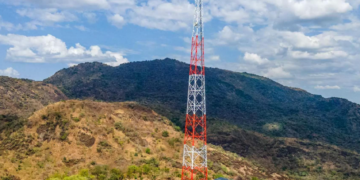

















On the scattered islands of Kalangala District, nestled in the vast waters of Lake Victoria, a crisis is quietly unfolding.
Power exists — but rarely stays on. For businesses, health facilities, and ordinary households, unreliable electricity has become the new normal, threatening livelihoods, disrupting essential services, and casting doubt on the sustainability of Uganda’s energy policies.


Once reliably powered by a solar energy system managed by Kalangala Infrastructure Services (KIS), the district transitioned in recent years to a marine cable connection from the mainland.
The goal was to modernize and stabilize energy access, promising 95% reliability. But for many island residents and local leaders, that promise remains unfulfilled.
“The solar system wasn’t perfect, but at least we had backup,” says Resty Nakawungu, the district’s LC5 Vice Chairperson.
“Now, we are completely at the mercy of an unstable cable — and businesses are suffering.”
Kalangala’s current power source is linked to the national grid via Masaka, a densely populated region already struggling with overloaded transformers and erratic supply.
The result is a wave of blackouts, surges, and brownouts that sweep unpredictably through Kalangala’s islands — where alternative power options are scarce.
“Salons, beverage shops, stationaries, they’re all losing customers and stock,” Nakawungu says. “Even Kalangala Health Centre IV is affected. Imagine losing power mid-treatment.”
A Safety Net Removed
During the solar energy era, KIS maintained backup generators to ensure uninterrupted power during outages or overcast conditions. However, this safety net was recently dismantled.
Andrew Kilmal Lajul, Managing Director of KIS, confirmed that the government had directed the company to decommission the generators by October 2, citing the solar system’s redundancy under the new grid connection.
“The solar plant has been declared redundant, but the reality on the ground is very different,” Lajul notes.
The move has left many questioning the logic of phasing out an already-functioning system — especially in a district where the grid connection is anything but reliable.
Leaders Demand Rethink
Local leaders and MPs are now urging the government to revisit the agreement with KIS, and explore practical solutions before the situation worsens.
Hellen Nakimuli, District Woman MP for Kalangala, has emerged as a key voice in the campaign for a dedicated power line — one that bypasses Masaka’s overburdened infrastructure.
“The current setup is not only unreliable — it’s dangerous,” Nakimuli says. “We need a dedicated cable to ensure consistent and safe electricity for the people of Kalangala.”
Nakimuli’s call reflects broader concerns that the district’s unique needs — as an archipelago of 84 islands — are being overlooked in national planning.
Despite being a tourism and fishing hub with growing infrastructure demands, Kalangala still operates as though it were off-grid.
A New Purpose for Solar?
One potential solution gaining traction is to relocate the now-idle solar infrastructure to other parts of Kalangala that remain off-grid.
Several islands still lack access to electricity, despite hosting schools, health centers, and growing populations.
Resident District Commissioner Fred Badda supports the idea, suggesting the solar assets be moved to a “high-population, underserved island where they can still make a difference.”
“This isn’t about clinging to the past,” Badda says. “It’s about using the resources we have to solve real problems — before things get worse.”
Living in the Flicker
In the meantime, islanders continue to adapt. Candles are stocked like essentials. Generators hum where fuel allows. Fridges are unplugged to avoid damage from sudden surges.
“Without stable power, we are paralyzed,” says Jane Kawuma, a salon owner in Kalangala town. “Some days we open late or not at all. Our dryers are useless.”
The contrast is jarring: a district once celebrated as a model of renewable innovation is now left in the dark — literally and figuratively — by weak transformers and bureaucratic inertia.
As the sun sets over Lake Victoria, Kalangala’s lights flicker on… and then off again. For its residents, hope is fading nearly as fast.








 English