















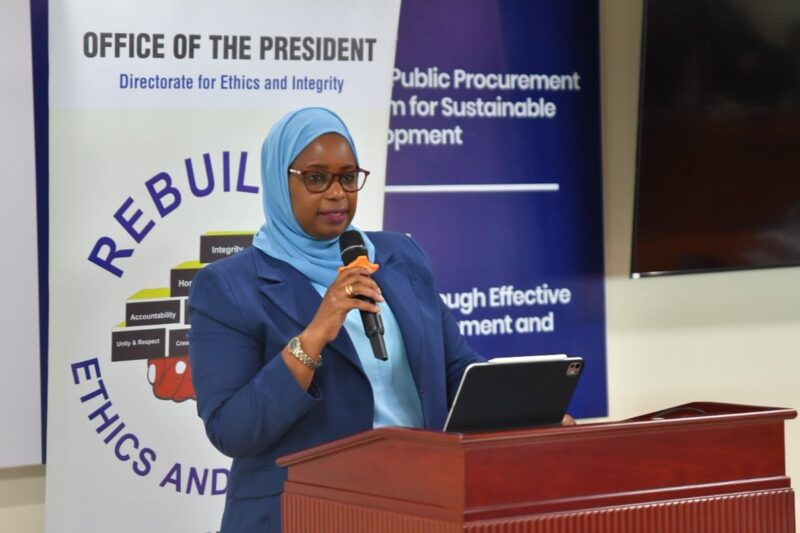
The Inspector General of Government (IGG), Aisha Batala Naluzze, has called for the swift finalisation and implementation of the draft Anti-Corruption (Confiscation and Recovery Orders) Rules, 2026, describing the regulations as a major step towards strengthening Uganda’s asset recovery framework and intensifying the fight against corruption.
Naluzze made the call while closing a National Validation Workshop on the draft Rules held at the headquarters of the Public Procurement and Disposal of Public Assets Authority (PPDA) in Kampala.


The workshop brought together members of the Inter-Agency Forum Legal Task Force and representatives from key government institutions to review and validate the proposed regulations ahead of their formal adoption.
Commending stakeholders for their contributions, Naluzze said the Rules are intended to operationalise Section 73 of the Anti-Corruption Act by providing a clear procedural framework for the implementation of confiscation and recovery orders.
She noted that the absence of comprehensive procedural guidelines has for years hindered effective asset recovery efforts, creating challenges in the management of confiscation proceedings, administration of recovered assets, and enforcement of recovery orders.
“The absence of clear procedural rules has created challenges in managing confiscation proceedings, administering recovered assets, and ensuring consistent enforcement of asset recovery measures,” Naluzze said.
Under Uganda’s anti-corruption laws, courts have the power to order the confiscation of assets linked to corruption-related offences. However, legal and administrative gaps have often complicated the tracing, preservation, management and recovery of illicitly acquired assets, weakening the effectiveness of the country’s asset recovery regime.
According to Naluzze, the proposed Rules seek to address these shortcomings by establishing clear procedures for confiscation and recovery processes, thereby promoting greater consistency, transparency and accountability in enforcement.
She emphasized that corruption remains one of the greatest obstacles to national development, undermining public service delivery and depriving citizens of resources intended for essential services.
“Corruption deprives citizens of resources meant for essential public services, and effective asset recovery is a key mechanism for restoring public trust and ensuring that illicit gains do not remain in the hands of wrongdoers,” she said.
The IGG observed that asset recovery is increasingly recognised worldwide as a critical pillar of anti-corruption efforts because it not only holds offenders accountable but also enables governments to reclaim stolen resources and redirect them towards development programmes and public services.
Once adopted, the Rules are expected to strengthen enforcement mechanisms, improve the management of recovered assets and close long-standing gaps that have limited the recovery of proceeds derived from corruption.
Naluzze further noted that the new framework would enhance Uganda’s compliance with regional and international anti-corruption obligations, particularly under the United Nations Convention Against Corruption (UNCAC), the principal global treaty aimed at preventing and combating corruption.
Uganda ratified UNCAC in 2004 and has since undertaken a series of legislative and institutional reforms to promote transparency, accountability and the recovery of illicit assets. Asset recovery is one of the convention’s cornerstone principles and requires member states to establish effective systems for tracing, freezing, confiscating and returning proceeds of corruption.
The IGG urged all stakeholders to maintain the spirit of collaboration demonstrated throughout the validation process and to take collective responsibility for ensuring the Rules are finalised and implemented without delay.
She stressed that sustained cooperation among government agencies, investigators, prosecutors, the judiciary and other key stakeholders will be vital in ensuring the new framework delivers tangible results in the fight against corruption.
The draft Rules are expected to provide greater legal certainty in confiscation proceedings, strengthen the management of recovered assets and reinforce Uganda’s broader efforts to safeguard public resources, promote accountability and enhance public confidence in governance institutions.








 English