
















The Inspector General of Government (IGG) has ordered the dismissal of four public officials from Bundibugyo, Dokolo, and Koboko districts after investigations revealed they used forged academic documents to obtain jobs and promotions in the public service.
According to a statement from the IGG’s office, the officials submitted falsified academic credentials, some of which were used to secure court-awarded compensation or promotions.


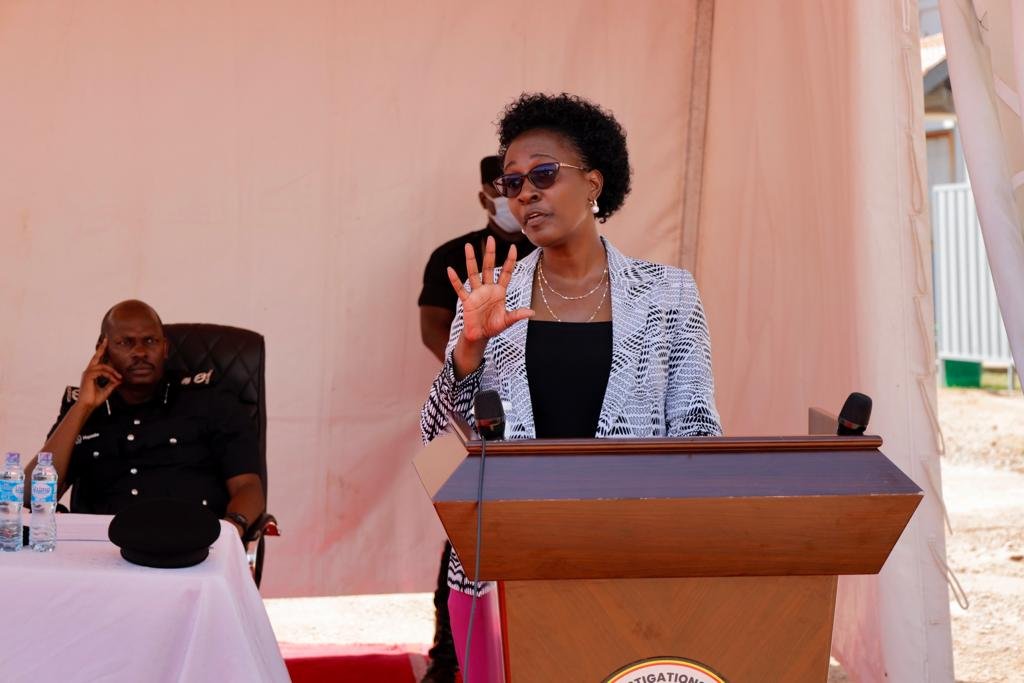
“The orders were signed by the Deputy Inspector General of Government, Mrs. Anne Twinomugisha Muhairwe, following successful investigations by the Inspectorate of Government,” the statement read.
The implicated officials are Charles Agaba and Eve Ithungu from Bundibugyo District Local Government, David Dimba Kenyi from Koboko Municipal Council, and Okello David Livingstone from Dokolo District Local Government.
In Bundibugyo, Charles Agaba, an Assistant Inventory Management Officer, allegedly submitted a forged bachelor’s degree in Procurement and Logistics Management, purportedly issued by Kyambogo University.
According to the IG report, “He submitted a forged Certificate No. KYU–B 10839 and Academic Transcript No. 027976 to Bundibugyo DLG.” These documents were later used to sue the district after he was denied a promotion in 2019—a case he won, receiving court-awarded compensation of UGX 35 million.
Eve Ithungu is accused of using a forged diploma in Public Administration, allegedly from Uganda Pentecostal University, to secure her appointment as Parish Chief.
In Koboko, David Dimba Kenyi was promoted to Principal Education Officer in 2018 based on a letter allegedly issued by the Uganda National Examinations Board (UNEB), equating his Sudan School Certificate to the Uganda Certificate of Education (UCE).
However, UNEB has since disowned the letter. “The said letter of equivalence formed the basis for his subsequent academic pursuit and employment… UNEB has since denied issuing the said letter,” the IG’s office noted.
In Dokolo, Okello David Livingstone, currently serving as the District Inspector of Schools, is accused of forging his appointment and posting letters.
He allegedly claimed to have been appointed under a minute that actually belonged to another individual and presented fake posting instructions from the Ministry of Education and Sports to justify his deployment to Kangai Secondary School in 2007. These documents were later used to support his promotion in 2018.
According to the IGG, these acts constitute criminal offenses under Section 328 of the Penal Code Act, which states: “Any person who knowingly and fraudulently utters a false document commits an offence of the same kind and is liable to the same punishment as if he or she had forged the thing in question.”
Their actions also amount to gross misconduct under the Public Service Standing Orders (2021), which defines such conduct as eroding trust between public officers and their employer—grounds for dismissal in the public interest.
The Inspectorate has raised persistent concerns over the growing number of public servants using forged academic documents, particularly in local governments. Officials warn that such fraud undermines service delivery and deprives qualified candidates of opportunities, amounting to a serious injustice.
The IGG’s office continues to uncover similar cases annually, with some individuals having remained undetected in the system for decades. In one particularly egregious case, a health officer on the government payroll since 1993 was found never to have attended any medical training institution.
In response, the IGG has urged District Service Commissions to verify applicants’ academic credentials directly with awarding institutions. Chief Administrative Officers have also been advised to allocate budgetary resources for routine document verification as a standard part of the recruitment process.







 English