
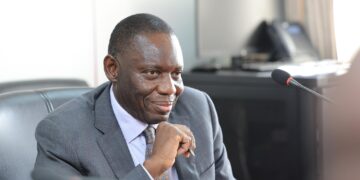

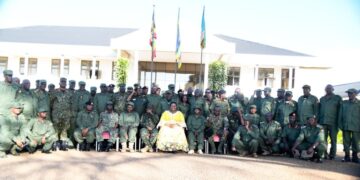















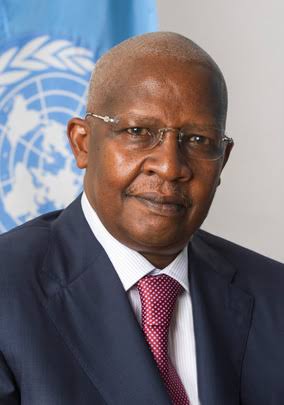
The High Court in Masaka has rejected an application filed by former Foreign Affairs Minister Sam Kutesa seeking to compel a Ugandan woman living in the United States to deposit security for costs in an ongoing land dispute case.
In a ruling delivered by Justice Fatuma Nanziri Bwanika, the court declined to order Alice Nambooze Osaga to provide security for costs in Civil Suit No. HCT-06-LD-CS-0017-2025. The case revolves around ownership of land situated on Mawogola/MSK 547 Folio 6, Block 83 Plot 520.


Osaga dragged Kutesa and another individual to court, accusing them of fraudulent dealings that allegedly led to the loss of her land rights. She is seeking declarations from court recognizing her as the legitimate owner of the disputed property.
Through Kakuru & Company Advocates, Kutesa argued that the lawsuit lacked merit and was intended to harass him. He further contended that Osaga, who resides in the United States, has no known property or steady source of income in Uganda, making it difficult to recover legal costs should the case fail.
But Osaga, represented by Victoria Advocates and Legal Consultants, opposed the application, maintaining that her case raises substantial allegations of fraud that deserve to be fully heard by court. She informed the court that she lives and works in Minnesota in the United States and is financially capable of satisfying any lawful costs order if necessary.
She also argued that her absence from Uganda was linked to the contested property dispute, claiming that Kutesa unlawfully took possession of her residence.
While delivering the ruling, Justice Bwanika noted that courts should exercise caution when considering applications for security for costs because such orders may hinder access to justice.
“The plaint in HCT-06-LD-CS-0017-2025, in its current form, discloses a cause of action against the applicant founded on alleged fraudulent conduct,” the judge ruled.
The court observed that there was no evidence showing that the case was frivolous, vexatious, or an abuse of court process. Justice Bwanika added that evaluating the merits of the suit at this stage would amount to prematurely determining the main dispute.
On the issue of Osaga residing abroad, the judge held that living outside Uganda alone could not justify ordering security for costs.
The court further acknowledged that Uganda and the United States do not have a formal reciprocal enforcement arrangement for court judgments but said it would be speculative to conclude that any future costs order would automatically be unenforceable.
Justice Bwanika also ruled that a litigant’s lack of property or permanent residence in Uganda should not be used to deny them access to court.
“It would be manifestly unjust to use a housing predicament allegedly created by the Applicant as a weapon to bar the Respondent’s access to the seat of justice,” she stated.
The decision now paves the way for the substantive hearing of the land case before the Masaka High Court.





 English