















Amid appreciation for the government’s development efforts, leaders from the Greater Mukono sub-region made a heartfelt appeal to President Yoweri Kaguta Museveni during his recent tour, calling for urgent action on persistent challenges that threaten to hinder the region’s progress.
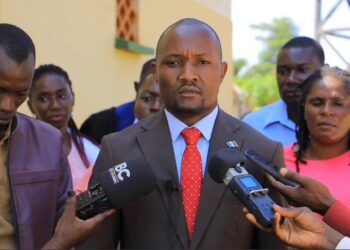
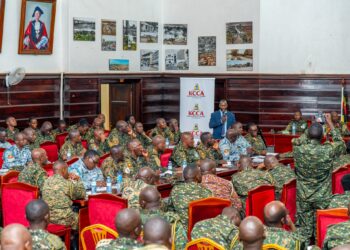
During a meeting held at Mukono Boarding Primary School, the leaders, through a presentation by State Minister for Finance and Planning Amos Lugoloobi, submitted a detailed memorandum.
The document outlined key accomplishments under the current administration while also highlighting unresolved issues that continue to stall inclusive development.
The Greater Mukono sub-region comprises the districts of Mukono, Kayunga, Buikwe, and Buvuma, including the municipalities of Lugazi, Njeru, and Mukono.
According to the 2024 national census by the Uganda Bureau of Statistics, the region is home to approximately 1.7 million people, with Mukono District alone accounting for more than half of this population.
The leaders commended a number of milestones achieved during President Museveni’s tenure. Among them was the completion of the Isimba Hydropower Dam, which generates 183.2 megawatts of electricity and features a bridge connecting Buganda and Busoga via Kayunga.
They also recognized significant developments at Namanve Industrial Park, where over 339 investors have been allocated land, with the park projected to create up to 200,000 quality jobs.
Other achievements cited included the construction of 444 kilometers of tarmac roads within Mukono Municipality and the development of a modern market under the Greater Kampala Metropolitan Area support program.

The government also constructed nine new seed secondary schools through the Uganda Intergovernmental Fiscal Transfers Program. Health facilities, including Kayunga Regional Referral Hospital and several Health Centre IIIs, were also established.
Access to clean water and sanitation has improved through the installation of piped water systems, micro-irrigation schemes, and boreholes. Ferry services now link Kiyindi to Buvuma Island, while the oil palm project has been initiated in Buvuma.
Additionally, the Parish Development Model was rolled out across the sub-region, enabling 18 percent of households previously living at subsistence levels to access funding through the program.
Despite these strides, the leaders expressed deep concern over critical gaps that remain unresolved. They cited the continued underdevelopment of island areas such as Buvuma and Kome, where poor roads, limited public services, and inadequate infrastructure persist.
They also raised alarm over the increasing shortage of industrial land, particularly in Kayunga, which could deter investors interested in replicating the Namanve Industrial Park model.
In Kayunga, the suspension of operations at Shakti Sugar has left many sugarcane farmers stranded.
Ongoing legal disputes and monopolistic practices in the sugar industry have further disrupted livelihoods.
Kayunga Hospital lacks a CT scan and suffers frequent power outages, limiting access to essential medical services, especially for patients requiring advanced diagnostics.
Leaders also noted worsening traffic along the Kampala-Jinja highway and called for alternative roads and rail links to ease congestion.
In Buvuma, the anticipated oil palm project has been delayed due to unresolved land compensation issues, with many Bibanja holders still awaiting payment.
Meanwhile, the electricity infrastructure continues to face rampant vandalism, with no clear agency taking responsibility for restoration.
In response, the leaders presented a series of proposals for immediate government action.
They requested the fast-tracking of key road upgrades, including the Namugongo-to-Lugazi route via Mayangayanga and roads connecting Namanve Industrial Park to surrounding districts.
They also proposed new ferry routes linking Katosi to Kome Island, Kiyindi to Mwena and Bugaya, and Kilongo to Mayuge District, along with the tarmacking of roads within Buvuma and other islands.

The reintroduction of passenger rail services between Lugazi, Namanve, and Kampala was also suggested as a solution to reduce road congestion.
In the health sector, the leaders called for a CT scan for Kayunga Hospital, estimated at 2.74 billion shillings, installation of solar power backups, ambulances for all four districts, and the elevation of Buvuma Health Centre IV to General Hospital status.
On education, they advocated for more government-aided primary and secondary schools, particularly in underserved parts of Kayunga and Buvuma.
To ease pressure on industrial land, they urged the government to acquire and develop more land for investment, especially in Kayunga.
Additionally, they asked for accelerated compensation of landlords and Bibanja holders in Buvuma to facilitate development of the oil palm nucleus estate.
They appealed to President Museveni to intervene in the Shakti Sugar issue and to operationalize the Sugar Council as mandated by law.
In his remarks, President Museveni thanked the leaders for their candid presentation, assuring them that his team would thoroughly review the memorandum and address the most urgent concerns.
He urged them to appreciate the progress made under his administration, recalling the challenges faced in earlier years.
The president applauded success stories from the Parish Development Model, citing farmers in Mukono and Buvuma who have transformed their lives using government funds. He encouraged leaders to actively promote such programs.
President Museveni also advised residents to report crimes at sub-county police stations and avoid tampering with crime scenes, which hinders investigations.
He noted the government’s increased use of surveillance cameras and digital number plates to enhance national security.
As the Greater Mukono region continues its transformation into an industrial and agricultural hub, the issues raised by local leaders underscore the need for deeper, inclusive development.
The memorandum presented was not merely a list of demands—it was a call for urgency, fairness, and forward-thinking leadership.
As the president and his team begin to analyze the proposals, residents across the sub-region remain hopeful that real action will follow the promises.




 English