
















A Nairobi court awarded UGX 4.3 billion in damages to Naila Gureshi and her husband after a botched surgical procedure led to the unauthorised removal of her cervix.
The judgment was issued on Wednesday, June 4, marking a significant legal victory for the couple after nearly two decades of suffering.


Naila was admitted to Aga Khan Health Service Kenya in September 2006 to receive routine treatment for pelvic pain and endometriosis.
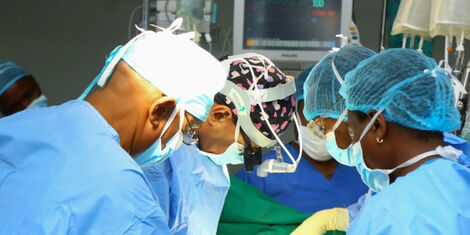
However, the surgery took a tragic turn when the attending gynaecologist performed an unauthorised procedure that resulted in the removal of her cervix—a part of her reproductive system that was never consented for removal.
The High Court ruled that while Naila and her husband had agreed to the removal of her uterus and ovaries, the removal of her cervix was never part of the consented procedure.
The court deemed the act as gross medical negligence and a violation of the patient’s rights.
Following the mishandled surgery, Naila suffered life-altering injuries, including the loss of her ability to work and earn a living.
The physical trauma was compounded by emotional and psychological distress, as well as a significant impact on her marital life.
Breakdown of Compensation Award (in Ugandan Shillings)
The court ordered Aga Khan Hospital to pay UGX 4,297,426,813 in total damages, converted from the original KSh 157,207,524. This amount includes:
- UGX 197,154,629 for special damages related to the cost of corrective treatment in Kenya and South Africa.
- UGX 820,500,000 for the unauthorised removal of the cervix.
- UGX 1,094,000,000 for loss of consortium (marital relationship).
- UGX 547,000,000 for loss of amenities (quality of life).
- UGX 273,500,000 for pain and suffering.
- UGX 547,000,000 for loss of earning capacity.
- UGX 820,500,000 for loss of society and services.
During the trial, it emerged that the gynaecologist responsible for the botched surgery had previously been disbarred from medical practice in Uganda.
Despite this, Aga Khan Hospital allowed him to operate within their facility, a decision that the court said placed the hospital at the center of liability.
Naila testified that the consequences of the unauthorised surgery included the loss of conjugal enjoyment and the inability to satisfy her husband, a reality that deeply strained their marital relationship.
She also explained that her condition requires ongoing and continuous medical care, for which the couple is also pursuing compensation to cover future medical expenses.
This landmark ruling is expected to raise further scrutiny over medical accountability in both Kenya and the wider East African region.






 English