

















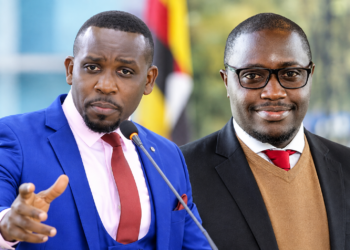
Lumumba Amin, son of former Ugandan president Field Marshal Idi Amin Dada, has called for restraint in the heated public debate surrounding the reported arrest of former Kampala Lord Mayor Erias Lukwago, urging Ugandans to focus on constitutional questions rather than drawing historical comparisons with his late father’s regime.
His remarks come amid mounting criticism over Lukwago’s alleged arrest by soldiers said to be attached to the Special Forces Command (SFC), an operation reportedly directed by Chief of Defence Forces Gen. Muhoozi Kainerugaba. The incident has sparked renewed discussion about the role of the military in civilian matters, due process, and respect for constitutional safeguards.


Lumumba Amin said he was troubled by attempts to associate his father’s legacy with contemporary political events, arguing that any assessment of Lukwago’s arrest should be guided by facts and the law.
“People have suddenly started mentioning my late father in matters for which he bears no responsibility,” he said, adding that such comparisons should not be made without carefully examining the circumstances surrounding the arrest.
According to Lumumba Amin, the primary concern should be establishing whether the arrest was conducted within the framework of Uganda’s laws.
“What exactly was he arrested for? What offence is alleged under Ugandan law, and what evidence supports it?” he asked. “These are the issues that should be clarified before conclusions are drawn.”
He stressed that public confidence in the justice system depends on transparency and accountability, insisting that authorities must clearly explain the legal basis for any arrest.
“Even if someone is eventually released, there should still be clarity about why they were taken into custody in the first place. It should be evident that the arrest was not arbitrary or an abuse of power,” he said.
Lumumba Amin’s comments have brought renewed attention to constitutional protections governing arrest and detention. Article 23 of Uganda’s 1995 Constitution guarantees personal liberty, requires that arrested persons be informed promptly of the reasons for their detention in a language they understand, and mandates that they be brought before a competent court within 48 hours.
Article 28 guarantees the right to a fair hearing, while Article 20 obliges all state institutions and public officials to uphold and protect fundamental rights and freedoms. The Criminal Procedure Code Act further stipulates that arrests must be based on lawful authority, reasonable suspicion, and recognised criminal offences.
Maintaining that arrests must always be tied to specific legal grounds, Lumumba Amin appealed for patience as details surrounding Lukwago’s case emerge.
“I ask the public to wait for the facts. Once we know precisely what offence the former Lord Mayor is alleged to have committed, then we can debate the matter from an informed position,” he said.
He extended a similar appeal to members of the international community who have expressed concern over reports involving opposition politicians and alleged human rights abuses.
However, opposition leaders have continued to portray Lukwago’s arrest as part of a broader pattern of repression.
Former Kira Municipality MP and spokesperson of the People’s Front for Freedom (PFF), Ibrahim Ssemujju Nganda, said he was relieved that Lukwago had reportedly been transferred to Luzira Prison, arguing that detention in a recognised civilian facility offers greater legal protection than military custody.
Drawing parallels with the detention of the late Hajji Aziz Kasujja during Idi Amin’s administration, Ssemujju noted that military officers at the time allegedly advised Kasujja that prison was safer than remaining in military hands.
“Today, many people feel more comfortable knowing Lukwago is in Luzira than being held in military detention,” he said, suggesting that such sentiments reflect growing public anxiety over extra-judicial detention.
Meanwhile, National Unity Platform president Robert Kyagulanyi, popularly known as Bobi Wine, accused the government of employing tactics reminiscent of Uganda’s authoritarian past.
“You can abduct and torture him, but you cannot break his resolve,” Kyagulanyi said, arguing that the methods used against political opponents expose institutional weakness rather than strength.
Kyagulanyi further alleged that facilities in Mbuya and the former State Research Bureau headquarters in Nakasero symbolise different periods in Uganda’s long struggle over state power. He also criticised Uganda’s international partners for maintaining support for the government despite recurring allegations of human rights violations.
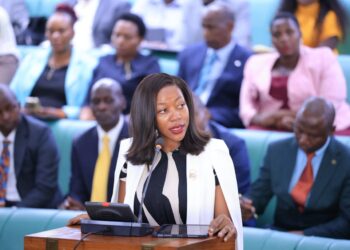
Speaking on the broader issue of constitutional safeguards, Pauline Nansamba Mutumba, Director for Complaints, Investigations and Legal Services at the Uganda Human Rights Commission, said all agencies involved in law enforcement have a responsibility to uphold fundamental rights during arrest and detention.
“Transparency and accountability remain essential in protecting human rights and maintaining public trust in the justice system,” she said.
Lukwago’s reported arrest has become the latest flashpoint in Uganda’s increasingly polarised debate over constitutional governance and security sector accountability. Opposition legislators have since petitioned Parliament to reconvene during recess to discuss allegations of arbitrary arrests, enforced disappearances, military involvement in civilian law enforcement, and non-compliance with court orders.
Leader of the Opposition Joel Ssenyonyi maintains that Parliament has a constitutional obligation to scrutinise credible claims of human rights violations and ensure state institutions remain accountable to the public.









 English