











The High Court has heard a tense cross-examination of election petitioner Jet John Ndamagi Tumwebaze, who was challenged over discrepancies in his names, allegations against Mawogola North MP Aine Godfrey Kaguta Sodo’s academic qualifications and claims of electoral malpractice during the January 15 parliamentary elections.
Tumwebaze, an advocate with Kampala Associated Advocates (KAA), appeared before High Court Judge Bernard Namanya, who was sitting in Kampala, as proceedings continued in Election Petition No. 10 of 2026, in which he is challenging Sodo’s election as Member of Parliament for Mawogola North.
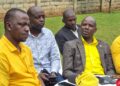

During cross-examination by Sodo’s lawyer, Paul Kutesa, Tumwebaze was asked to explain the basis of his claim that Sodo lacked the minimum academic qualifications required for parliamentary candidature. He was also questioned about the authenticity and sufficiency of the academic documents Sodo submitted to the Electoral Commission (EC).
The lawyer further challenged him over changes in his own names, how he obtained Sodo’s academic records from the EC and allegations of ballot stuffing, military interference and other electoral irregularities.
One of the first areas of contention was the variation in names appearing on Tumwebaze’s academic and nomination documents.
Kutesa drew his attention to his degree certificate, which bears the names John Ndamagi Tumwebaze, while his Ordinary Level academic documents carry the names Tumwebaze John Ndamagi. His nomination papers, however, bear the names Tumwebaze Jet John Ndamagi.
Explaining the differences, Tumwebaze told court that the variations had been addressed through a deed poll prepared in 2007 by Kampala Associated Advocates, adding that Kutesa himself had been involved in the process.
He said he added the name Ndamagi following the death of his father and maintained that his Law Development Centre (LDC) certificate bears all four names.
Asked about his current official name, he said he is known as Jet John Ndamagi Tumwebaze.

Kutesa also questioned him about why he adopted the name Jet and whether the change was connected to a deceased colonel.
Tumwebaze denied any relationship with the late military officer. He, in turn, asked Kutesa whether he had personally adopted his name because of an association with former Foreign Affairs Minister Sam Kutesa.
The lawyer subsequently asked whether Tumwebaze acknowledged that a person could legally change their name through a deed poll.
Tumwebaze agreed but declined to comment on a deed poll belonging to Sodo, saying he had not analysed the document because it was not his.
Kutesa had referred to Sodo’s deed poll and a Gazette notice reflecting his change of names from Aine Godfrey to Aine Godfrey Kaguta Sodo.
The cross-examination later turned to the central issue in the petition: whether Sodo possessed the academic qualifications required to contest for Parliament.
Kutesa asked Tumwebaze to explain his allegation that Sodo’s academic documents were inconsistent and did not establish that he met the statutory education requirements.
Tumwebaze maintained that the documents did not add up, accusing the Electoral Commission of wrongly nominating Sodo despite what he described as a lack of the requisite academic qualifications.
He argued that Sodo did not possess the necessary Primary Leaving Examination (PLE), Uganda Certificate of Education (UCE) and Uganda Advanced Certificate of Education (UACE) qualifications required for parliamentary candidature.
However, when asked whether he had attached evidence to his petition demonstrating that another person existed under the name Aine Godfrey Kaguta Sodo, Tumwebaze answered in the negative.
Kutesa also questioned him about academic verification documents attributed to the Uganda National Examinations Board (UNEB), which Sodo relies on to establish his qualifications.
The lawyer referred to a document indicating that Sodo sat the UACE examinations in 2000, with results showing F9 grades in the subjects presented, apart from Swahili, in which he obtained a pass.
Asked whether he had any reason to doubt the authenticity of the document, Tumwebaze said he could not testify on whether it was authentic or forged.
He, however, maintained that he was dissatisfied with the verification letters because, in his view, they did not constitute academic certificates.
Kutesa pressed him on whether UNEB was the competent institution responsible for verifying academic qualifications, to which Tumwebaze agreed.
The lawyer also asked whether academic certificates had prescribed formats. Tumwebaze said such formats existed and that he had seen them, but insisted that the verification letters produced by Sodo were insufficient to resolve the questions he had raised.
Tumwebaze told court that Sodo had stated under oath that he possessed the requisite academic documents, including UCE and UACE qualifications, but had not presented the certificates he expected to see.
He went further to challenge Sodo over the alleged examination failures, saying he would offer Shs1 million to anyone who could identify a person with more academic failures than the respondent.
Tumwebaze claimed that Sodo had accumulated 11 F9 grades and questioned how someone with such results could aspire to lead others.
He also disputed whether Sodo had personally obtained the alleged results, insisting that the respondent had not presented sufficient academic documents to establish his qualifications.
The petitioner expressed frustration, questioning how someone without the certificates he expected could seek to become a political leader.
The lawyer also challenged Tumwebaze over when he obtained the documents used by the Electoral Commission to clear Sodo’s nomination.
Kutesa told court that the documents relating to Sodo’s nomination had been furnished to Tumwebaze by the Electoral Commission on October 30, 2025.
He argued that Tumwebaze had nevertheless proceeded with the petition despite receiving the records upon which the Commission relied in clearing Sodo’s nomination.
Tumwebaze disputed this account, explaining that what he received on October 30 were verification letters relating to Sodo’s Ordinary and Advanced Level academic qualifications, rather than a complete set of the underlying academic documents.
He said the material was incomplete and contained missing pages, prompting him to write another letter to the EC on December 9, 2025, requesting Sodo’s O’Level and A’Level certificates.
Kutesa challenged this explanation, asking him to identify where, in the December 9 letter, he had complained about missing pages or incomplete records beyond requesting the certificates.
Tumwebaze acknowledged that the letter specifically requested the certificates, adding that his concerns about missing information were raised in another letter the following year.
The lawyer argued that Tumwebaze had not complained about missing pages in his December 2025 correspondence and had only raised the issue in subsequent communication in 2026.
Tumwebaze insisted that the records initially supplied were incomplete and accused the Electoral Commission of frustrating his efforts to obtain the information he required.
He said the complete records were eventually availed to him on April 23, 2026, following another request made in a letter dated February 27, 2026.
Asked whether the documents he subsequently received were different from those initially supplied, Tumwebaze explained that the documents were the same, but the records were different.
He maintained that he had not been in a position to establish whether Sodo was academically qualified by December 9, 2025, because he did not have sufficient information.
Kutesa suggested that by that date Tumwebaze already knew Sodo had not furnished the EC with his O’Level and A’Level certificates.
Tumwebaze rejected the suggestion, saying he was unaware of what Sodo had or had not submitted to the Commission. He insisted that he only had access to incomplete records.
The exchange highlighted the distinction between Tumwebaze’s complaint about the absence of academic certificates and his separate concerns about the authenticity and sufficiency of the verification documents.
When asked whether his petition specifically challenged the authenticity of the verification letters, Tumwebaze said the issue was not contained in his pleadings and that he could not confirm matters relating to documents that did not belong to him.
The cross-examination also addressed the results of the January 15 parliamentary elections, which Sodo won according to the Electoral Commission.
Kutesa asked Tumwebaze to confirm that Sodo had been declared the winner of the Mawogola North parliamentary election.
Tumwebaze declined to recognise the declaration as a legitimate victory, insisting that nobody had won and that Sodo had only been declared the winner.
He told court that he obtained 6,955 votes, while Sodo was declared with 15,923 votes.
Tumwebaze alleged that Sodo secured the victory through ballot stuffing aided by the military, claims that remain contested in the petition.
Kutesa asked him to confirm that the difference between their respective vote totals was 8,968, which Tumwebaze accepted.
The lawyer further asked whether Tumwebaze had specifically pleaded that he was the rightful winner of the election. He answered that he had not.
The questioning then turned to Kawanda polling station in Rutungu Village, within Kabulasoke, where Tumwebaze was asked to explain why he had lost in his home polling area.
He attributed his loss to alleged interference, claiming that the presiding officer had been changed at night.
Kutesa reminded him that he had two polling agents at the station and that both had signed the Declaration of Results Forms (DRFs).
Tumwebaze responded that the agents had signed under duress, alleging that soldiers intimidated and overpowered his supporters in Rutungu.
He further accused the Uganda People’s Defence Forces (UPDF) of taking control of Kawanda Sub-county, assaulting people and disrupting the electoral process.
He went as far as claiming that there had been no credible election throughout Ssembabule District, including the district woman parliamentary race and other constituencies previously represented by Theodore Ssekikubo and National Unity Platform’s Gorreti Namugga.
Kutesa challenged Tumwebaze to demonstrate whether the alleged irregularities had been formally reported to election officials and properly documented in the petition.
Asked whether any complaint had been made to the returning officer at the tally centre, Tumwebaze said he was unaware of any formal complaint lodged by his agent.
He explained that his agent had followed up on the matter but maintained that the affidavits he filed contained complaints made to presiding officers.
The lawyer further asked him to confirm that neither his petition nor the supporting affidavits contained photographic or video evidence of the alleged electoral malpractice.
Tumwebaze disputed the suggestion, saying some affidavits contained photographic evidence, although he acknowledged that there was no video evidence.
The questioning also touched on alleged irregularities at Kabulasoke Community Playground, with Kutesa asking whether the petitioner had raised any specific complaint concerning the polling station in his pleadings.
Tumwebaze answered in the negative, explaining that he had wanted to maintain a good relationship with his neighbours.
He nevertheless maintained his allegations of military interference and intimidation during the elections.
Sodo, meanwhile, has appealed to his supporters to remain calm and wait for the court’s decision.
The hearing follows a ruling by the High Court in Masaka barring Tumwebaze from representing himself as an advocate in the same election petition in which he is the petitioner and a principal witness.
In a ruling delivered electronically on November 24, 2026, Justice Bernard Namanya allowed an application by Sodo challenging Tumwebaze’s decision to personally conduct the case as an advocate.
The court held that Tumwebaze could not simultaneously occupy the roles of petitioner, principal witness and advocate in the proceedings.
Sodo had argued that Tumwebaze’s position was legally untenable because he had sworn the principal affidavit supporting the petition and another affidavit in rejoinder, setting out allegations that would require him to give evidence and potentially undergo cross-examination.
His lawyers from Arcadia Advocates and Byenkya, Kihika & Co. Advocates relied on Regulation 9 of the Advocates (Professional Conduct) Regulations, which prohibits an advocate from appearing in a matter in which they have reason to believe they may be required to testify, either orally or through an affidavit.
Tumwebaze opposed the application, arguing that the regulation was intended to prevent advocates representing clients from becoming witnesses in their clients’ cases.
He maintained that his circumstances were different because he was representing himself and that Order 3 Rule 1 of the Civil Procedure Rules allowed a party to conduct proceedings personally.
He also argued that Sodo had not demonstrated any actual prejudice arising from his decision to appear in person.
However, Justice Namanya rejected that interpretation, holding that Regulation 9 does not create an exception for an advocate who chooses to represent himself.
The court consequently disqualified him from appearing as an advocate in the proceedings and directed that the costs of the application would abide by the outcome of the main petition.
The application had initially been heard on September 29, 2026, before Justice Thomas Ocaya.
Apart from the academic qualification dispute, Tumwebaze accuses Sodo and individuals allegedly associated with his campaign of involving armed UPDF personnel in the electoral process.
He alleges that soldiers were deployed at several polling stations, where they intimidated voters, assaulted election agents and supervisors, and interfered with voting.
Sodo has disputed the allegations, maintaining that he possessed the minimum academic qualifications required by law and that his credentials were verified by UNEB.
He also maintains that discrepancies between the names appearing on his academic records and his official names were legally addressed through a deed poll.
The hearing is expected to resume after a one-hour lunch break.







 English
