








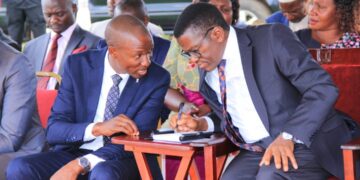

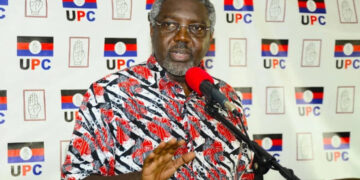
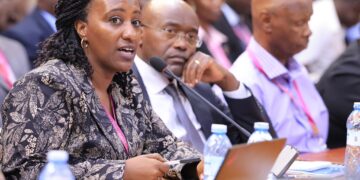

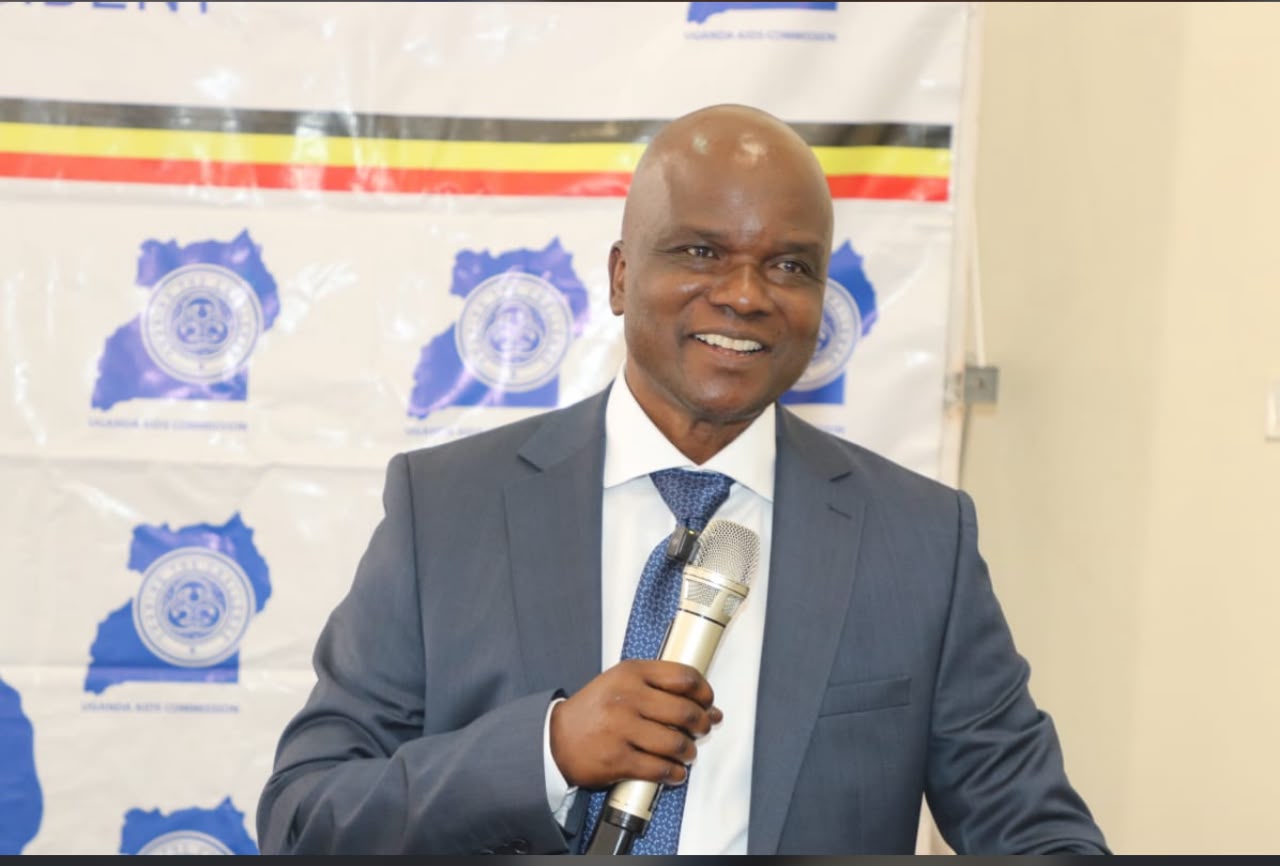
Dr Nelson Musoba, the Director General of the Uganda AIDS Commission (UAC), who spent more than a decade coordinating Uganda’s national response to HIV/AIDS, has died at the age of [age not provided].
Musoba died at 5:45 a.m. on Sunday, November 22, 2026, at Medipal Hospital in Kampala, where he had been receiving treatment for cancer-related complications, according to Milly Babalanda, the Minister for the Presidency, who announced his death.

His death marks the end of a career spanning more than 20 years in the health sector, during which he played a central role in health policy development, strategic planning, donor coordination and strengthening Uganda’s response to HIV/AIDS.
His passing comes at a particularly critical moment for the country, less than two weeks before the December 1 World AIDS Day commemoration, when Uganda is expected to reflect on progress made against the epidemic and the challenges that remain.
Musoba had become a familiar face at national HIV/AIDS engagements, regularly representing the Uganda AIDS Commission at press briefings, policy discussions and public engagements aimed at informing the country about the epidemic.
However, his absence from two major engagements earlier this month had raised questions among colleagues and stakeholders in the health sector.
On November 4, when the Uganda AIDS Commission and Uganda Media Centre held a press briefing to announce preparations for World AIDS Day, Musoba was represented by Tom Eti, the Commission’s Senior Manager for Coordination.
He was also absent from the 2026 National HIV and AIDS Symposium held at Mbarara University of Science and Technology (MUST) from November 16 to 18, where he had been expected to participate in discussions on the country’s progress towards ending AIDS as a public health threat by 2030.
His absence was later understood following the announcement of his death.
Information from sources close to the family indicates that Musoba had sought medical attention after experiencing cancer-related complications. He reportedly underwent medical examinations at the Uganda Cancer Institute before travelling to Nairobi, Kenya, where he underwent surgery.
He was subsequently brought back to Uganda, but the illness had reportedly spread to other organs, leading to his placement under palliative care at Medipal Hospital.
A family source who visited him on November 16 said Musoba appeared aware of the seriousness of his condition and had expressed fears that he might not live much longer.
The family was reportedly surprised by how quickly the illness progressed, particularly because he had been keen on undertaking routine medical examinations.
Although details of his diagnosis and treatment have not been independently confirmed by the family or the Uganda AIDS Commission, Babalanda attributed his death to cancer-related complications.
A career dedicated to public health
Musoba’s contribution to Uganda’s health sector dates back more than two decades, with much of his professional life devoted to strengthening health systems and coordinating programmes targeting major public health challenges.
Between 2007 and 2012, he served as a Senior Health Planner at the Ministry of Health, where he was involved in coordinating Uganda’s office of the Global Fund programmes targeting HIV/AIDS, tuberculosis and malaria.
The programmes were central to Uganda’s efforts to mobilise resources, expand access to treatment and strengthen interventions against the three major diseases.
Before joining the Uganda AIDS Commission, Musoba served as Project Director and Chief of Party for the Monitoring and Evaluation of the Emergency Plan Progress (MEEPP) project.
The USAID-funded project provided technical support to the United States government in monitoring and evaluating the President’s Emergency Plan for AIDS Relief (PEPFAR), while supporting the development of national monitoring and evaluation systems under the Three Ones principle.
His experience in programme monitoring, strategic planning and coordination provided a foundation for his subsequent leadership role at the Uganda AIDS Commission.
Musoba joined the Commission in 2014 as Director of Planning and Strategic Information, where he headed a directorate responsible for coordinating planning processes and generating strategic information to guide the national HIV response.
In March 2017, he was appointed Acting Director General, a position he held until February 2018, when he was confirmed as the substantive head of the institution.
As Director General, Musoba provided leadership to an institution mandated to offer strategic direction and coordinate Uganda’s multisectoral response to HIV/AIDS.
His responsibilities involved working with government ministries, local governments, development partners, civil society organisations and communities affected by HIV to ensure that interventions were coordinated and aligned with national priorities.
Leading the national HIV response
Musoba’s tenure at the Uganda AIDS Commission coincided with a period in which the country continued to expand HIV prevention and treatment programmes while confronting persistent new infections, inequalities in the burden of the epidemic and questions about the sustainability of external funding.
Under his leadership, the Commission continued to coordinate national efforts aimed at reducing new infections, improving access to treatment and strengthening partnerships among institutions involved in the HIV response.
The scale of the challenge was highlighted during a November 4 press briefing, where Commission officials presented the latest figures on the country’s HIV situation.
Dr Vincent Bagambe, the Commission’s Senior Manager for Policy, Planning and Strategic Information, reported that Uganda had an estimated 1.567 million people living with HIV.
New infections had declined from approximately 38,000 to 34,000. However, young people aged between 15 and 24 accounted for 38 per cent of the new infections, with adolescent girls and young women continuing to bear a disproportionate burden.
The figures also revealed regional differences in HIV prevalence, estimated at eight per cent in southwestern Uganda, 7.3 per cent in southern Uganda and 7.2 per cent in northern Uganda.
Key populations, including female sex workers and their clients, fishing communities, truck drivers, people who inject drugs and men who have sex with men, also remained among groups disproportionately affected by the epidemic.
These challenges formed part of the discussions at the National HIV and AIDS Symposium, held under the theme, “Sustainable Interventions to End AIDS as a Public Health Threat by 2030.”
The symposium brought together government officials, researchers, health professionals, development partners and civil society organisations to review the country’s performance under the National HIV Strategic Plan.
Discussions also focused on the sustainability of HIV programmes amid declining external support, the need to increase domestic financing and the importance of scientific research in shaping interventions.
The programme included the annual joint AIDS review, a financing dialogue, scientific meetings and the Philley Bongole Lutaaya Memorial Lecture.
Musoba’s death leaves the Commission without the leader who had overseen its coordination role during these critical discussions and the country’s efforts to achieve the 2030 target.
Tributes from the health sector
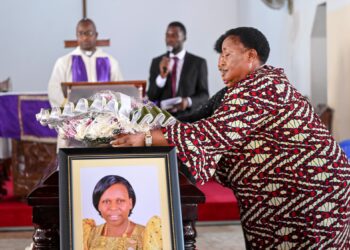
News of Musoba’s death has attracted tributes from government institutions, international organisations and civil society groups that worked with him in Uganda’s HIV response.
Babalanda, who announced his death, described his passing as a major loss to the country, particularly at a time when Uganda was preparing to commemorate World AIDS Day.
She said his dedication, commitment and contribution to the fight against HIV/AIDS would be remembered, adding that his service had left an enduring legacy in strengthening the national response.
The Ministry of Health also mourned his death, describing it as a loss to the health sector and recognising his years of dedicated service and leadership in the fight against HIV/AIDS.
UNAIDS Executive Director Winnie Byanyima described Musoba’s death as a tremendous loss to Uganda’s public health community and international partners.
Byanyima said that throughout his leadership at the Uganda AIDS Commission, Musoba demonstrated an unwavering commitment to strengthening the national HIV response and ensuring that it remained a national development priority.
She credited him with helping guide Uganda’s HIV response through a period of changing global funding arrangements, while advocating for national ownership, stronger coordination and partnerships among government, development partners, civil society and affected communities.
For UNAIDS, Byanyima said, Musoba was more than an institutional counterpart but a trusted partner and colleague whose wisdom and dedication helped advance the shared goal of ending AIDS as a public health threat by 2030.
The Centre for Health, Human Rights and Development (CEHURD) also extended condolences to his family, colleagues and friends, describing his contribution to Uganda’s HIV response and public health advancement as significant.
The Uganda Network on Law, Ethics and HIV/AIDS (UGANET) recognised his leadership, saying his stewardship had helped build an institution whose work and continuity reflected his contribution.
The Jinja Network of Young People Living with HIV described him as a giant whose leadership, wisdom and strategic guidance would not be forgotten.
Other organisations, including AIDS Information Centre Uganda and Centre for Women Justice Uganda, also joined the country in mourning his death.

Dr Musa Lumumba, in a message posted on X, said Musoba’s leadership and years of service had strengthened Uganda’s national HIV/AIDS response and public health systems.
An unfinished national mission
Musoba’s death comes at a time when Uganda is seeking to consolidate gains made in controlling HIV/AIDS while addressing persistent infections, especially among young people, and securing sustainable financing for prevention and treatment programmes.
His professional journey placed him at the centre of many of the institutions and partnerships responsible for shaping the country’s response to the epidemic.
From his early work at the Ministry of Health to his leadership at the Uganda AIDS Commission, he was involved in planning, coordinating and monitoring interventions that brought together government, international agencies and communities.
As Uganda prepares to mark World AIDS Day on December 1, his death will be felt across the institutions and networks that worked with him to advance the national HIV response.
For colleagues and partners, his legacy will be measured not only by the institution he led but also by the partnerships he helped strengthen and the national commitment to ending AIDS as a public health threat.
Babalanda said further information regarding burial arrangements would be communicated in due course.






 English
