
















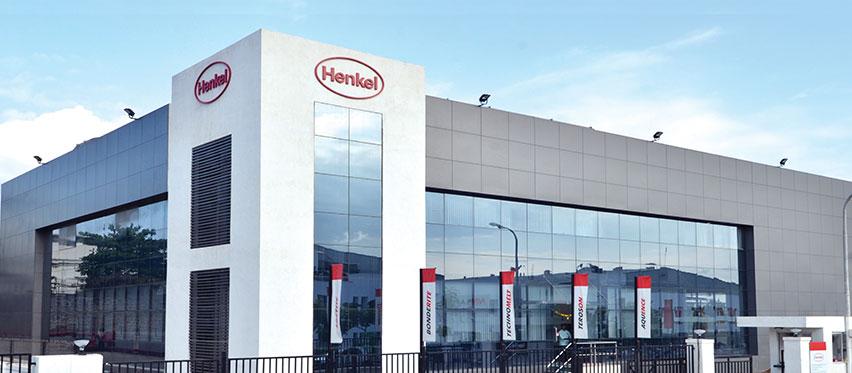
The Industrial Court has awarded more than 98 million Shillings to a former employee of Henkel Polymer Company (Uganda) Limited after ruling that his dismissal was both procedurally and substantively unfair.

The court found that the company unlawfully dismissed Okello Morise, who had worked for the company for approximately 24 years, without according him a fair disciplinary hearing or establishing sufficient grounds to justify his dismissal.


In an award delivered in Kampala on November 17, 2026, Justice Anthony Wabwire Musana ordered Henkel Polymer Company to pay Morise UGX 99,? million in various employment benefits, compensation and allowances, alongside interest at 15 per cent per annum until payment is completed.
The award followed Labour Dispute Reference No. 94 of 2022, in which Morise accused his former employer of terminating his employment without notice or a fair hearing after he travelled to Kitgum to attend to domestic matters in October 2021.
Morise told the court that he notified the company on October 2, 2021, about personal matters that required his attention in Kitgum and travelled for approximately two weeks after his employer did not object.
However, upon returning to work, he said he was verbally instructed to leave the company premises and was later informed through text messages that his services were no longer required pending disciplinary action.
He maintained that despite explaining his absence and repeatedly requesting to resume work, the company refused to allow him back. He also complained to the Labour Office, after which he received a notice to show cause and an invitation to attend a disciplinary hearing.
The company, in its defence, denied wrongdoing and argued that Morise had absconded from duty between October 4 and November 3, 2021, without notifying management.
It further accused him of engaging in competing business activities, diverting clients and stealing from the company, allegations it said amounted to breaches of his employment contract.
The company maintained that it had issued him with a notice to show cause and subsequently invited him to a disciplinary hearing scheduled for January 29, 2022. However, it accused Morise of failing to attend the hearing and instead reporting the matter to the Labour Office.
The Industrial Court, however, found significant shortcomings in the company’s disciplinary process.
The court noted that although the company had issued a notice inviting Morise to a disciplinary hearing, the notice was dated January 26, 2022, and required him to appear only three days later.
Justice Musana observed that three days was insufficient time for an employee to prepare a defence, citing previous court decisions that had established the need for adequate notice before disciplinary proceedings.
The court also questioned whether the notice had been properly served, noting that the document lacked evidence of acknowledgement of receipt by Morise.
It further observed that January 26 was a gazetted public holiday, raising additional concerns about the timing and adequacy of the disciplinary process.
The court was particularly concerned that the company’s managing director, Shai Henkel, had already informed the Labour Officer on January 25, 2022, that the disciplinary hearing had been delayed because of workplace pressures.
The court also noted that Morise had been asked to organise and collect his termination letter in February 2022, despite the disciplinary process allegedly still being pending.
Although the company accused him of diverting clients and causing financial losses, the court found that it had not provided sufficient details identifying the clients involved or demonstrating the alleged losses.
The court further faulted the company for failing to produce a human resource manual or disciplinary policy clearly outlining offences and corresponding penalties applicable to employees.
Justice Musana said employers are required under the Employment Act to establish accessible disciplinary rules, communicate them to employees and ensure that workers understand the offences that could lead to dismissal.
The court concluded that the company had failed to demonstrate that Morise committed misconduct serious enough to fundamentally breach his employment contract.
It consequently ruled that his dismissal was both procedurally and substantively unfair and unlawful.
In determining compensation, the court awarded Morise UGX 2.7 million, equivalent to four weeks’ pay, for the company’s failure to comply with the statutory requirements for a fair hearing.
It also awarded him UGX 6.51 million in unpaid annual leave arrears after limiting his claim to the six years preceding his dismissal, in accordance with the applicable limitation period.
The court further awarded him UGX 5.42 million in payment in lieu of notice, observing that employees who have served for more than ten years are entitled to three months’ notice under the Employment Act.
Morise was also awarded UGX 3 million as repatriation allowance to facilitate his return to his home district of Kitgum.
On general damages, the court awarded him UGX 16.27 million, equivalent to approximately six months of his salary, to compensate for the psychological distress and inconvenience arising from the loss of his employment after many years of service.
The court additionally awarded him UGX 65.08 million in statutory severance allowance, calculated at one month’s salary for each year of service.
Regarding his National Social Security Fund (NSSF) contributions, the court established that the company had failed to remit contributions for a period of 23 months.
It declared that Morise was entitled to UGX 9.35 million in outstanding contributions, which should be remitted to the Fund for his benefit rather than paid directly to him.
The court also directed the company to issue him with a factual certificate of service within 30 days and file a copy with the court.
However, it rejected his claim for unspecified terminal benefits, ruling that the amount and period to which the claim related had not been sufficiently particularised or proved.
The court also declined to order the termination of the disciplinary proceedings, reasoning that the declaration that his dismissal was unlawful had already resolved the substantive dispute.
In addition to the monetary awards, the court ordered Henkel Polymer Company to pay interest at 15 per cent per annum on the monetary compensation and allowances, effective from the date of the award until full payment.
The company was also ordered to meet the costs of the claim.
The case proceeded ex parte on November 9, 2026, after the company and its lawyer failed to appear in court despite having been notified of the hearing date. The court subsequently allowed Morise and his lawyer, Oscar Boban Owakubariho, to proceed with the case.
The company was represented in the proceedings by Levis Karugaba of Sebanja and Company Advocates.
The award was signed by Justice Musana and endorsed by panelists Can Amos Lapenga, Emmanuel Bigirimana and Dr Oling Dawn Kerjew.









 English
