
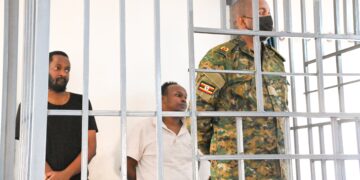










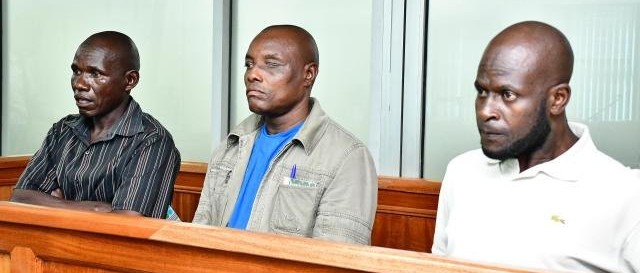
A court assessor has recommended that the High Court’s International Crimes Division convict three men accused of murdering former Assistant Director of Public Prosecutions Joan Namazzi Kagezi, who was gunned down in Kampala in March 2015.
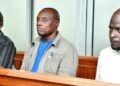
In an opinion delivered on Wednesday, assessor Judith Muhairwe told the court that the prosecution had presented sufficient evidence to establish the essential elements of murder against John Kibuuka, John Massajage, also known as Mubiru Brian, Badru and Chongo, and Nasur Abdallah Mugonole.


The case, registered as HCT-00-ICD-SC-0005-2025, is being heard by a panel of four judges led by Justice Andrew Bashaija, with Justice Richard Wabwire Wejuli, Lady Justice Joyce Kavuma and Justice Duncan Gaswaga.
The trial initially involved four accused persons. However, Daniel Kisekka Kiwanuka pleaded guilty to participating in the murder and was sentenced to 35 years in prison. He subsequently appeared as a prosecution witness against his former co-accused.
Kagezi was shot dead on March 30, 2015, at about 7pm in Kiwatule, a Kampala suburb. At the time of her death, she was a senior prosecutor involved in handling sensitive criminal cases.
In her assessment of the evidence, Muhairwe said the prosecution had established that Kagezi died, that her killing was unlawful, that it was committed with malice aforethought and that the three accused participated in the crime.
She relied on testimony from several prosecution witnesses, including an individual said to have been at the scene of the shooting, and a pathologist who examined Kagezi’s body at City Mortuary in Mulago on March 31, 2015.
According to Muhairwe, the medical findings and accounts from other witnesses supported the prosecution’s case that Kagezi died from gunshot wounds. She also noted that the circumstances of the attack and the use of firearms supported the conclusion that the killing was unlawful.
On malice aforethought, the assessor pointed to testimony suggesting that the attack had been planned in advance, with the assailants allegedly waiting for Kagezi before shooting her. She also cited evidence that money had reportedly been paid or promised to individuals involved in the alleged plot.
Muhairwe further relied on testimony identifying Kibuuka as the person who allegedly fired through the driver’s window of Kagezi’s vehicle before checking whether she was dead.
The witness reportedly told the court that the attackers fired shots into the air to disperse people at the scene before escaping on motorcycles.
Telephone analysis presented by a prosecution witness also featured prominently in the assessor’s opinion. The evidence allegedly placed telephone numbers associated with Kibuuka and Massajage at or near the scene around the time of the shooting.
Muhairwe noted that the two accused persons had not challenged ownership of the telephone numbers during their defence. She said the telephone evidence supported the prosecution’s account placing them at the scene.
The assessor also considered testimony about an alleged visit to a shrine in Kayunga after the murder.
A traditional healer who testified for the prosecution reportedly described how some individuals, including people said to be among the accused, sought spiritual intervention in an attempt to prevent the case from proceeding.
Muhairwe said this testimony was consistent with an account given by another prosecution witness concerning activities allegedly undertaken after Kagezi’s death.
On the basis of the evidence presented, she advised the judges to find Kibuuka, Massajage and Mugonole guilty as charged.
However, the assessor’s opinion is advisory and does not constitute a conviction. The final decision rests with the judges, who must independently evaluate the evidence and applicable law.
The court is scheduled to deliver its judgment on December 4, 2026.
Accused Deny Role in Killing
The three accused persons testified under oath and denied direct involvement in Kagezi’s murder. In their defence, they sought to implicate other individuals, including former Inspector General of Police General Kale Kayihura and former senior police officer Nixon Agasirwe Karuhanga.
Mugonole told the court that Kagezi had allegedly been placed under surveillance before her death.
He claimed that her mobile phone had been stolen and later returned with a tracking device, alleging that information about her movements was shared among individuals he said were involved in the operation.
Mugonole further alleged that Kagezi possessed documents concerning Kayihura and had turned down an offer of Shs1 billion to surrender them.
These claims were made by the accused in their defence and have not been established as findings of the court.
Agasirwe and Abdulnoor Ssemujju, commonly known as Minana, are also facing charges connected to Kagezi’s murder in a separate case. Their trial is yet to be heard, according to the information presented.
Convicted Accomplice Central to Prosecution Case
The prosecution relied heavily on the testimony of Kisekka, who was initially charged alongside the three accused before pleading guilty and receiving a 35-year prison sentence under a plea agreement.
Kisekka told the court that members of the group used motorcycles to follow Kagezi before the shooting. He alleged that Kibuuka fired the fatal shots, while other members helped execute the operation and facilitate the attackers’ escape.
He also testified that the group had two firearms and ammunition and later travelled to Kayunga, where they allegedly sought the assistance of a traditional healer to avoid detection.
The prosecution maintained that Kagezi’s killing was deliberate and motivated by financial considerations.
Kagezi was attacked while seated in her vehicle and sustained fatal gunshot wounds to the neck and chest.
The investigations and subsequent arrests took nearly nine years. Some suspects were reportedly identified through inquiries into other alleged offences, including aggravated robbery, while Kisekka was linked to the murder after his arrest in connection with another case.
The judges are expected to deliver their verdict on December 4, 2026.






 English
