






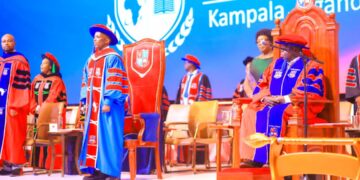








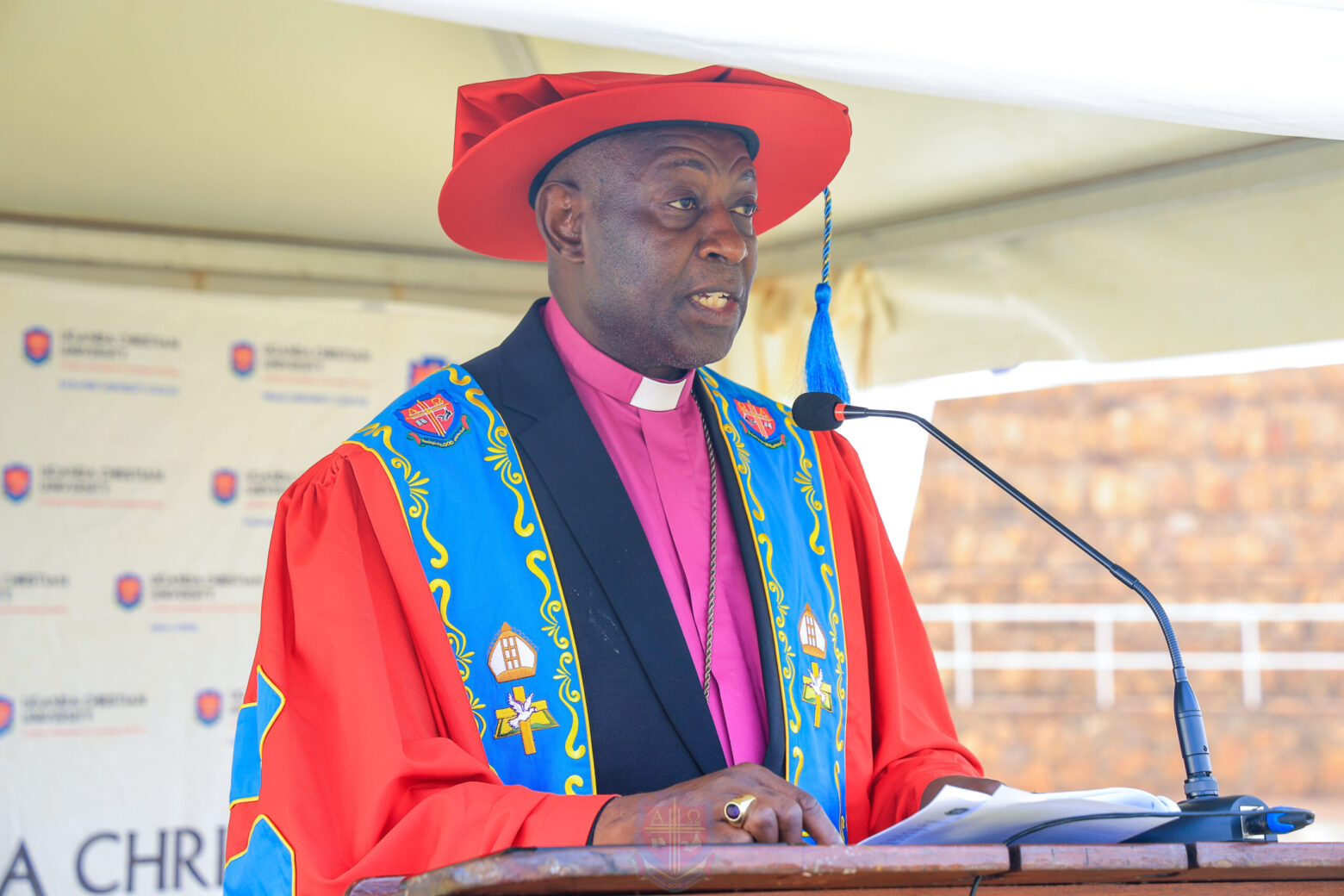
Uganda Christian University (UCU) has graduated 670 students, with university leaders and the Church of Uganda Archbishop urging them to use their qualifications to address societal challenges, reject corruption and demonstrate integrity in their professional and personal lives.
The graduates include 390 males, representing 58 per cent, and 280 females, accounting for 42 per cent. Of these, 22 obtained First Class degrees, comprising 14 females and eight males.

Jane Namunana emerged as the best overall student with a Cumulative Grade Point Average (CGPA) of 4.7, while David Kuteesa was the best male student with a CGPA of 4.63.
According to Vice Chancellor Prof. Aaron Mushengyezi, the graduates include seven PhD holders, 233 master’s degree recipients, 333 undergraduate degree recipients, 10 postgraduate diploma recipients and 87 diploma recipients.
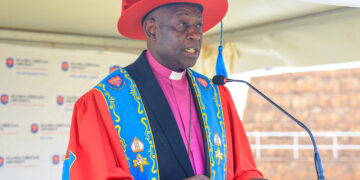
Addressing the graduands during the second part of the university’s 27th graduation ceremony, the Archbishop of the Church of Uganda and UCU Chancellor, the Most Rev. Dr. Stephen Samuel Kaziimba Mugalu, challenged them to prioritise faithfulness, character and service over personal advancement and recognition.
“Do not be in a hurry to be important. Be in a hurry to be faithful,” Kaziimba said, urging the graduates to uphold integrity in their workplaces, homes, churches and communities.
He said education should go beyond academic achievement to produce people capable of bringing positive change to society through service to God, the Church and the nation.
Kaziimba also commended UCU for supporting the Church of Uganda’s mission through theological education, the formation of clergy and continued professional development for church leaders. He particularly recognised the university’s Church Relations Department for strengthening ties between the institution and dioceses and parishes.
The Archbishop called on dioceses to remit their contributions from UCU Sunday promptly to support the university’s development, describing the contributions as a practical expression of the Church’s shared responsibility for the institution.
He also urged leaders in the Church, university and government to embrace the Church of Uganda’s 2027 theme, “Focused Leadership and Integrity in Service,” saying leadership should be measured by faithfulness, transparency and commitment to the needs of the people.
Rt. Rev. Prof. Alfred Olwa, Bishop of the Diocese of Lango and Chairperson of the UCU Council, said university education should transform how people think, make decisions and treat others, rather than merely equip them with information.
Drawing on his personal experience, Olwa recounted how Bishop Janani Luwum prayed for him in 1973 when he was a Primary Three pupil at Namasale, encouraging him to study hard and serve the Gospel. He later experienced a religious transformation after evangelist Petero Ocoma introduced him to Christianity in April 1982. Eight years later, he graduated from UCU.
Olwa challenged the graduates to reject corruption, mediocrity and hopelessness, embrace lifelong learning and use innovation to solve practical problems facing their communities.
“Intelligence without integrity is dangerous. Knowledge without responsibility is destructive,” he said, adding that Uganda needs qualified people who can be trusted.
Bishop Olwa also urged graduates to remain adaptable in a rapidly changing world shaped by artificial intelligence, digital technology and new business models, emphasising that a degree should be treated as a foundation for further learning rather than the end of education.
The guest of honour, Dr. Patricia Adong Ojangole, Managing Director of Uganda Development Bank, challenged the graduates to choose purpose over entitlement, discernment over conformity, integrity over convenience, service over status and growth over fear.
Drawing on her career, which began in internal audit, Ojangole said professional discipline, curiosity and the courage to ask difficult questions had helped prepare her for greater responsibilities.
She cautioned graduates against taking shortcuts for personal gain, saying integrity is built through everyday decisions, including telling the truth, keeping promises, admitting mistakes and refusing corruption.
“Your competence may take you into the room, but your character will determine whether you can be trusted there,” she said.
Ojangole urged the graduates to use their knowledge to create jobs, strengthen institutions, improve healthcare, educate children, advance agriculture and industry, and contribute to national development.
She also challenged them to take practical action during their first 90 days after graduation by identifying a problem in their communities or professions and taking steps to address it, developing a useful skill and identifying someone they could mentor, encourage or help.
Prof. Mushengyezi said the university’s graduation theme, “A Renewed, Transformational Mindset,” drawn from Romans 12:2, emphasises the need for graduates to become agents of change by critically examining challenges and developing innovative solutions.
He urged them to use their qualifications to establish and strengthen institutions, including schools, health centres, churches and businesses, while contributing to a public service sector that delivers services to all.
The university leaders also thanked parents, guardians, sponsors, lecturers and staff for supporting the graduates through their academic journeys, urging the new alumni to protect the institution’s reputation through responsible conduct and meaningful service to society.









 English
