















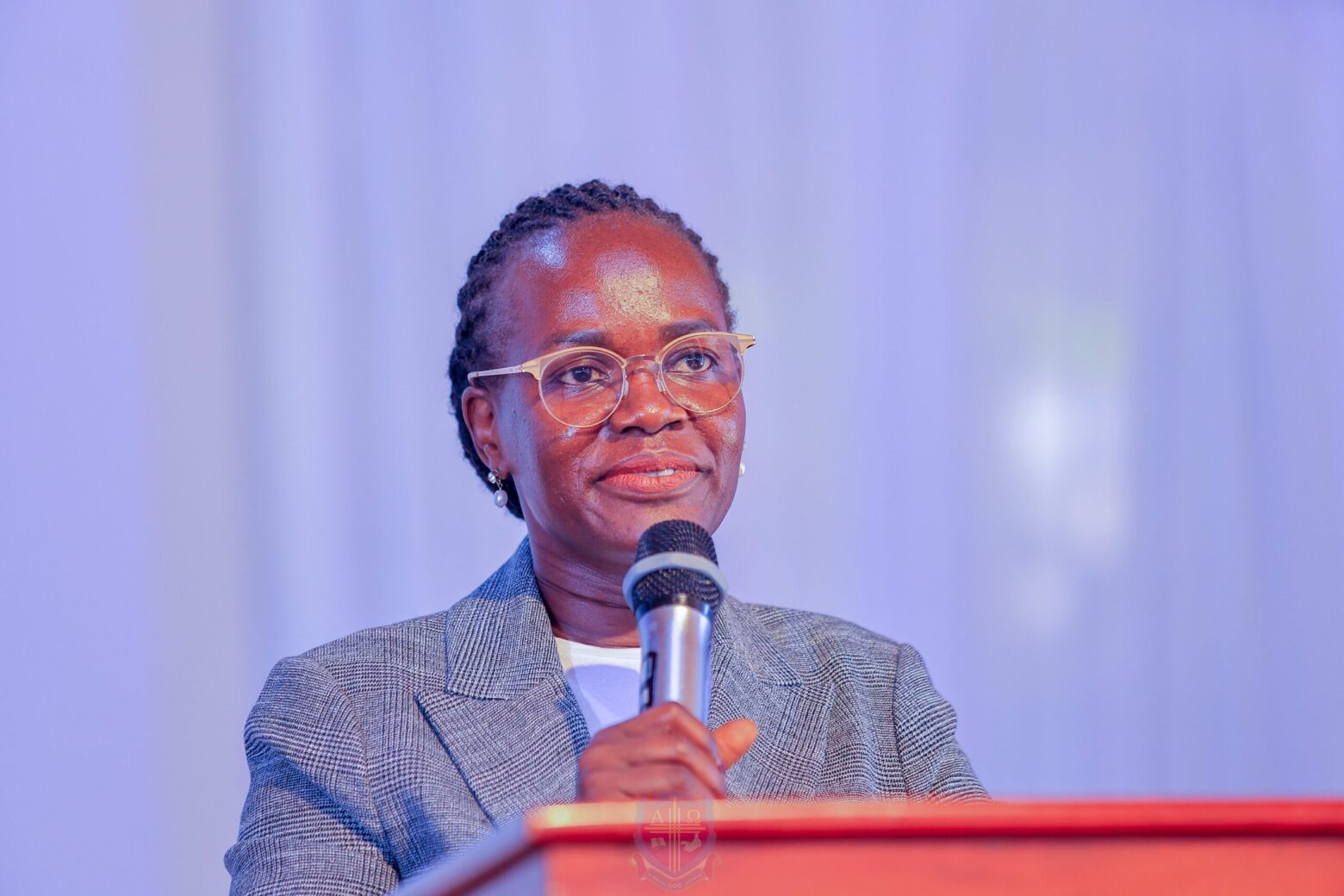
Dr Patricia Adongo-Ojangole, the Managing Director of Uganda Development Bank (UDB), has urged Ugandans to embrace critical thinking in their personal and professional lives, warning that poor judgement, unverified information and unquestioned traditions can undermine institutions and national development.
Speaking at a public lecture at Uganda Christian University (UCU) in Mukono under the theme “The Power of Thinking: Why Critical Minds Build Better Futures,” Ojangole said the ability to examine evidence, challenge assumptions and make ethical decisions was becoming increasingly important in an era of abundant information and widespread misinformation.
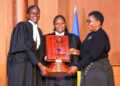

She argued that the future of individuals, organisations and nations depends not merely on the information they possess, but on their ability to think independently, evaluate evidence and make sound decisions.
“We are drowning in information, but often starving for wisdom,” Ojangole said, reflecting on the growing influence of social media, conflicting narratives and unverified claims on public opinion.
She observed that technological advances had made information readily accessible to students, professionals, businesspeople and ordinary citizens. However, the increased availability of information had not necessarily improved people’s ability to distinguish truth from falsehood.
Ojangole cautioned against the tendency to believe or circulate information simply because it had been shared widely, urging people to verify claims before acting on them.
She illustrated this with the example of a WhatsApp message announcing the closure of a major road. Even when such a message carries an official-looking logo and has been forwarded numerous times, she said, a critical thinker should check the date, establish the original source and consult the relevant authorities before changing their plans.
She said the same caution was necessary during public health emergencies, citing the COVID-19 pandemic and Ebola outbreaks as periods when conflicting information could create confusion and influence people’s decisions.
Ojangole advised people to resist pressure to make hurried decisions, arguing that stepping back to examine a situation could prevent costly mistakes.
“When you are under pressure, that is the time you actually have to slow down and step back,” she said, explaining that intense pressure should prompt people to examine why a particular decision or course of action was being urgently demanded.
She defined critical thinking as a disciplined process of examining information before accepting it as true. This, she said, involves asking what evidence supports a claim, what assumptions are being made, whether alternative explanations exist and what information may be missing.
Drawing on the biblical account of King Solomon’s judgement in 1 Kings 3:9, Ojangole explained that wisdom involves looking beyond appearances and competing claims to establish the truth and act fairly.
She also cited the Bereans in Acts 17:11, who examined the Scriptures to establish whether Paul’s teachings were true, as an example of the need to remain open to new ideas while carefully scrutinising what one hears.
According to Ojangole, critical thinking requires people to question not only the beliefs of others but also their own assumptions, habits and established practices.
She challenged individuals and institutions to examine why certain systems exist, who established them, whether they remain relevant and whether they continue to serve their intended purpose.
However, she emphasised that questioning established practices does not automatically mean rejecting them. Rather, it provides an opportunity to evaluate their relevance and retain those that continue to deliver value.
Ojangole identified confirmation bias, groupthink, emotional reasoning and authority bias as major obstacles to sound judgement.
Confirmation bias, she explained, occurs when people seek information that supports their existing beliefs while disregarding evidence that challenges them. Groupthink, meanwhile, arises when individuals accept a group’s position without independently examining its merits, often because they want to belong or avoid disagreement.
She warned that groupthink could also affect organisations where employees approve proposals without adequately questioning their feasibility, costs or alignment with institutional objectives.
Emotional reasoning, she said, involves treating feelings as facts, while authority bias occurs when people stop examining information simply because it comes from an influential person or institution.
“Feelings are not facts,” Ojangole said, noting that although emotions are an important part of human experience, they should not replace evidence when making decisions.
She added that experience and intuition could help people anticipate risks, but such instincts should be tested against available evidence rather than accepted without scrutiny.
On leadership, Ojangole said intelligence and academic qualifications alone do not guarantee wisdom, integrity or sound decision-making. She noted that highly educated leaders and experienced professionals could still make destructive or unethical choices.
She attributed effective leadership to a combination of objectivity, fairness, truth, ethical conduct and accountability, particularly where decisions affect institutions, employees and the wider public.
Reflecting on her experience at UDB, Ojangole said responsible leadership required decision-makers to understand their mandates, establish sound governance systems and accept responsibility for the consequences of their actions.
She explained that her Christian upbringing, professional training in accounting and auditing, and experience in leadership had shaped her approach to decision-making.
“Your cardinal duty is how you take your organisation forward while keeping it under control,” she said, emphasising the importance of integrity and safeguarding an institution’s interests.
Ojangole also challenged universities to move beyond producing graduates who memorise information to nurturing independent thinkers capable of evaluating evidence, interpreting information, solving problems and exercising sound judgement.
Her remarks were reinforced by Professor Aaron Mushengyenzi, who called for a shift from business as usual to innovative leadership capable of transforming Uganda’s private sector, infrastructure, education and other institutions.
Mushengyenzi said UCU sought to nurture a generation capable of driving positive change and urged leaders to translate their ideas into practical action.
He cited UDB’s growth under Ojangole’s leadership, saying its balance sheet had expanded from Shs109 billion in 2013 to Shs2.8 trillion, which he presented as evidence of institutional transformation.
Ojangole holds a PhD in development finance from the University of Stellenbosch Business School in South Africa and has extensive experience in banking, accounting and auditing. In 2025, she was named Banker of the Year at the African Bank Awards.
Her message to students and other pa rticipants was that critical thinking should not be mistaken for endless criticism or argument. Instead, it should help people identify the most effective, ethical and practical course of action.
Ultimately, she said, individuals and institutions must cultivate the discipline to examine evidence, question assumptions and make decisions that advance the interests of society rather than simply follow popular opinion or established routines.
ENDS.












 English
