


















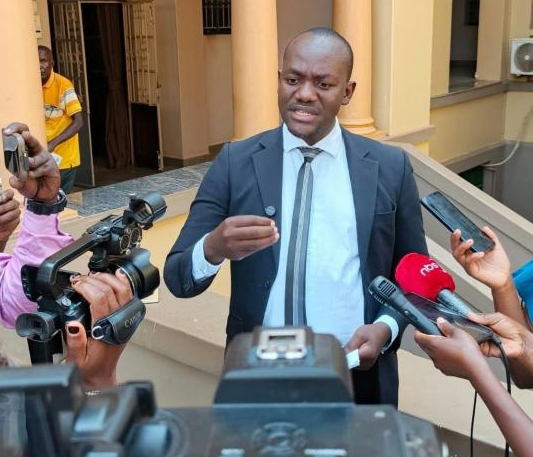
Lawyer Steven Kalali has petitioned the High Court to punish three officials of Exodus Police Co-operative Savings and Credit Society Limited for alleged contempt of court, accusing the SACCO of continuing to deduct contributions from police officers’ salaries despite a ruling declaring such deductions unlawful without their consent.
In an application filed before the High Court’s Civil Division on Thursday, Kalali is seeking a six-month jail term for the SACCO’s chairperson, secretary and chief executive officer if they are found responsible for the alleged contempt.


He is also seeking Shs200 million in general, punitive, exemplary and aggravated damages, a Shs300 million fine against the SACCO, and costs of the proceedings.
The application stems from a July 15, 2026, ruling by Acting Civil Division Judge Bonny Isaac Teko in Case No. 28 of 2025, which declared salary deductions for SACCO contributions unlawful where the affected police officers’ free and informed consent had not been established.
Kalali alleges that Exodus SACCO continued deducting contributions from officers’ salaries in July and August, despite being aware of the court’s decision. He argues that the alleged continued deductions amount to disobedience of the court’s orders.
Court documents indicate that the SACCO was aware of the ruling and filed a notice of appeal on July 16, 2026, a day after the judgment. It also requested a copy of the record of proceedings.
In his supporting affidavit, Kalali says he repeatedly wrote to the SACCO seeking compliance with the judgment, but the deductions allegedly continued.
He has also submitted bank statements belonging to Eliphaz Isabirye, a police officer recruited under the 19th intake, which he says demonstrate that deductions were made after the court issued its ruling.
Beyond the disputed deductions, Kalali accuses the SACCO of restricting members who wish to terminate their membership from withdrawing. He argues that the alleged actions undermine the constitutional rights the court sought to protect through its judgment.
Court orders on police officers’ SACCO membership
In its July 15 ruling, the court directed the Attorney General to guide the Uganda Police Force and Exodus SACCO on implementing measures to ensure that serving officers are neither enrolled in the SACCO nor subjected to salary deductions for membership contributions without documented, free and informed consent.
The court also ordered the SACCO to provide affected officers with a documented opportunity to decide whether to remain members or withdraw without penalty.
Officers who choose to leave are entitled to access their accumulated savings and any dividends due to them.
The judge further directed Exodus SACCO to conclude its pending application for a licence from the Bank of Uganda. If the institution fails to obtain the licence, it must stop accepting new deposits and disbursing new loans while continuing to service existing loans and maintain the accounts of members who choose to remain.
The Registrar of Co-operatives was also ordered to audit the SACCO’s membership records and accounts relating to officers recruited under the 2015 intake and submit a report to the court within nine months.
Solicitor General’s office issues guidance
In a letter dated September 4, 2026, the Office of the Solicitor General informed Kalali’s lawyers that it had taken steps within its mandate to facilitate the implementation of the judgment.
The letter, signed on behalf of the Solicitor General by Martin Mwambutsya, responded to an earlier request for intervention dated July 17, 2026, submitted by M/s Mwina-Wananda & Co. Advocates.
The Solicitor General’s office acknowledged the court’s finding that recruiting police officers into the SACCO without their free, express and documented consent violated Article 29(1)(e) of the Constitution, which guarantees freedom of association.
The office said it had communicated guidance to the Uganda Police Force requiring compliance with the court’s orders and protection of officers’ constitutional rights.
In a separate communication, Deputy Solicitor General Charles Ouma outlined measures the police should implement, including preventing enrolment into Exodus SACCO without documented consent and stopping salary deductions for membership or contributions unless officers had expressly agreed to them in writing.
The guidance also called for a review of police policies and administrative procedures governing SACCO membership and salary deductions, as well as mechanisms to prevent future violations. It was intended for circulation across police directorates, departments, units and formations.
Despite these interventions, Kalali’s latest application alleges that the disputed deductions continued after the judgment, raising questions about the extent to which the court’s directives have been implemented.
He argues that continued deductions would undermine the effectiveness of the ruling and defeat the protections it was intended to provide.
Kalali further claims that the alleged non-compliance has caused him financial and psychological distress and forced him to incur additional legal expenses while pursuing enforcement of the judgment.
He is asking the court to award the damages sought, impose the proposed sanctions and order the SACCO to meet the costs of the proceedings.
Exodus SACCO has not yet filed its defence to the latest application, which is awaiting a hearing. The allegations of contempt have not yet been determined by the court.










 English