

















The prosecution has asked the High Court in Kampala to sentence the nine people convicted of kidnapping and murdering businesswoman Susan Magara to death, arguing that the crime ranks among the “rarest of rare” cases deserving the maximum punishment under Uganda’s sentencing guidelines.
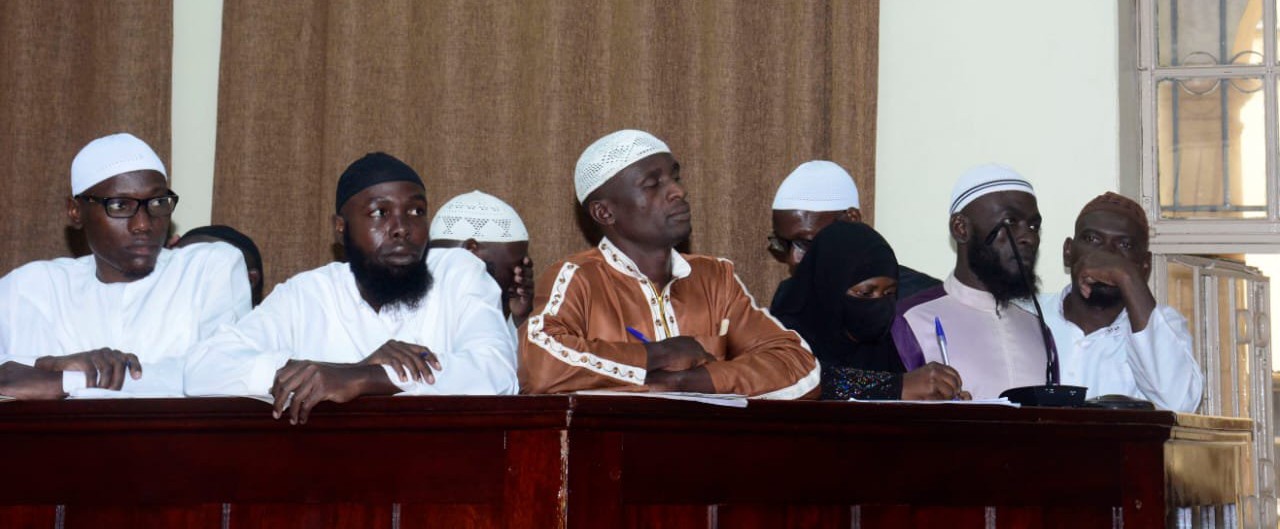
The request was made during mitigation and sentencing submissions before Justice Alex Mackay Ajiji, a day after the court convicted Yusuf Lubega, Mahad Kisalita, Ismail Bukenya, Abubaker Kyewokya, twin brothers Hassan Wasswa and Hussein Kato Miiro, Abbas Musa Buwembo, Hajjara Nakandi and Muzamir Ssali.

The group was found guilty of abducting the 28-year-old former Bwendeiro Dairy cashier from Lungujja, near Kabaka Njagala Road, in February 2018. According to evidence presented during the trial, Magara was held captive for about three weeks, tortured, had some of her fingers cut off, and was later killed despite her family paying a ransom of USD 200,000, approximately UGX700 million, in an attempt to secure her freedom. Her body was later abandoned along Entebbe Road.
Chief State Attorney Sherifah Nalwanga told the court that the kidnapping was carefully planned and executed with the sole intention of extorting money before the victim was deliberately murdered.
Relying on Rules 20 and 21 of Uganda’s Sentencing Guidelines, Nalwanga argued that the offence attracts a sentence ranging from 35 years’ imprisonment to death. She submitted that the brutality, planning and cruelty involved in the crime justify the ultimate sentence.
Working alongside Chief State Attorney Joseph Kyomuhendo and Senior State Attorney Irene Nakimbugwe, Nalwanga said the convicts subjected Magara to prolonged captivity, torture and eventual murder after receiving the ransom, circumstances she said qualify the case for capital punishment.
The prosecution outlined the alleged role of each convict during the commission of the offence.
According to the State, Yusuf Lubega was the mastermind who coordinated planning meetings, supervised the collection of the ransom, participated in disposing of the victim’s body and later invested part of the ransom money.
Hassan Wasswa was said to have participated in the abduction, delivered food to the captive and later benefited from land allegedly purchased with proceeds of the ransom in Buikwe District.
The prosecution said Muzamir Ssali transported members of the group to various ransom collection points, while Hajjara Nakandi allegedly provided the house where Magara was held and made the final decision to kill her after the kidnappers feared they had been exposed. Prosecutors further claimed Nakandi encouraged the kidnapping as a means of raising money to support fellow Muslims.
Other convicts, including Abubaker Kyewokya, Hussein Kato Miiro, Mahad Kisalita, Ismail Bukenya and Abbas Musa Buwembo, were accused of carrying out surveillance, guarding the victim, facilitating logistics and acquiring property using the ransom money.
The prosecution identified Buwembo as the person who allegedly cut off Magara’s fingers, injected her with ketamine and later suffocated her with a polythene bag.
Nalwanga further told the court that the gang deliberately targeted a female victim because they believed she would be easier to overpower. Investigators also established that the group had initially intended to kidnap another relative, Immaculate Magara, before eventually abducting Susan on their third attempt.
She added that after the murder, each participant allegedly received UGX1 million to destroy the clothes worn during the crime, making it difficult for investigators to recover crucial physical evidence.
The prosecution also detailed the emotional and financial impact the crime had on Magara’s family.
Court heard that her father, John Magara, continues to suffer recurring nightmares and still struggles to come to terms with the loss of his daughter. Other family members reportedly continue to experience trauma, while Flora Magara developed stress-related health complications and remains fearful for her safety.
Besides paying the USD200,000 ransom, prosecutors said the family spent an additional UGX240 million during the search for Magara, recovery of her body and burial arrangements.
The court was also informed that Magara had been financially supporting vulnerable women and children with about UGX42 million, assistance that ended following her death.
Addressing court on behalf of the family, Flora Magara appealed for the maximum sentence.
“We are suffering. My brother John, his wife Immaculate and I are scared for our lives. I pray this court to pass the maximum sentence of death,” she said.
On compensation, Senior State Attorney Irene Nakimbugwe asked the court to order the recovery of the entire USD200,000 ransom paid by the family.
She argued that investigations traced the ransom money to assets allegedly acquired by the convicts, including 35 acres of land in Buikwe District valued at about UGX130 million, another acre in Luweero District worth about UGX13 million and several motor vehicles.
Nakimbugwe requested the court to order the forfeiture and sale of all property believed to have been purchased using the ransom money and direct that the proceeds be paid to Magara’s family. She also asked for the confiscation of three vehicles allegedly used during surveillance, the kidnapping and disposal of the victim’s body.
“The court should not only punish the accused but also deprive them of enjoying the proceeds of their crime,” she submitted.
The prosecution further argued that kidnappings had become a growing security concern at the time, citing national crime statistics showing that 184 kidnapping cases were recorded in 2018.
In mitigation, defence lawyer Richard Kumbuga expressed sympathy to Magara’s family and acknowledged the pain caused by the offence. However, he urged the court to exercise mercy.
Kumbuga argued that, apart from the twin brothers Hassan Wasswa and Hussein Kato Miiro, the remaining convicts were family breadwinners with spouses and children who depend on them.
He submitted that lengthy prison terms or death sentences would also punish innocent family members.
“The nation lost Magara, and it will not benefit anything when nine more die,” Kumbuga told court.
He further argued that justice should focus on rehabilitation rather than revenge, citing the Biblical story of Cain and Abel to support his plea against capital punishment.
The defence was still presenting its mitigation before Justice Alex Mackay Ajiji, who is expected to deliver the sentence after hearing all submissions.








 English