
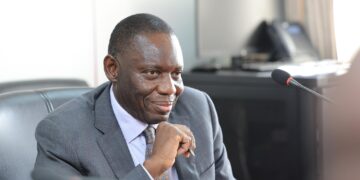

















The prosecution of Erias Lukwago for misprision of treason raises fundamental questions concerning the relationship between criminal liability, constitutional rights, and legal professional privilege. Lukwago, a senior advocate and defence counsel for Dr. Kizza Besigye, has been charged under Section 25 of the Penal Code Act for allegedly failing to report knowledge of a treasonous plot.
Under Ugandan law, misprision of treason requires proof that an accused person had actual knowledge of another person’s intention to commit treason and failed to report that information to the appropriate authorities or failed to take reasonable steps to prevent the offence.


The prosecution therefore bears the burden of proving actual knowledge beyond a reasonable doubt. Mere political association, friendship, or professional representation is insufficient.
The central legal difficulty facing the prosecution is that any alleged knowledge possessed by Lukwago may have arisen during the course of his professional representation of Dr. Besigye. Sections 125–128 of the Evidence Act protect confidential communications between an advocate and a client.
Such privilege belongs to the client and cannot ordinarily be disclosed without the client’s consent. Consequently, information obtained through legal consultations is generally inadmissible against the advocate.
The prosecution can only overcome this protection if it successfully invokes the crime-fraud exception by proving that the communications were made in furtherance of an illegal purpose. This exception is narrowly construed and requires substantial evidence. Mere allegations of criminal conduct are insufficient.
The Constitution further strengthens Lukwago’s position. Article 28 guarantees the right to a fair hearing, while Article 44(c) makes that right non-derogable. Any prosecution that relies on privileged lawyer-client communications risks undermining the constitutional right to effective legal representation.
If lawyers can be criminally prosecuted for information received from clients during legal consultations, accused persons may no longer communicate openly with counsel, thereby weakening the administration of justice as a whole.
Ugandan jurisprudence, including Salvatori Abuki v Attorney General and earlier treason-related litigation involving Dr. Kizza Besigye, demonstrates that courts closely scrutinise prosecutions that threaten constitutional guarantees. Courts have consistently emphasised that both the purpose and effect of state action must comply with constitutional standards.
In conclusion, while the offence of misprision of treason exists in Ugandan law and can lawfully be charged, the case against Erias Lukwago faces significant constitutional and evidentiary challenges.
The prosecution will only be sustainable if the State can prove actual knowledge through independent, admissible, and non-privileged evidence, or establish that the communications fall within the narrow crime-fraud exception.
Failing this, the charge may be vulnerable to challenge on grounds of legal professional privilege and the non-derogable constitutional right to a fair hearing.
Isaac Christopher Lubogo








 English