















The World Bank Group has unveiled a new 10-year Country Partnership Framework (CPF) for Uganda, committing to provide up to 2 billion dollars (about Shs7.5 trillion) in financing during each of the three development cycles between 2026 and 2035.
The new funding plan will add to the existing 4.05 billion dollars (approximately Shs15.26 trillion) already committed to Uganda.


According to the Bank, the framework is aligned with Uganda’s Fourth National Development Plan, Vision 2040, and the government’s Tenfold Growth Strategy.
The CPF is aimed at accelerating private sector-led economic transformation while expanding economic opportunities, particularly for Uganda’s growing youthful population.
Job creation, infrastructure development, and improved social services are among the key priorities under the programme.
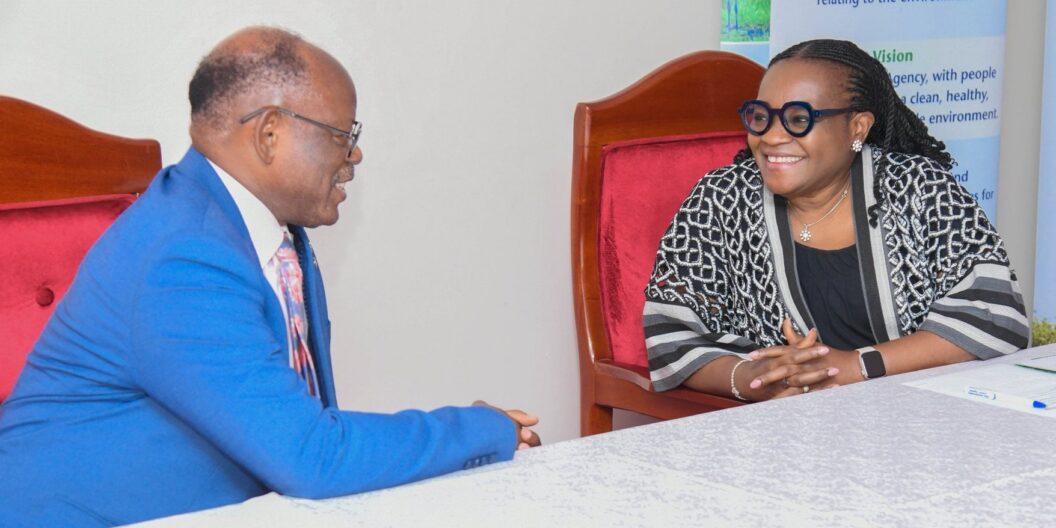
Francisca Ayodeji Akala, the World Bank Country Manager for Uganda, said the country possesses significant potential driven by its young population, natural resources, and long-term development ambitions.
She noted that the Bank intends to support investments in people, infrastructure, and institutions to help translate economic growth into jobs and improved living standards for citizens.
The framework also places strong emphasis on mobilising private investment. According to the Bank, businesses in Uganda continue to face challenges such as high borrowing costs, limited access to long-term financing, strict collateral requirements, and underdeveloped capital markets.
Although Uganda has recently attracted some of the largest foreign direct investment inflows in the region — estimated at six percent of GDP in 2025 — much of the investment has been concentrated in the oil and gas sector, leaving other sectors of the economy with limited private capital.
To address this, the CPF proposes a coordinated “One WBG Approach” involving the World Bank’s various financing arms.
The Bank says reforms supported by the International Development Association (IDA) are expected to reduce public domestic borrowing, improve macroeconomic stability, and lower pressure on interest rates.
The reforms are also intended to deepen financial markets, expand access to credit, and strengthen governance and the business environment.
This, the Bank says, will enable the International Finance Corporation (IFC) to scale up investments and advisory services, while the Multilateral Investment Guarantee Agency (MIGA) provides investment risk guarantees.
The programme will further promote the use of Public-Private Partnerships (PPPs) as a strategy for attracting more private capital into development projects.
Under the framework, the World Bank Group projects that it will help generate at least 1.3 billion dollars while mobilising an additional 2.5 billion dollars in private investment over the next decade.
Among the major targets outlined in the CPF is expanding electricity access from the current 25 million people to 50 million by 2035 under the Mission 300 initiative.
The Bank also plans investments in electricity transmission and distribution infrastructure to improve household and commercial access to power.
Other goals include improving health, nutrition, and population services for 22 million people, supporting better education and skills development for 10 million students, and improving transport infrastructure to benefit up to 20 million Ugandans.
The programme also aims to extend access to financial services to 14 million people and businesses, including nine million women, while doubling agricultural productivity in selected value chains.
Despite the ambitious targets, the World Bank cautioned that implementation risks remain high, particularly due to weaknesses in public institutions, procurement systems, and overall institutional capacity.
However, the Bank says measures have been built into the framework to strengthen implementation and address capacity gaps.
According to the World Bank Group, Uganda’s economy has nearly doubled in size over the last 15 years, while life expectancy and internet usage have also significantly improved.
However, poverty reduction has remained slow due to limited availability of quality jobs, with only about 500,000 people moving out of poverty during the period.











 English