

















For centuries, our ancestors walked across this vast continent without permission from European mapmakers, guided only by open horizons and the shared bonds of humanity. Today, that ancient spirit of brotherhood is bleeding, caught in a painful and deeply emotional bind where the natural, brotherly pull of continental connection clashes violently against the rigid, unyielding borders of modern statehood.
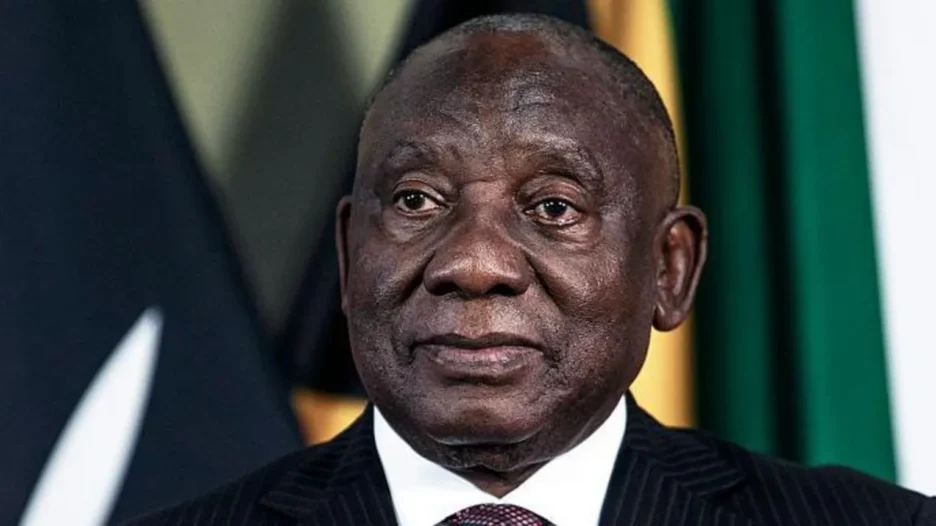
This heartbreaking tension was laid bare during South African President Cyril Ramaphosa’s national address. Faced with boiling community frustrations and organized demands for undocumented African migrants to leave, the president’s speech attempted to manage a crisis that goes far deeper than routine domestic policy.


It marked a tragic turning point where South Africa found itself forced to balance immediate domestic economic anxieties against its deep, sacred historical debt to continental solidarity. The situation requires more than a temporary law-and-order response. It demands a thorough look at how the country arrived at this point and what it means for the future of the entire continent.
To truly understand the grief and friction tearing at South African communities, we must look past the loud populist arguments that cheapen the debate by blaming all social ills on foreign labor.
An honest look at our shared history reveals that the struggles suffocating the country’s social fabric, such as severe unemployment, failing infrastructure, and heavily burdened public hospitals and schools, were never created by modern African migration. Instead, they are the unresolved, bleeding wounds left behind by over three centuries of colonial invasion and the brutal, systemic inequality of the apartheid era.
We must call the past by its true name, for it was the barbaric and vicious acts of European colonialists that systematically dismantled the sovereignty of African societies, stole the land, and engineered a continent of dependency.
For generations, the apartheid economy was explicitly built around a cruel migrant labor system designed to strip wealth out of neighboring countries like Lesotho, Zimbabwe, Mozambique, and Malawi, while deliberately denying those workers any permanent rights, dignity, or social safety nets. Much of modern South Africa’s wealth was built on the literal sweat, blood, and broken bones of these regional brothers.
Because of this, treating today’s movement of people across regional borders as an isolated security threat is a deep historical injustice. It ignores the very hands that built the subcontinent’s economic core.
Regrettably, South Africa’s modern think tanks and its current coalition government seem unable or unwilling to demystify this tension by addressing its real, foundational cause. Instead of boldly confronting the colonial architectures of inequality that still control the economy, leadership often defaults to crisis management, allowing the public to misdiagnose their pain.
The borders being aggressively defended today by state immigration officials and community groups are, at their root, artificial scars inflicted on our land. Drawn on maps by ruthless European empires at the Berlin Conference with zero regard for shared languages, cultures, or ancestral ties, these frontiers were created with the sole, vicious intent of dividing African populations and making imperial conquest easier.
When our governments treat these colonial lines as sacred, untouchable barriers, they accidentally keep the destructive logic of the old colonizers alive.
As Africans, we are brothers and sisters. Our destiny is tied together by a shared history of struggle and a common identity. We ought to interact, trade, and move freely across this beautiful continent without fear of hostility from our own flesh and blood. However, true Pan-Africanism does not mean a rejection of order.
For our societies to thrive, we must embrace this freedom responsibly by strictly following established immigration protocols. Our borders should be bridges for brothers, but they must also function effectively to maintain security and ensure we do not accommodate vagabonds or criminal elements who seek to exploit our hospitality and break the law.
There is a profound difference between welcoming a brother seeking a better life and allowing lawlessness to compromise national stability.
By framing the shortage of jobs and public services as a simple, hostile competition between citizens and non-citizens, populist leaders avoid the hard work of structural reform. The crisis is not an absolute lack of resources caused by a growing population; it is a failure of internal economic distribution and a lack of state capacity to break down the unequal wealth structures inherited from the past.
When frustrated and marginalized communities turn their anger against fellow Africans, the deeper inequalities of global markets and historical wealth distribution remain completely unchallenged. This displacement of anger protects the actual structures of privilege while pitting the dispossessed against one another.
South Africa’s current position as a regional powerhouse is tied directly to the radical generosity and ultimate sacrifice of its neighbors. During the darkest years of the anti-apartheid struggle, the Frontline States suffered massive economic damage, political instability, and direct military attacks for supporting South Africa’s liberation movements.
Countries like Zambia, Tanzania, Angola, Zimbabwe, and Mozambique sheltered political exiles, hosted freedom fighters, and faced severe economic blockades because they firmly believed that no African nation could be truly free until the entire continent was rid of minority rule.
The rising tide of anti-migrant sentiment within South Africa risks alienating the very nations whose sacrifices helped pave the way for the democracy citizens enjoy today, threatening to break a bond forged in the fire of liberation.
Fixing South Africa’s internal tensions cannot be achieved through mass deportations, heavily militarized borders, or turning a blind eye to vigilantism. It requires moving toward real regional integration, the exact goal envisioned by the African Continental Free Trade Area. True prosperity requires the smooth, legal, and regulated movement of goods, services, and people across the region.
To bridge the gap between state laws and continental unity, the coalition government needs to focus on practical, structural changes. First, it must clear the heavy bureaucratic backlogs within its immigration systems to bring undocumented workers out of the shadows, ensuring they can work legally, follow immigration protocols, pay taxes, and be protected from workplace exploitation.
Second, it must work closely with regional neighbors to invest heavily in industries and agriculture outside South Africa, which will naturally reduce the overwhelming economic pressure that forces millions to migrate to economic hubs like Johannesburg or Cape Town.
Finally, political leaders must stop using inflammatory language that turns vulnerable groups against each other to distract from governance failures and instead focus on creating policies that build shared wealth.
Ultimately, the future of South Africa cannot be separated from the future of the wider continent. The defining challenges of our time, from climate disruptions to global economic imbalances, cannot be solved behind walls built by 19th-century colonial mapmakers.
By viewing migration not as a national security threat but as an opportunity for disciplined, brotherly cooperation, South Africa can honor its historical relationships, dismantle the remaining structural inequality of the past, and help build a stronger, self-reliant, and truly unified African continent.
By Twiine Charles Mansio











 English