



The geopolitical tectonic plates of the African continent are being intentionally and aggressively shattered by a new breed of uncompromising leadership that has transformed the West African Sahel into an absolute graveyard for Western corporate impunity. For decades, global commodity markets, predatory multinational cartels, and neocolonial financial networks operated under the comfortable assumption that Africa’s subsoil wealth was theirs for the taking, protected by a compliant old guard of local politicians who signed away ancestral birthrights for single-digit crumbs.
That era of submissive capitulation is officially dead. The rise of General Assimi Goïta in Mali, Captain Ibrahim Traoré in Burkina Faso, and General Abdourahamane Tchiani in Niger represents the ultimate manifestation of a sovereignist reawakening, a fierce ideological triumvirate known as the Alliance of Sahel States that is systematically dismantling the century-old architecture of global exploitation. These are the Sahelian Lions, and they have become the ultimate waking nightmare of Western boardrooms because they have discovered a terrifying truth: global corporations need African resources far more than Africa needs their exploitative contracts.


There is a quiet, profound deception embedded in the vocabulary of global economics, an intellectual trap that labels our continent as “developing” or “poor,” and it is a trap that this new generation of West African sovereigns rejects with absolute fury. Africa is not poor. It has been systematically and legally hollowed out by design.
There is a vast philosophical difference between a home that is sparse because its inhabitants lack industry, and a home where an aggressive stranger enters every night to harvest the riches beneath the floorboards, leaving a pittance on the table to patch the structural damage. For generations, our continent has lived through this modern, legalistic home invasion, sitting atop oceans of gold, uranium, bauxite, cobalt, lithium, and oil, yet our societies are forced to beg for foreign aid to fund basic literacy and medical care.
This paradox is a meticulously manufactured outcome, engineered through lopsided concession agreements and artificial tax loopholes designed to keep the Global South as an eternal extraction zone, while the Global North remains the secure vault.
The exploiters are no longer ghosts of a bygone colonial century. They have simply discarded their military uniforms for tailored business suits, arriving on private jets and operating behind the clinical anonymity of multinational corporations listed on Western stock exchanges. They are scattered across every strategic coordinate of our continent, deploying the exact same blueprint of plunder.
In the Sahel, companies such as Canada’s Barrick Gold and France’s Orano have historically treated the rich underground of Mali and Niger like private storage rooms, paying minor royalties while shifting billions of dollars in profits to offshore tax havens. In the heart of Africa, across the Democratic Republic of Congo, multi-billion-dollar conglomerates lock up rare earth elements such as cobalt and coltan, essential for the global tech revolution, while paying local miners pennies a day to work in dangerous, toxic conditions. Along the Atlantic coast, from the oil fields of Nigeria and Angola to the offshore gas deposits of Senegal, foreign energy companies have built isolated processing plants that export raw wealth directly, leaving surrounding communities to deal with systemic oil spills and polluted water.
We do not deny that Africa needs foreign investment, capital, and technical partnerships as we live in an interconnected global economy. However, if these corporations want access to our wealth, the absolute worst-case scenario must be a fair win partnership. It can no longer remain a system of absolute plunder executed with total impunity.
To understand the sheer magnitude of this structural draining, one must look directly at how these corporate cartels operate with clinical precision across our borders without ever being held accountable by the people whose land they deplete.
In Nigeria, corporations such as Shell, Chevron, and ExxonMobil have spent over half a century extracting massive reserves of crude oil and liquefied natural gas, siphoning millions of barrels of sweet crude from the Niger Delta while leaving behind an environmental wasteland of chronic oil spills and toxic gas flaring.
In the Democratic Republic of Congo, Swiss commodities giant Glencore and China’s rebranded powerhouse CMOC Group Limited dictate the global flow of cobalt and copper by dominating major industrial sites such as Mutanda, Kamoto, and Tenke Fungurume to power the Western tech industry, while local labor faces severe ecological exploitation.
In Senegal, Australian-based Woodside Energy and British petroleum giant BP have entrenched themselves off the Atlantic coast, where Woodside handles the deepwater extraction of offshore crude oil from the massive Sangomar field, while BP leads the multi-billion-dollar Greater Tortue Ahmeyim liquefied natural gas project, locking up natural gas reserves under legacy contracts that the newly inaugurated national review commission under President Bassirou Diomaye Faye is aggressively auditing to halt exploitation before the host nation is shut out from establishing basic processing infrastructure.
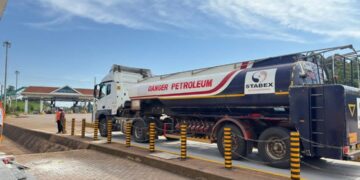
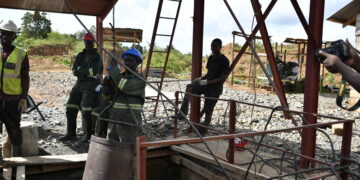
In Uganda, France’s TotalEnergies and the China National Offshore Oil Corporation are heavily developing the Tilenga and Kingfisher oil fields to export raw crude oil through the controversial East African Crude Oil Pipeline, while simultaneously in eastern districts such as Busia, Chinese firm Wagagai Mining operates extensive commercial infrastructure to extract and process deep subterranean gold reserves.
In Niger, the French state-controlled nuclear titan Orano has spent more than fifty years mining high-grade uranium in Arlit to power Western domestic electricity grids, leaving the immediate northern desert regions radioactively exposed and entirely starved of infrastructure, a historical entitlement shattered directly by General Tchiani’s historic revocation of Orano’s major mining permits at Imouraren.
In Ghana, multi-billion-dollar conglomerates such as the American Newmont Corporation and South Africa’s Gold Fields command the extraction of gold, taking out tons of physical bullion annually under historic stability agreements designed to shield corporate earnings from national taxation.
In Zambia, Canadian capital, through First Quantum Minerals and Barrick Gold, has thoroughly carved up the Copperbelt to extract immense quantities of copper essential for worldwide green energy grids, forcing the sovereign Zambian economy to remain completely vulnerable to price shocks dictated by distant Western metal exchanges.
In Guinea, the Anglo-Australian giant Rio Tinto and the Chinese-backed SMB Winning Consortium exploit the world’s largest reserves of bauxite while building out infrastructure to drain Simandou, the planet’s largest untapped deposit of high-grade iron ore.
For a long time, it felt like this extraction loop was unbreakable because the old guard of African leadership signed whatever papers were put in front of them, content with whatever crumbs fell from the corporate boardroom table. Under those older administrations, the state share in these massive mining operations was often a source of mockery, frequently dropping into single digits and barely reaching eight percent.
Imagine a multinational titan hauling away billions from our ancestral lands and leaving us with scraps that do not even cover the cost of environmental devastation.
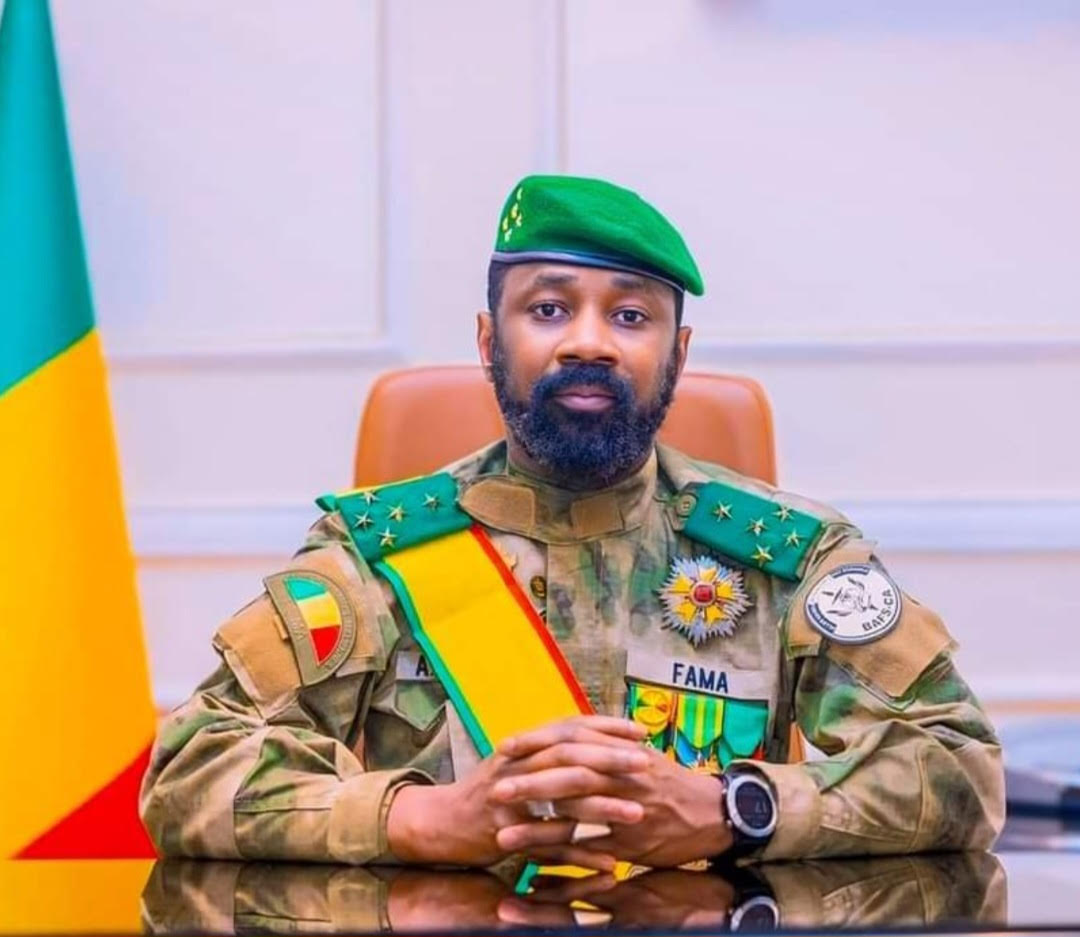
But everything changed when a new administration arrived in Bamako and General Assimi Goïta came to power. He did not just change the guards at the palace. He permanently changed the rules of the game.
The Goïta administration initiated a full forensic audit of mining operations across the country, refusing to take corporate tax filings and production numbers at face value. While other companies saw the wind shifting and chose to renegotiate under Mali’s bold new Mining Code, Barrick Gold refused. They thought this was merely political theater and expected international pressure to force a compromise, waiting for the old system of surrender to repeat itself, but they were dead wrong.
What followed was an extraordinary, dramatic showdown between a sovereign state and a global corporate giant. When Barrick refused to comply, the dispute escalated at lightning speed. General Goïta did not blink. Instead, he doubled down and ordered that gold output belonging to Barrick could not leave the country, triggering absolute panic in Western markets.
The state intensified regulatory oversight, demanding proof of full tax compliance and demonstrating that corporate giants do not run Mali. After a fierce battle, the corporate giant returned to the table, not with demands but with heavy concessions.
The Malian administration delivered an absolute ultimatum, forcing Barrick Gold to agree to an immediate financial settlement of 430 million dollars. This massive payment was forced out of the company to resolve years of hidden disputes, unpaid revenues, and unfulfilled obligations uncovered by the audit. There were no extensions and no excuses allowed.
The administration mandated that this massive sum be paid completely within a strict timeline of just six days. Furthermore, the state extracted an additional 50 billion CFA francs in overdue taxes that had been buried in corporate accounting loopholes, sending a clear message to close the books, accept the parameters of the newly instituted state frameworks, and pay immediately.
This historic victory completely rewrote the landscape of African mining by addressing the structural exploitation we have endured for generations.
Under the new terms, Mali’s ownership stake rose dramatically to 35 percent, transforming the country from a passive observer watching its wealth leave in a truck into a dominant active partner with genuine boardroom power. The administration instituted a strict offshoring ban, forcing all tax obligations to be settled locally in Bamako rather than disappearing into distant tax havens.
Shocking the entire global industry, Mali also required that top executive, managerial, and engineering positions be filled by Malian citizens, ensuring our own experts lead our territory. No longer will there be extraction without responsibility or profit without contribution. If a company benefits from our land, they must build schools, build hospitals, and employ local youth.
General Goïta has proved that African nations can negotiate from a position of absolute, unyielding strength and that corporate giants will kneel when faced with a leader who refuses to kneel first.
The conditions Mali imposed following this audit provide a blueprint for what true resource sovereignty looks like in the modern era.
This approach defines sovereignty because it breaks the cycle of resource dependency where African countries own the wealth, but foreign corporate boards retain all the power, profit, and control. By establishing hard national equity baselines, enforcing local processing, and refusing to allow raw materials to be shipped away untaxed, a state transforms from a passive zone of extraction into an equal global partner.
Other African nations must adopt these exact conditions because multinational corporations cannot operate without access to the physical ground under our feet. When an administration shows that it is fully prepared to halt production and protect its soil, the balance of power shifts instantly, proving that these corporations need African resources far more than Africa needs their exploitative contracts.
We have felt the deep, agonizing sting of this exploitation in our daily lives, watching our youth cross dangerous seas and deserts in search of opportunities that were dug out of our own backyards and shipped away on foreign vessels, while our landscapes get scarred, our waters get polluted, and our economies get choked by debt.
The very corporations causing this devastation are celebrated on global stock markets for record-breaking quarterly profits, coming to us with agreements written in distant boardrooms, full of complex clauses designed to exempt them from paying local taxes, grant them legal immunity, and allow them to sue our governments in international courts if we try to protect our people.
They call us unstable when we demand fairness, and they label us unreliable business partners when we insist that our children deserve a share of the inheritance under their feet. But the true instability lies in an economic model that enriches a tiny distant minority at the expense of an entire continent’s survival.
We must now throw down a direct challenge to the rest of the African continent to shake off decades of political stagnation and fear. Every single African president must immediately initiate forensic audits of every foreign concession within their borders, demanding absolute transparency and full tax returns from the multinational giants operating in their backyards.
If our leaders summon the corporate courage to open those books, they will be deeply shocked by the billions in stolen revenues, artificial losses, and illegal tax holidays that have kept our populations impoverished while enriching foreign capitals. From that point of shock, we can finally begin entirely afresh, tearing up the deeply exploitative agreements of the past and renegotiating terms from a position of absolute, unyielding strength.
The regional momentum of the Lions of the Sahel, where Assimi Goïta in Mali, Ibrahim Traoré in Burkina Faso, and Abdourahamane Tchiani in Niger stand united and uncompromising, shows a new path forward. With Ousmane Sonko now knocking on the door of contract renegotiations in Senegal, and even Benin feeling the pressure of this historic shift, the time is now for all African states to galvanize.
We must dismantle the psychological chains of neocolonialism that have taught us to be grateful for the crumbs of our own feast and firmly rediscover our sovereignty by jealously guarding what rightly belongs to us.
When a foreign entity approaches an African nation for its resources, it must find a government that is completely unyielding, backed by a continent that refuses to be fragmented, building regional supply chains and creating African-owned institutions capable of refining our wealth on African soil.
We hold the absolute keys to the global future, and it is time we start acting like the gatekeepers. The corporate cartels must be brought to their knees, exactly as the Sahelian Lions have proven is possible, to understand that the terms of engagement have permanently changed as we reclaim our dignity, safeguard our inheritance, and silence the quiet plunder of our home forever.
By Twiine Mansio Charles




 English