













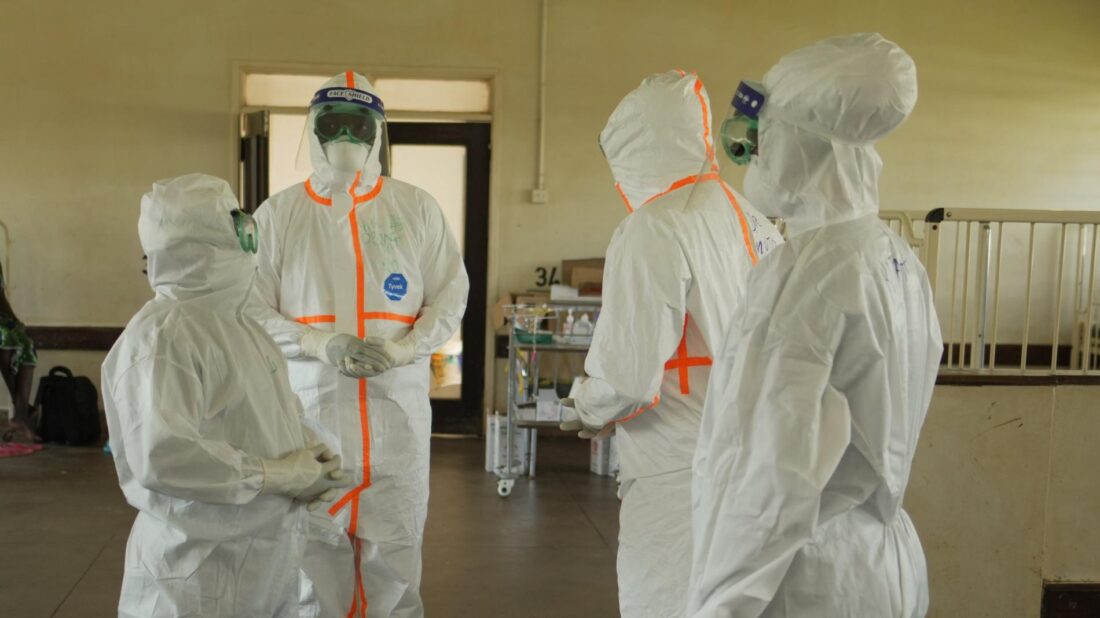
The Ministry of Health on Saturday confirmed three new cases of Ebola Virus Disease, bringing the total number of confirmed infections in the country to five.
The newly confirmed cases include a Ugandan driver who transported the index patient and later succumbed to complications related to the disease, as well as a health worker who had been involved in his treatment.

According to Dr. Charles Olaro, the Director General of Health Services, the third new case is a Congolese woman who travelled into Uganda through the Arua border before proceeding to Entebbe.
A statement from the Ministry of Health indicated that the woman later boarded a chartered flight from Arua to Entebbe and sought treatment at a private hospital in Kampala.
The hospital later discharged her, after which she returned to the Democratic Republic of Congo (DRC). However, laboratory samples taken by Ugandan health authorities later tested positive for Ebola after she had already left the country.
The latest infections come amid growing concern over the regional spread of the disease and Uganda’s objection to the World Health Organization’s decision to group the country together with the DRC in travel and outbreak assessments, despite Uganda recording significantly fewer cases.
Speaking at a press conference on Thursday, Dr. Diana Atwine, the Permanent Secretary at the Ministry of Health, announced travel restrictions to the DRC, noting that Uganda had no active positive cases at the time because the only imported patient under treatment had tested negative.
Meanwhile, the United States earlier this week updated its travel advisory, urging Americans not to travel to the DRC, South Sudan, or Uganda due to the Ebola Bundibugyo virus outbreak in the region, while advising travellers to reconsider travel to Rwanda.
“The Department’s Travel Advisories for DRC, South Sudan, and Uganda are now Level 4 – Do Not Travel, and the Travel Advisory for Rwanda is Level 3 – Reconsider Travel,” a notice published on the U.S. Embassy website stated.
One American citizen who recently travelled to the DRC reportedly tested positive for Ebola and was later evacuated to Germany for specialised treatment.
The current outbreak involving the Bundibugyo strain marks the second time both Uganda and the DRC have experienced this particular strain of Ebola. The two countries have also previously battled several outbreaks linked to the more common Zaire strain.
Health experts warn that the Bundibugyo strain remains a major public health threat because there are currently no approved vaccines or specific treatments for it. Management of the disease largely depends on supportive care, while the fatality rate is estimated at about 40 percent.








 English