











The High Court in Fort Portal has brought to a close a protracted dispute over ownership of nearly 73 hectares of land in Kinyamakende, Kabarole District, ruling against the Registered Trustees of Fort Portal Diocese in a case that has spanned more than a decade and a half.
In a judgment delivered on Wednesday, Justice Vincent Wagona dismissed the Diocese’s suit against the Attorney General and businessman George Mwesige Sharp, finding that the Church had failed to establish a lawful and indefeasible claim to the contested property, identified as Burahya Block 44 Plot 9.

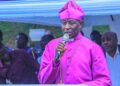
The land, measuring 72.95 hectares and estimated by the Diocese to be worth Shs5.4 billion, has been the subject of court battles since 2010. The Diocese had accused the Registrar of Titles of unlawfully cancelling its certificate of title and transferring ownership to Sharp, who later sold the land to businessman Robert Kayonjo.
According to court records, the Diocese maintained that it legally acquired the land in 1993 from six beneficiaries of the estate of the late Eliphaz Buchekenyu Ochaki. Church officials argued that after the purchase, they took possession of the property and used it for agricultural activities, including growing wheat and sim-sim.
The Diocese told court that trouble emerged in 2005 when it found Kayonjo carrying out developments on the land. It further claimed that its title had been revoked without notice following orders issued in earlier court proceedings linked to High Court Civil Suit No. 208 of 1995.
However, the Attorney General and Sharp opposed the claims, arguing that the Church’s ownership stemmed from an invalid process undertaken by the Administrator General during the distribution of Ochaki’s estate.
Evidence presented before court showed that Sharp had earlier challenged the Administrator General’s handling of the estate in both the High Court and the Court of Appeal.
Those courts reportedly concluded that the estate had already been distributed under Toro customary law and that the Administrator General lacked the legal authority to redistribute it.
Justice Wagona ruled that the earlier decisions effectively invalidated every transaction arising from the Administrator General’s actions, including the Diocese’s acquisition of the land.
The judge observed that once the foundation of a title is found defective, any subsequent ownership claims based on that title cannot stand in law.
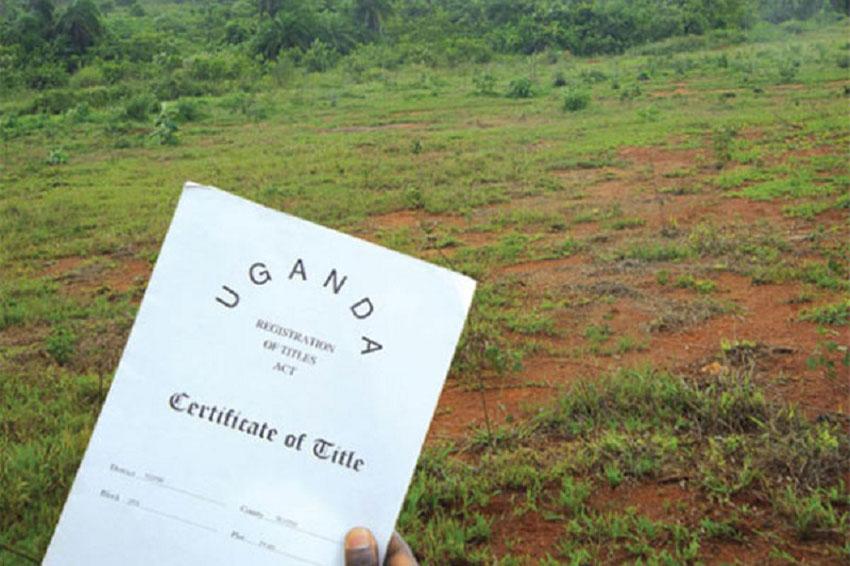
Although the Diocese produced a certificate of title during the proceedings, the court noted that official land registry records did not indicate the Church as the registered proprietor of the disputed property.
The court relied on testimony from Senior Registrar of Titles Milton Matsiko, who stated that registry documents did not contain any entry showing the Diocese as owner of the land.
Justice Wagona further held that the Registrar of Titles acted within the law by implementing court orders that directed cancellation of the Administrator General’s interests and replacement with Sharp’s name.
According to the ruling, the Registrar had no discretion to disregard or reinterpret orders issued by a competent court.
While the judge acknowledged that the Diocese had not been informed before the transfer was executed, he ruled that the failure to notify the Church did not invalidate the enforcement of an otherwise lawful court directive.
The Diocese had sought compensation equivalent to the current market value of the land, along with Shs1 billion in general damages, special damages, and annual interest of 25 percent.
But the court dismissed all the claims, holding that compensation could not be awarded where the claimant’s interest was founded on a title already rendered void by law.
Sharp’s counterclaim for damages was also rejected after the court found insufficient evidence to support it.
Justice Wagona ordered the Diocese to pay legal costs incurred by the Attorney General, while directing Sharp to meet his own costs.




 English