


















There is an old saying that “when elephants fight, it is the grass that suffers,” but today the more fitting truth is that when tectonic plates grind, a single crack in the earth can reveal the shape of the entire world. Venezuela is that crack, a single crisis that exposes the greatest geopolitical shift since the end of the Cold War. It is not just a country in turmoil; it is the front line of the global rearrangement of power.
For decades the United States assumed that Latin America was a sealed hemisphere, a quiet backyard where Washington’s will could be imposed without challenge. But the world has changed profoundly. American dominance is no longer uncontested. China’s economic might and Russia’s military capacity have rewritten the balance of power. And Venezuela, once seen as a marginal state, has emerged as the flashpoint where these shifting realities collide.

The crisis did not begin with Nicolás Maduro, nor even with the economic collapse that captured international headlines. Its origins trace back to the moment Hugo Chávez won power and dared to challenge the old geopolitical order. Chávez sensed something that Washington refused to see: that the unipolar moment was fading, that U.S. influence was overextended, and that new poles of power Beijing and Moscow were rising fast. It was not ideology alone that drove him; it was geopolitical foresight. And when the United States supported a coup attempt against him in 2002, a coup that collapsed within hours, any remaining trust evaporated. From that moment on, Chávez turned decisively toward China and Russia, not simply as allies but as long-term guarantors of sovereignty and survival.
China poured more than sixty billion dollars into Venezuela, tying future oil production to Beijing for years, embedding Chinese companies in the Orinoco Belt, financing infrastructure, building telecommunications networks, fueling agriculture, and anchoring itself into the country’s economic bloodstream. These were not symbolic gestures; they were strategic entanglements. Russia followed a different but equally consequential path: billions in military sales, strategic aircraft landings, advisors working inside the Venezuelan security apparatus, advanced air-defense systems positioned to deter any external force. Each Russian plane landing in Caracas said something unmistakable: Moscow was back, and it would not abandon its partners the way it did in the 1990s.
Yet Washington behaved as though the world had not changed at all. It clung to Cold War reflexes pressure, sanctions, isolation, regime change. For twenty years the U.S. sponsored, funded or politically boosted opposition movements, hoping to unseat both Chávez and later Maduro. It argued moral righteousness, calling Venezuela a dictatorship, accusing it of narcotization, even placing multi-million-dollar bounties on Maduro’s head during the Trump years. The U.S. Navy patrolled the Caribbean, intercepting ships suspected of carrying drugs, sending a message of enforcement rather than engagement. But while Washington fought old battles, Beijing and Moscow quietly built durable power structures.
This crisis cannot be separated from America’s track record. Iraq remains destabilized; Libya collapsed into militia rule; Syria fractured under war fueled by foreign intervention; Egypt fell back into authoritarianism. These were not distant miscalculations , they were watershed failures. And the world saw them. Latin America saw them. Venezuela especially saw them. U.S. foreign policy, once anchored in prudence, patience, and humility, increasingly looked like a blunt instrument that left chaos in its wake.
So when Washington again raises the drumbeat of intervention, whether through airstrikes, blockades, or regime-change fantasies, it dangerously misreads the moment. If America thinks this is merely another tough-guy showdown with a “narco-dictator,” it is missing the biggest geopolitical earthquake in the Western Hemisphere since the Cuban Missile Crisis. Because what is happening in the Caribbean is not about drugs, and it is not primarily about Venezuela. It is about the unraveling of American hemispheric dominance. It is the return of great-power rivalry to the doorstep, and the opening moves of a conflict that could reshape the global order as profoundly as Ukraine reshaped Europe.
If the United States were to strike Venezuela today, it would not only confront Maduro. It would confront China and Russia, whose stakes are now structural, strategic, and non-negotiable. China would retaliate economically, slowly unloading U.S. treasuries, raising American borrowing costs, squeezing rare-earth mineral exports vital to U.S. defense and technology, accelerating de-dollarized trade arrangements, and using the distraction to intensify pressure on Taiwan. Russia, faced with the death of even a handful of personnel, would face immense domestic pressure to strike back, not necessarily through direct military confrontation, but through cyberattacks on American corporations, energy infrastructure sabotage, intensified operations in Ukraine, expanded military engagements in Syria or Africa, and diplomatic offensives aimed at fracturing Western unity.
Latin America would recoil. Protests would erupt in São Paulo, Mexico City, Buenos Aires, Bogotá, Lima, and Santiago. Brazil and Mexico would lead a regional denunciation; Colombia, Argentina, Panama, Guatemala, and others, even those traditionally aligned with Washington, would be forced by public opinion to distance themselves. The memory of past U.S. interventions has never faded: Guatemala 1954, Chile 1973, Grenada 1983, Panama 1989. A new intervention would reopen old wounds and demolish decades of painstaking diplomacy.
Into that vacuum, China and Russia would step, expanding BRICS influence, offering development financing without political strings, and presenting themselves as defenders of sovereignty against Western imperialism. The dollar’s dominance, already challenged, could erode faster. A multipolar hemisphere would emerge, and Washington’s uncontested reign would be over.
But catastrophic war is not inevitable. A wiser path exists, one rooted in diplomacy, structural reform, and long-term economic transformation. The United States must replace confrontation with engagement. It must pursue direct dialogue with Caracas, not endorsement, but negotiation. It must support Venezuelan electoral reforms, encourage credible democratic processes, and pair them with sanctions relief tied strictly to verifiable benchmarks: humanitarian access, prisoner releases, transparency, and institutional strengthening. It must work not alone, but with Brazil, Colombia, Mexico, Argentina and other regional partners who hold both moral credibility and strategic interest in Venezuela’s stability. And beyond politics, Venezuela’s recovery demands deep structural change: diversification away from oil, investment in human capital, revitalization of public institutions, rebuilding healthcare and education, and professionalization of economic governance.
International institutions like the UN, the OAS, CELAC, regional courts, development banks, must be empowered to mediate, monitor, and support reforms. Venezuelans deserve dignity, sovereignty, and stability, not another war imposed from outside.
And America must learn. The world has changed. Power is dispersed. Economic leverage and military capability are no longer monopolized by Washington. To act as if nothing has changed is to invite catastrophe. If the United States miscalculates, if it ignores the new geometry of global power, it could drag the world into a crisis far larger than Venezuela, a crisis none of the major powers are truly prepared for.
Venezuela is not a hill worth dying on. And if Washington insists on treating it as one, the outcome will not be American victory, it will be a fractured hemisphere, a strengthened BRICS, a weakened dollar, cyberattacks on American institutions, global economic shockwaves, and perhaps even simultaneous crises in Taiwan and Ukraine. The stakes are that high.
This is the geopolitical reality. This is the warning. And this is the moment for restraint, diplomacy, and sober recognition that the age of uncontested American dominance is over. To pretend otherwise is to risk igniting the very war the world has feared since the Cold War ended, a war that could reshape the global order for generations.
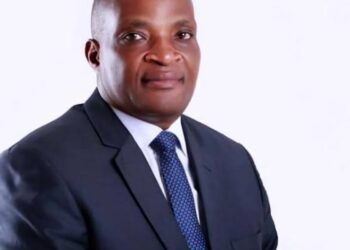
Twiine, Mansio Charles
CEO, The ThirdEye Security Consults (U) Limited








 English