













Kampala, Uganda – As Uganda races against time to align with new European Union regulations, a national coffee taskforce has unveiled innovative digital traceability tools designed to secure the country’s lucrative coffee exports to the EU.
The move comes in response to the European Union Deforestation Regulation (EUDR), a directive passed in 2023 requiring all agricultural imports—including coffee—to be verifiably free from deforestation.

With the compliance deadline set for December 2025, Uganda’s coffee industry is under pressure to meet strict sustainability standards while maintaining growth.
To meet this challenge, the Uganda Coffee Platform—a taskforce comprising government agencies, private sector players, and development partners—has begun piloting two digital tools that track coffee from farm to cup.
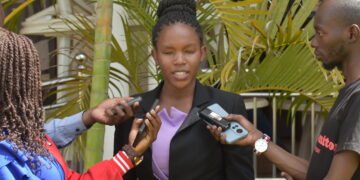
“We have introduced Farmerlink and Symos, two applications that allow traceability across the entire coffee value chain,” said Judith Muvara, Advocacy and Communications Officer at Café Africa, the platform’s coordination secretariat.
“They are integrated with the national coffee farmer database, enabling verification of the coffee’s origin.”
Since last year, the government has been registering coffee farmers and issuing them unique digital identifiers, ensuring that plantations are not established on deforested land.
The new apps build on this initiative, allowing stakeholders—processors, exporters, and buyers—to verify each batch of coffee using a farmer’s ID.
The system generates a verification batch number that is linked to the exporter and ultimately attached to coffee shipments. This facilitates backward tracing at the final market stage, providing assurance that the coffee meets EUDR standards.
The tools have already been successfully piloted among coffee cooperatives and dealers in Kalungu District, where Muvara says they proved effective.
The next step, she notes, is nationwide sensitization of all value-chain actors to ensure smooth adoption.
“This is a major milestone in Uganda’s journey toward full compliance with the EU coffee regulations,” Muvara emphasized.
Wim Simonse, CEO of ExoLink, the German firm behind Farmerlink, said the tool was designed to work both online and offline, ensuring accessibility for farmers in remote areas.
“We spent over a year developing and testing the system. It’s a robust solution for tracking coffee throughout its production and supply chain,” he said.
According to Rauben Keimusya, Assistant Commissioner for Coffee Production at the Ministry of Agriculture, Animal Industry and Fisheries (MAAIF), the innovation is a vital step in securing Uganda’s biggest coffee market.
“Europe remains the top destination for Uganda’s coffee. These tools are not just about compliance—they are about protecting a cornerstone of our economy,” Keimusya said.
As Uganda continues to digitize and modernize its coffee sector, the integration of traceability technology is not just a regulatory requirement—it’s a gateway to greater transparency, sustainability, and global competitiveness.




 English