


















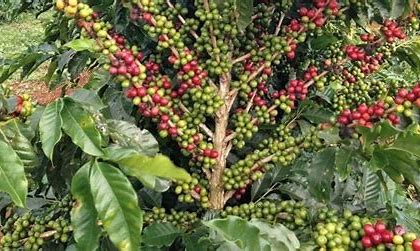
The Ministry of Agriculture, Animal Industry and Fisheries has rolled out a set of innovative farming practices aimed at helping coffee thrive in the dry and often unforgiving climate of Northern Uganda.
Under the new approach, farmers are encouraged to grow coffee alongside crops such as bananas, pigeon peas, and cassava within the same garden space.
The strategy is part of a wider government effort to increase coffee output and improve household incomes in the Acholi sub-region and beyond.
According to Julius Twiine, a regional officer in the ministry’s Coffee Department, the techniques are specifically designed to help young coffee plants survive long dry spells that frequently affect districts like Kitgum.
He explained that the methods are tailored to local conditions where water stress has historically limited coffee farming.
Banana plants, for instance, are planted in the same pit as coffee seedlings. As they grow, they spread away from the main stem, creating a protective environment without competing heavily for nutrients.
This natural spacing allows the coffee plants to benefit from shade and moisture retention during their early stages.
Farmers are also advised to plant pigeon peas, locally known as lapena, about a metre from each coffee plant.
These legumes play multiple roles, including improving soil fertility, conserving moisture, and shielding the young coffee from intense sunlight.
In addition, they provide food and an extra source of income, making them a practical choice for smallholder farmers.
Cassava is another key component of the system, planted between rows of coffee. Its broad leaves help cover the soil, suppress weeds, and reduce heat stress.
Twiine noted that cassava is temporary and can easily be removed once the coffee plants are well established and no longer require as much shade.
These practices form part of a broader climate-smart agriculture campaign targeting Northern Uganda, where prolonged dry seasons between November and March have traditionally affected crop survival.
Officials say the approach is particularly important as many farmers in the region are still new to coffee cultivation and need guidance on proper agronomic techniques, including preparing deep and wide planting pits to support root development.
So far, more than 30,000 farmers in East Acholi have received training through extension services using a Train-of-Trainers model.
The initiative is being implemented in partnership with programmes such as Operation Wealth Creation, as well as local institutions that are helping mobilise communities.
The ministry believes that if widely adopted, these methods could significantly improve coffee survival rates and productivity, positioning the crop as a reliable source of income in the region.












 English