








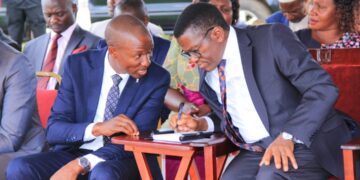





Ronald Amanyire, the Principal Road Safety Officer at the Ministry of Works and Transport (MoWT), has turned to social media following his interdiction by Permanent Secretary Bageya Waiswa.
The suspension, which took immediate effect, came after a series of posts published on X under the handle @amronaldo. In the posts, Amanyire allegedly shared confidential government documents and accused senior Ministry officials, as well as the Inspector General of Government (IGG), of corruption.
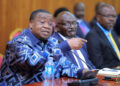

In an interdiction letter dated April 30, 2026, the Ministry accused Amanyire of breaching the Official Secrets Act, Cap. 323, by circulating internal documents online. The Ministry also claimed that he had failed to submit a mandatory performance plan and had not delivered expected outputs since December 2024.
The letter, which was later circulated on X, further accused the officer of undermining government initiatives, including the Intelligent Traffic Monitoring System (ITMS) and RAPEX reforms. Authorities also alleged that Amanyire repeatedly skipped departmental meetings and ignored earlier warnings reportedly issued as far back as March 2021.
Under the terms of the interdiction, Amanyire will remain on half salary, is prohibited from accessing his office, and cannot travel outside the country without official clearance.
Reacting on X, Amanyire defended his actions and portrayed the interdiction as the consequence of exposing wrongdoing within government institutions.
“Speaking out from inside a corrupt system comes at a personal cost,” he wrote. “The price of truth is high, but the price of silence is national collapse. If interdiction is the price of integrity, I will wear it as a badge of honour.”
He also challenged both the IGG and the Director of Public Prosecutions (DPP) to examine their roles in what he described as the persistence of corruption. Amanyire further alleged that certain individuals within the Ministry had long targeted him, even during difficult moments in his personal life.
Referring to the Uganda Public Service Standing Orders (2021), Amanyire argued that the interdiction was irregular because he was allegedly denied a hearing before disciplinary action was taken.
The Standing Orders under Section F-s recommend a gradual disciplinary process that begins with verbal warnings, followed by written warnings before suspension or interdiction is considered.
Although Paragraph 5 of the same regulations gives a Responsible Officer authority to initiate disciplinary proceedings at any stage, critics contend that bypassing a hearing in the case of a suspected whistleblower could contradict the principles of the Whistleblowers Protection Act.
Amanyire has been granted 14 working days to submit his formal response to the allegations. The case is already attracting attention from anti-corruption campaigners, who view it as an important test of how government institutions handle internal criticism and demands for transparency.
His case adds to a growing number of public officials facing disciplinary measures over social media conduct.
In November 2025, prison officer Lawrence Ampe received disciplinary warnings after videos he created on TikTok circulated online. Although the incident did not immediately lead to interdiction, the Uganda Prisons Service later issued a strict warning to staff against misuse of social media platforms.
Within the UPDF, several officers have also faced severe punishment for allegedly leaking classified information through social media channels.
Under the Computer Misuse (Amendment) Act 2022 and the Government Social Media Guidelines, public officers are prohibited from sharing sensitive, malicious, or unauthorized government information online. Violations can attract heavy penalties, including prison sentences of between five and ten years, as well as restrictions from holding public office.










 English