












A groundswell of interest has swept through the National Resistance Movement (NRM) as the ruling party intensifies preparations for Uganda’s 2026 general elections.
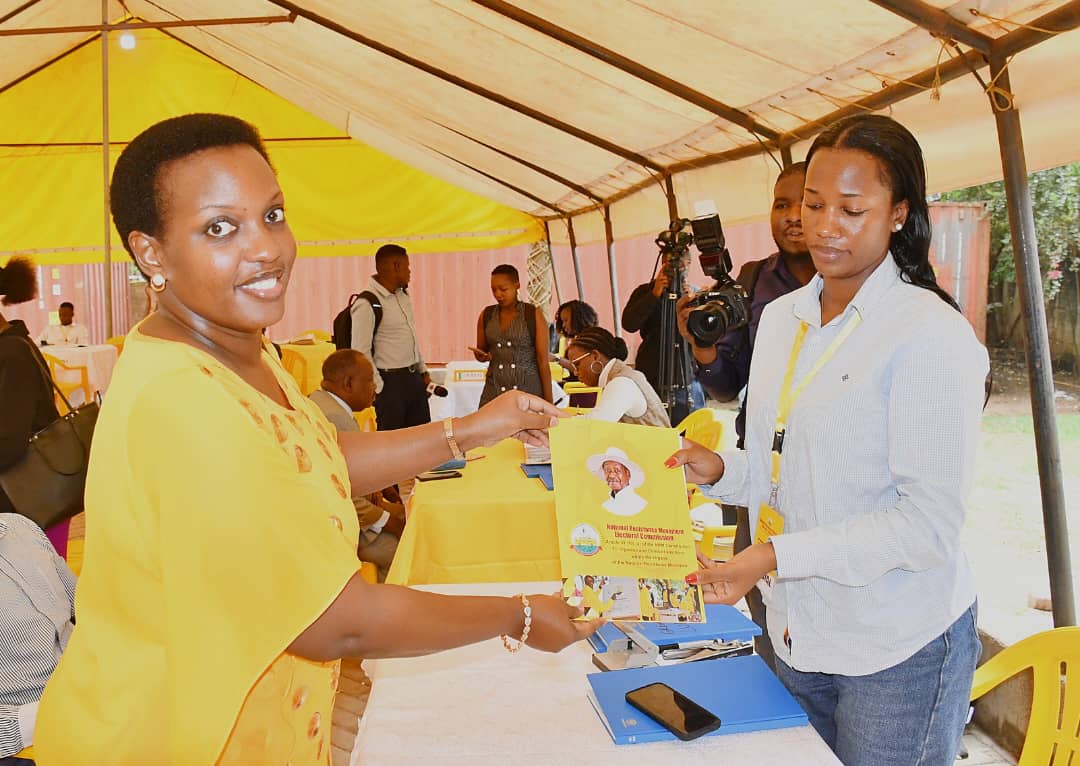
In a striking show of political enthusiasm, 1,303 aspirants have so far picked nomination forms in just the first two days of the NRM’s internal nomination exercise.


Among the headline-makers was 86-year-old Second Deputy Prime Minister, Retired General Moses Ali, who reaffirmed his enduring place in Uganda’s political theatre.
Though visibly frail, General Ali’s gesture of having nomination forms collected on his behalf sent a clear signal: the veteran politician has no intention of stepping aside from national service.
Seated in his official vehicle, clad in dark glasses, and shielded from the press, General Ali delegated a member of his security team to collect the forms at the NRM headquarters in Kampala.
With the help of party officials, the elderly lawmaker remained inside the car, avoiding public remarks before being quietly driven away.
Ali has represented Moyo East in Parliament since 2011 and has long been viewed as a pillar of the NRM’s historical and military legacy.
His re-entry into the race, even in such a muted fashion, drew the attention of both supporters and observers—underscoring the gravity of this election cycle for Uganda’s political old guard.
Dr. Tanga Odoi, Chairperson of the NRM Electoral Commission, confirmed the extraordinary turnout during the first two days of nominations.
Wednesday alone saw 508 individuals pick up forms. He pointed to the figures as a testament to the NRM’s sustained popularity at the grassroots level.
“The Youth thinking that the NRM is collapsing is a fallacy,” he said emphatically.
This wave of interest cuts across generations and political backgrounds, drawing both longtime NRM loyalists and fresh faces, including high-profile defectors.
One such defector is Catherine Achola, who until recently was a member of the opposition Forum for Democratic Change (FDC).
She is now eyeing the Pallisa District Woman MP seat on the NRM ticket.
Achola attributed her shift to feedback from constituents, who reportedly pledged support only if she aligned with the ruling party.
Achola also spotlighted teenage pregnancy as a critical challenge in her district—promising to prioritize reproductive health and youth empowerment if elected.
Also reaffirming his commitment to public service was Finance Minister Matia Kasaija, 81, who picked up nomination forms to seek another term as MP for Buyanja County, Kibaale District.
His colleague, State Minister for Finance Amos Lugolobi, followed suit, declaring his intentions to continue representing Ntenjeru North.
Other ministers who joined the nomination process included:
- Henry Musasizi (Rubanda East)
- Hanifa Kawooya (Ssembabule Woman MP)
- Davinia Esther Anyakun (Nakapiripirit Woman MP)
- Diana Mutasingwa (Buikwe Woman MP)
In Lwengo District, the race for Bukoto Midwest took a competitive turn. Deputy LC5 Chairperson Vincent Birimuye declared his candidacy to unseat incumbent MP Isaac Ssejoba.
Birimuye did not mince words, accusing Ssejoba of being “silent in Parliament” and neglecting the voices of his constituents.
Birimuye’s challenge illustrates an emerging pattern: local leaders seeking to disrupt established incumbents from within the NRM ranks, possibly reflecting shifting voter expectations.
Each parliamentary aspirant is required to pay a participation fee of UGX 3 million, while local council hopefuls pay UGX 1 million.
All candidates must submit their completed forms, endorsed by seconders, no later than June 17th, 2025.
As day three of the registration process gets underway, the NRM headquarters remains a hive of activity—bustling with hopefuls, strategists, and party loyalists.
The surge in interest not only reflects the NRM’s expansive political network but also the stakes at hand as Uganda marches toward another decisive election.
For many, including veterans like General Moses Ali and youthful defectors like Catherine Achola, 2026 is more than just a ballot—it’s a battleground for legacy, relevance, and the future of Uganda’s leadership.






 English