

















Dear brethren in Christ,
It is with a heavy heart, deep concern and a sincere desire to see the body of Jesus Christ remain united that I write this open letter to the Church of Christ in Uganda. I write not to accuse any denomination, condemn any minister of the Gospel or take sides in the disagreements currently unfolding within the Christian community. Rather, I write to appeal to our collective conscience as believers, leaders, pastors, bishops, apostles, evangelists and servants of God to pause, reflect and reconsider the direction in which we are taking the Church.


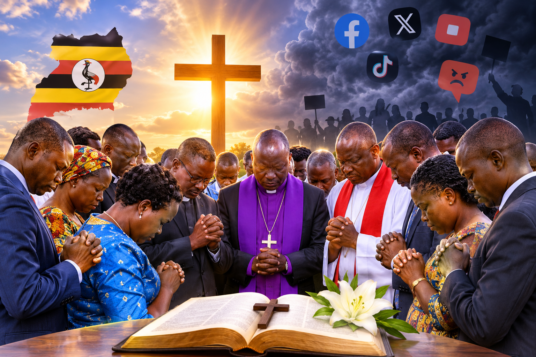
There is a storm gathering against the body of Christ in Uganda. It is unfolding before our eyes, particularly on social media, where Christianity, its doctrines, institutions, leadership and spiritual practices have increasingly become subjects of public ridicule, hostility and relentless criticism. What is even more troubling, however, is not simply the existence of this storm, but the condition of the Church as it faces it.
We are facing a moment that should ordinarily call for unity, collective reflection, prayer and spiritual maturity. Instead, we appear increasingly divided, distracted and occupied with disagreements that have little to do with the central mission of the Gospel. At a time when the Church ought to be standing together, some of its leaders have chosen to stand against one another. At a time when believers should be strengthening the foundations of their faith, we are witnessing public exchanges, accusations, counteraccusations and divisions that are gradually weakening the very institution we claim to defend.
The question we must ask ourselves is simple: If the Church cannot stand together when its very existence and credibility are under attack, then what exactly are we preserving?
The Church has become distracted from its mission
One of the most unfortunate developments in contemporary Christianity in Uganda is the extent to which the Church has allowed social media conversations to influence its spiritual direction.
Social media has become an important platform for communication, accountability, evangelism and public engagement. There is nothing inherently wrong with Christians participating in these conversations or responding to genuine concerns raised by the public. Indeed, the Church must never become an institution that is beyond scrutiny. Where there is wrongdoing, exploitation, abuse of authority or financial misconduct, those responsible must be held accountable.
However, there is a fundamental difference between responding responsibly to legitimate concerns and allowing every trending controversy to determine what the Church discusses, teaches and prioritises.
Today, it is increasingly common to find sermons on the pulpit shaped by what has been said on Facebook, TikTok, X and other social media platforms. Instead of beginning with the Word of God and allowing the Holy Spirit to guide the message, some ministers appear to begin with the latest online controversy and then construct a sermon around it.
The pulpit, which should remain a place of spiritual nourishment, correction, encouragement and revelation, is increasingly becoming an extension of social media debates.
This should concern every believer.
The Church cannot afford to surrender its spiritual agenda to online commentators, critics, influencers or individuals whose primary interest may not necessarily be the advancement of truth. Neither should pastors feel compelled to respond to every provocation, accusation or insult directed at them or the Christian faith.
Not every trending subject deserves a sermon. Not every insult deserves a response. Not every provocation requires the attention of the Church.
There are moments when silence is not weakness but wisdom. There are battles that do not require our microphones, press statements or social media accounts. Some require us to return to our knees and allow God to take His rightful position.
The Church must rediscover the difference between speaking about God and listening to God.
We have chosen to speak for God instead of listening to Him
Perhaps one of the greatest spiritual dangers confronting the Church today is the temptation to assume that every battle against Christianity requires an immediate human response.
We have become so eager to defend God that we sometimes forget that He is God.
The God we serve is not helpless. He does not depend on our social media arguments to establish His authority, nor does His sovereignty diminish because someone questions Christianity, mocks a minister or attacks a church institution.
Throughout Scripture, we encounter a God who knows when to speak, when to remain silent, when to intervene and how to fight His battles.
In Exodus 14:14, the Israelites were reminded: “The Lord will fight for you; you need only to be still.”
This is not an invitation to abandon responsibility, tolerate wrongdoing or ignore injustice. Rather, it is a reminder that the Church must not confuse human anger with divine instruction.
We must learn to listen before speaking, pray before reacting and seek God’s wisdom before choosing our battles.
There is a difference between defending the Gospel and defending personal interests under the banner of Christianity. There is a difference between protecting the integrity of the Church and protecting the reputation of individual religious leaders.
The Church must be courageous enough to distinguish between the two.
When the body of Christ is attacked, our first instinct should not be to calculate which bishop, pastor, denomination or ministry will benefit from the controversy. It should be to seek God’s direction on how to respond in a manner that preserves truth, justice, love and the integrity of the Gospel.
Sometimes the most powerful response is not delivered through a microphone. It is delivered through prayer.
Our divisions are creating opportunities for greater attacks
Brethren, the greatest vulnerability of the Church may not be the voices attacking it from outside, but the divisions growing within it.
We have allowed differences in doctrine, church administration, leadership styles, theological interpretation, ministry approaches and personal interests to become reasons for hostility.
Some of these disagreements may be legitimate and deserve discussion. The Church is not expected to abandon its doctrinal convictions or pretend that every theological position is the same. However, disagreement should never become an excuse for hatred, humiliation, character assassination or the destruction of Christian fellowship.
The body of Christ is bigger than any individual ministry, denomination, bishop, pastor or apostle.
No single minister owns Christianity. No denomination has a monopoly on God’s grace. No individual preacher should consider himself the sole custodian of the Gospel.
When one part of the body is wounded, the entire body should be concerned. When one church faces a legitimate challenge, other believers should not celebrate simply because they belong to a different denomination or theological tradition.
Unfortunately, we are increasingly witnessing the opposite.
Some Christians seem more interested in proving that another ministry is wrong than in demonstrating why their own faith is right. Some leaders appear more comfortable watching another minister fall than offering counsel, correction or an opportunity for reconciliation.
We have become too comfortable with the misfortunes of fellow believers.
This is precisely the kind of environment in which hostility flourishes. When the Church is divided, those who wish to discredit Christianity find an easier audience. They no longer need to create every disagreement because some of the divisions are already being manufactured and sustained from within.
The devil does not always need to destroy a house from outside when those living in it are already pulling down its walls.
Jesus Christ, in Mark 3:25, warned that a house divided against itself cannot stand.
That warning remains relevant to the Church in Uganda today.
The silence of traditional religious institutions is equally concerning
There is another dimension to this crisis that deserves honest reflection.
For years, traditional religious institutions and established Christian communities have played important roles in shaping Uganda’s moral, social and spiritual identity. Their influence within communities, families and congregations remains significant.
However, we must ask difficult questions about the silence that sometimes surrounds persistent attacks against the body of Christ, particularly when such attacks are propagated by individuals who are themselves part of religious communities.
It is understandable that religious institutions may choose not to engage in every public controversy. Institutional restraint is sometimes necessary, especially where facts are unclear or where public exchanges could worsen tensions.
However, there is a difference between responsible restraint and prolonged silence in the face of conduct that threatens peaceful religious coexistence.
Where individuals repeatedly ridicule Christianity, deliberately misrepresent its teachings or encourage hostility towards believers, religious leaders across traditions should be concerned about the consequences.
The issue is not that every religious institution must defend every Christian minister, regardless of their conduct. Neither should traditional churches be expected to endorse every action of independent ministries or charismatic leaders.
Rather, the concern is about the broader responsibility of religious institutions to protect the principles of mutual respect, tolerance and peaceful coexistence.
Religious leaders cannot preach unity within their congregations while remaining indifferent to the growth of hostility between religious communities.
We must also be careful not to turn this concern into an accusation against entire religious traditions. The responsibility for inflammatory conduct belongs to those who engage in it, not to every member of the faith they profess.
Nevertheless, silence from influential religious voices can sometimes create an impression that hostility is acceptable. Where divisive narratives are repeatedly allowed to grow without correction, they risk becoming normalised.
Uganda needs religious leaders who can speak with one voice against intolerance, even when they do not share the same theological convictions.
Men and women of God must rise above personal interests
Perhaps the most painful part of this unfolding situation is the apparent willingness of some religious leaders to take sides based on personal interests rather than the collective good of Christianity.
The Church is not a political party where loyalty to individuals should determine every position. It is not a marketplace where ministers compete for influence, followers, financial resources and public recognition at the expense of Christian unity.
Leadership in the Church is a responsibility before God, not an entitlement to public admiration.
Those entrusted with spiritual leadership must understand that their words carry weight beyond their immediate congregations. When a bishop attacks another bishop, when a pastor publicly humiliates another pastor, or when religious leaders use their platforms to settle personal scores, the damage does not end with the individuals involved.
It extends to ordinary believers who look up to them for spiritual direction.
A young Christian watching ministers exchange insults may begin to question the very faith they are supposed to be nurturing. A new convert witnessing denominational hostility may wonder whether Christianity is truly founded on love. A person struggling with faith may find in these divisions another reason to walk away from the Church.
We must therefore ask ourselves whether our conduct is bringing people closer to Christ or pushing them further away.
The Church cannot preach reconciliation while practising hostility. It cannot teach forgiveness while nurturing grudges. It cannot call believers to humility while its leaders compete for supremacy.
Paul’s appeal in 1 Corinthians 1:10 remains particularly important. He urged believers to agree with one another, avoid divisions and be united in mind and purpose.
This does not mean that every disagreement must disappear. It means that our differences must never become greater than our common identity in Christ.
The Church needs leaders who are prepared to sacrifice personal pride for collective progress.
Put every battle before God
Dear brethren, perhaps it is time for the Church to reconsider its approach to the attacks directed against it.
We have spent considerable time arguing, responding, explaining and defending ourselves. We have given some controversies more attention than they deserve, sometimes allowing individuals with little understanding of Christian doctrine to dictate the conversations taking place within our churches.
Perhaps it is time to return to the altar.
When individuals rise against the body of Christ, when accusations are made, when religious institutions are ridiculed and when the integrity of Christianity is deliberately challenged, the Church should not be consumed by anger.
Let us take these matters before God.
Let us place those who fight the body of Christ at the altar, not to pronounce personal curses upon them, not to seek their destruction through human vengeance, but to surrender the matter to the God who judges righteously.
Let us pray that He transforms those who have misunderstood the Gospel, corrects those who have deliberately misrepresented it and brings accountability where wrongdoing has occurred.
Let us leave room for repentance, because the same God who corrects also restores.
We must never become a Church that celebrates the downfall of another human being. Our prayer should be for truth to prevail, for justice to be served and for those who have lost their way to find a path back to righteousness.
And perhaps some of these prayers should be made quietly, away from cameras, microphones and social media audiences.
Not every prayer needs to be announced. Not every spiritual concern needs to become a public statement. Not every act of faith requires an audience.
There is power in a Church that knows how to kneel together in silence.
Matthew 6:6 reminds believers about the importance of praying privately before the Father. This is a timely reminder that our relationship with God should never be reduced to public religious performances.
Let us pray more and perform less.
Unity does not mean protecting wrongdoing
As we call for unity, there is an important distinction that must not be overlooked.
Standing together as the Church does not mean protecting every religious leader from accountability. It does not mean concealing abuse, financial exploitation, manipulation, false teachings or misconduct simply because the person involved carries a religious title.
The Church must not use unity as a shield for wrongdoing.
If a minister exploits believers, that minister must be held accountable. If a religious institution misuses resources, the matter must be investigated. If a church leader abuses authority, victims must be protected and justice must take its course.
The Church must be willing to correct its own before demanding respect from society.
Indeed, one of the most effective ways to confront public hostility against Christianity is to demonstrate that the Church is committed to integrity, transparency, accountability and genuine service.
We cannot demand that society respect the Church while refusing to address conduct that undermines its credibility.
However, accountability must not become a licence for blanket condemnation of Christianity. The wrongdoing of one individual should not be used to declare every minister a fraud or every congregation a centre of exploitation.
Equally, the mistakes of some churches must not become an excuse to attack the faith of millions of believers who sincerely serve God.
We must be able to confront wrongdoing without destroying the institution, and defend the institution without excusing wrongdoing.
That is the balance required of a mature Church.
Let us rediscover the meaning of being one body
The Church in Uganda must understand that its greatest strength is not the size of its congregations, the number of branches it operates, the influence of its bishops or the popularity of its preachers.
Its greatest strength is its relationship with Jesus Christ.
We may worship in different buildings, sing different songs, interpret certain passages differently and organise our ministries according to different traditions. But we must never forget that we profess one Lord, one faith and one baptism.
Ephesians 4:4-6 reminds us that there is one body and one Spirit, just as believers were called to one hope, one Lord, one faith and one baptism.
This is the foundation upon which our unity must rest.
The Church should consider establishing genuine platforms for interdenominational dialogue, where religious leaders can discuss emerging challenges, resolve disagreements and collectively defend the principles of Christianity without compromising their respective doctrinal convictions.
There is a need for mature conversations between traditional churches, Pentecostal ministries, evangelical fellowships and independent Christian institutions.
We need to move beyond ceremonial meetings and photographs of religious leaders shaking hands. We need practical cooperation, mutual respect, accountability and a shared commitment to protecting the integrity of the Gospel.
The Church must also invest in educating believers about Christian doctrine, responsible social media engagement and the difference between legitimate criticism and religious intolerance.
Our young people should not inherit a Christianity defined by online arguments. They should inherit a faith built on love, truth, service, humility and spiritual conviction.
A final appeal to the Church of Christ in Uganda
Dear brethren, the storm is here, and pretending otherwise will not make it disappear.
But the question is not whether the Church will encounter opposition. Throughout history, Christianity has faced opposition in different forms and from different quarters. The question is whether we shall allow that opposition to find us divided, distracted and consumed by personal interests.
We cannot continue fighting one another while expecting the world to understand the message of Christ through us.
We cannot continue allowing social media to determine the content of our pulpits while neglecting the spiritual needs of the people entrusted to our care.
We cannot continue competing for recognition while the very foundation of Christian fellowship is being weakened.
We cannot continue treating the fall of another minister as an opportunity for personal celebration.
And we cannot afford to remain silent when hatred and religious intolerance threaten peaceful coexistence.
This is a moment for the Church to wake up.
To the bishops, I appeal to you to provide spiritual direction beyond denominational interests.
To the pastors and apostles, I appeal to you to remember that the pulpit belongs to God and must not become a platform for settling social media disputes.
To the evangelists and other ministers, I appeal to you to preach Christ rather than allow the controversies of the day to consume the message of salvation.
To the traditional religious institutions, I appeal to you to use your influence to promote religious harmony and speak against hostility wherever it emerges.
To the ordinary believers, I appeal to you not to become instruments of division. Do not share every accusation, celebrate every scandal or participate in online exchanges that diminish the dignity of Christianity. Seek truth, demand accountability and exercise restraint.
And to those who have deliberately chosen to attack the Church, I pray that God grants you understanding, discernment and an opportunity to appreciate the responsibility that comes with freedom of expression. Criticism is legitimate, accountability is necessary, but hatred and deliberate misrepresentation should never become the foundation of public discourse.
Above all, let us remember that the Church belongs to Christ, not to us.
We are stewards of His message, servants of His people and custodians of a faith that is greater than our individual ambitions.
One day, the titles will mean nothing, the pulpits will remain empty, the followers will move on and the applause will cease. What will remain is our accountability before God.
Let us therefore be careful about the battles we choose, the words we speak and the divisions we create.
Perhaps the greatest statement the Church can make at this moment is not another press conference, another social media response or another sermon directed at its critics.
Perhaps it is time for all of us to return to the altar, kneel before God and ask Him to restore what we have allowed to break.
Let us put aside our differences where they are not fundamental to the faith. Let us correct one another in love. Let us defend truth without hatred. Let us demand accountability without prejudice. Let us pray for those who oppose us without wishing them harm.
And when the storm passes, as storms eventually do, may the Church of Christ in Uganda emerge not as a collection of competing religious personalities, but as a stronger, more accountable, more united and spiritually renewed body.
The Church does not need more people fighting for positions within the body of Christ. It needs more people willing to stand together for the Christ who gave His life for that body.
May God restore our unity, renew our commitment to His Word and teach us when to speak, when to act and when to be still.
For the Church is not ours to destroy, and the Gospel is not ours to manipulate. It belongs to Him.
Yours in Christ,
Ivan Kimbowa
Concerned about the unity, integrity and spiritual direction of the Church of Christ in Uganda.
Editorial note: The central argument of this letter is that the Church should defend its integrity without becoming defensive, pursue accountability without encouraging hostility, and prioritise prayer and unity over social media reactions. This distinction is important because it makes the letter a call for spiritual renewal rather than an attempt to silence legitimate public criticism.











 English
