













Makerere University has spent more than Shs1 billion in legal fees pursuing ownership of its disputed Katanga land, prompting Members of Parliament to recommend negotiations with the government for compensation or alternative land to avoid further expenditure on a prolonged court battle.
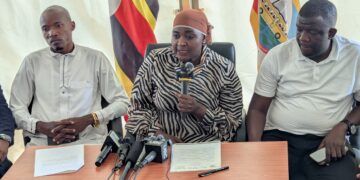
The recommendation was made by Parliament’s Public Accounts Committee (PAC) Central during a hearing in which the university’s Secretary, Yusuf Kiranda, appeared before the committee to respond to concerns raised by the Auditor General regarding the management and protection of university land.

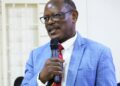
The committee, chaired by Kassanda North MP Patrick Nsamba Oshabe, questioned the financial implications of the dispute and whether continued litigation remained a practical option, given the number of people occupying the contested property and the legal hurdles involved in removing them.
Kiranda told the MPs that the legal battle had been costly because of the high value of the property involved. However, he did not provide a detailed breakdown of the more than Shs1 billion reportedly spent on the case.
Oshabe advised the university to consider engaging the government over compensation or the allocation of alternative land, arguing that a negotiated settlement could offer a more practical solution than continuing to spend public resources on litigation with an uncertain outcome.
The Katanga dispute involves land in Katanga Valley, near Wandegeya in Kampala, where Makerere holds a registered title but several families and other occupants claim legally protected interests. The contest has persisted for decades, with the university seeking to assert its ownership while occupants maintain that they have lawful rights to parts of the property.
In a 2015 judgment, the High Court reportedly recognised Jonathan Yosamu Masembe, Bulasio Buyisi, George Kalimu and Samalie Nambogga, together with their licensees, as bona fide occupants entitled to remain on the land under the Land Act. The court also recognised Makerere as the registered proprietor.
Dissatisfied with the ruling, the university appealed, and the appeal remains central to its efforts to challenge the recognised occupancy rights.
The disputed area has been reported to cover approximately 37 acres across three zones. Makerere, however, has claimed ownership of a much larger area of about 277 acres. Previous reports have also pointed to a discrepancy between the university’s claim and the 10.315 hectares reflected on its land title.
Other parties involved in the dispute include Pastor Daniel Walugembe, who claims interests derived from people recognised as bona fide occupants, and businessman Abdu Ssekajja.
In June 2026, the High Court dismissed a separate case Makerere had filed in 2021 seeking a declaration that no kibanja interests existed on approximately 5.13 acres of the disputed property. The university had also sought the eviction of Walugembe, Ssekajja and their agents.
Justice Samuel Emokor struck out the suit, ruling that it duplicated issues already dealt with in earlier proceedings and those pending before the Court of Appeal. The judge considered the separate action an abuse of court process, leaving the appeal as the university’s main avenue for challenging the 2015 decision.
The legal setback has complicated Makerere’s efforts to regain possession of the disputed land. During the parliamentary hearing, the university’s legal team also cited procedural difficulties in pursuing the appeal following the deaths of the original respondents.
According to the university, it was seeking assistance from the Administrator General to address issues concerning representation of the deceased respondents’ estates.
Kiranda further told the committee that Walugembe had approached the Office of the Prime Minister claiming an interest in the property. The university said the Prime Minister consulted the Attorney General, whose guidance indicated that the government should compensate the claimant for his interests in the land.
The Katanga case is one of several land disputes highlighted in the Auditor General’s report on Makerere University for the financial year ended June 2025.
The report identified encroachment, competing ownership claims and pending court cases affecting university properties, including parts of the main campus, land along Bombo Road, property in Bweyogerere and Kabuteta, and land occupied by tenants associated with Mulago National Referral Hospital.
The Auditor General warned that the disputes could affect the accuracy of the land values reflected in the university’s financial statements. Makerere reported non-produced assets worth Shs6.704 trillion during the period under review, including its land holdings.
Kiranda said the university had written to the Accountant General seeking guidance on how public institutions should value assets affected by litigation and encroachment.
He added that the university council had prioritised land protection as part of its strategic agenda, while management had asked the Chief Government Valuer to reassess the value of its properties.
Despite these interventions, Kiranda acknowledged that university land continued to face significant threats.
He told the committee that Makerere had recovered some properties and introduced measures to prevent further encroachment. These included evicting occupants from sections of the main campus, constructing perimeter walls, cancelling disputed land titles and placing a caveat on 14 acres in Makindye.
However, the university said the caveat had constrained development on the Makindye property, while a court injunction had limited its ability to fence off a disputed section of land at Kabanyolo.
Oshabe reiterated that Makerere should pursue negotiations with the government alongside its legal efforts, saying compensation or alternative land could help resolve the long-running Katanga dispute and reduce further expenditure on litigation.





 English
