
















Imagine standing in a burning room, suffocating in thick smoke, while the world outside insists that pointing out the fire is a disgraceful sin against family honour. This is the silent, suffocating hell in which millions of mothers, daughters and sisters are trapped every day, forced to endure the agonising trauma of sexual violation just to protect society from its own fragile pride and superficial reputation.
Rape is an absolute terror that systematically dismantles a person’s sense of self, leaving behind a hollowed-out shell of fear, grief and unimaginable isolation. Whether committed through the terrifying brute force of a weapon or facilitated through psychological coercion, deception and abuse of power, this barbaric act tears away at human dignity and leaves survivors suffering silently in the dark.


Every father who cradles his newborn daughter, every mother who prays for her child’s safe return, and every human being with a beating heart must realise that our collective silence actively protects the predator. By allowing shame to dictate our response, we have built a sanctuary for perpetrators while condemning innocent survivors to a lifetime of unspoken, agonising trauma.
Globally, the United Nations and the World Health Organisation estimate that more than 736 million women, nearly one in three worldwide, experience physical or sexual violence during their lifetime. Yet, empirical criminological studies reveal that fewer than 10 per cent of survivors report such incidents to law enforcement because of paralyzing social stigma, institutional hostility and fear of retaliation. What appears in official crime records represents merely the tip of a vast, submerged iceberg of human suffering.
Here in Uganda, official records from the Annual Police Crime Report document approximately 13,000 cases of rape and defilement annually. However, data from the Uganda Bureau of Statistics and national demographic and health surveys indicate that more than 56 per cent of Ugandan women experience physical or sexual violence after the age of 15, with fewer than one in ten victims seeking help from formal justice systems. This staggering statistical gap suggests that many cases of sexual violence remain hidden because of household secrecy, family intimidation and forced informal settlements.
Imagine the daily nightmare of a child forced to serve dinner to her abuser because family elders chose a quiet monetary settlement to avoid public embarrassment. Imagine a mother weeping silently into her pillow as she watches her daughter’s spirit crumble under the weight of severe depression and post-traumatic stress disorder, while fear of social exclusion prevents her from accessing medical care or HIV post-exposure prophylaxis. This is the devastating, lifelong human cost of concealing crime.
When a society tolerates the concealment of sexual violence to preserve family honour or avoid public embarrassment, it makes a devastating compromise with evil. We normalise a lawless culture in which perpetrators operate with near-total impunity while survivors suffer in isolation. To end this nightmare, we must wage an unrelenting war against sexual violence in every form, whether it occurs behind closed domestic doors, in dark alleys or within corporate and institutional corridors. We must dismantle the wall of shame and construct a robust system of protection built on confidentiality, modern forensic science, specialised law enforcement and effective legal accountability.
We must wage an uncompromising war against sexual assault in every form, refusing to excuse or minimise the abuse of consent and coercive power dynamics. Consent obtained through manipulation, threats or deception may not be freely given and must be assessed in accordance with the law and the circumstances of each case. Society must reject every mask this crime wears and join the fight to eradicate it.
To break this vicious cycle, we must candidly evaluate the structural gaps within our justice mechanisms. While the Judiciary and the Office of the Director of Public Prosecutions have commendably introduced specialised gender desks and dedicated court sessions, these initiatives remain insufficient to protect survivors and hold perpetrators accountable. In practice, many police gender desks operate without private rooms, leaving survivors to recount horrific experiences in open spaces within earshot of suspects and onlookers.
Furthermore, temporary court sessions are inadequate substitutes for a permanent, well-resourced system of justice. These periodic sessions can leave substantial case backlogs, allowing accused persons to remain on bail for years while survivors face intimidation and families are pressured into silence. When specialised desks lack adequate forensic funding, access to DNA testing and effective witness protection mechanisms, they offer a false sense of security that sophisticated abusers can exploit.
To achieve the highest standards of justice, we must harness modern digital technology to eliminate obstacles that hinder investigations or encourage concealment. Through secure, encrypted portals, survivors should be able to submit relevant digital evidence, statements, location data and details about alleged perpetrators remotely, where appropriate. They should also be able to update their secure case files from safe locations, with their physical presence required only when necessary for investigative or judicial processes.
We must also overhaul our judicial infrastructure by replacing temporary court sessions with permanent, dedicated courts for sexual offences. Trials should proceed expeditiously, with unnecessary adjournments minimised to prevent survivors from being worn down by prolonged proceedings. All structural, institutional and bureaucratic obstacles that delay trials or encourage concealment must be addressed through effective legal and administrative reforms.
Our security sector must transform every police gender desk from a mere desk into an independent, private and professionally equipped specialised unit staffed by officers trained in trauma-informed approaches. Every district should have access to dedicated forensic kits, timely DNA testing and specialised prosecutors who handle sexual and gender-based violence cases as serious criminal matters rather than routine administrative complaints.
Concurrently, the state and civil society must establish a nationwide network of secure, confidential shelters and comprehensive psychosocial support services. A victim cannot safely come forward if she is forced to sleep under the same roof as her abuser or faces retaliatory violence from his family. Safe houses provide the physical security and emotional support necessary for recovery and the pursuit of justice.
Our judiciary must strengthen protections for survivors through in-camera proceedings, where appropriate, and effective safeguards against the disclosure of their identities. Survivors should be afforded legal protections for anonymity, supported by appropriate penalties for unlawful disclosure. Justice must be administered in a setting where survivors feel protected and accused persons receive a fair trial, while those found guilty face the full weight of the law.
When guilt is established, particularly in cases of aggravated rape, punishment must be lawful, proportionate and consistent with the seriousness of the offence. Whether a case involves deadly weapons, gang violence, the transmission of life-threatening diseases or the targeting of vulnerable individuals, the justice system must apply the law firmly and consistently. Society must send an unmistakable message: sexual violence will not be tolerated.
And let this truth be declared assertively, bravely and unapologetically: even when an entire village whispers, even when family elders threaten, and even when critics invoke culture or religion to enforce silence, survivors must be supported and empowered to seek justice without fear or shame. The shame was never theirs to carry. It belongs to the perpetrator who chose to violate another person’s rights, not the survivor who suffered the violation. Survivors should be able to walk into a police station, a clinic or a courtroom with their heads held high, knowing that seeking help is an act of courage, not a source of disgrace.
Let the perpetrator be held accountable for his actions. Let those who commit sexual offences face the consequences prescribed by law. Survivors have nothing to be ashamed of. Those responsible for the crimes must answer for their actions.
A civilisation that trades the bodily integrity of its daughters for the illusion of family harmony is failing in its duty to protect its people. A state cannot claim sovereignty over its territory while failing to safeguard the bodily autonomy and security of its citizens from violence within their own homes and communities. We must recalibrate our moral compass today, build a robust system of legal accountability and ensure that the shadows in which predators thrive are dispelled by the steady, relentless light of justice.
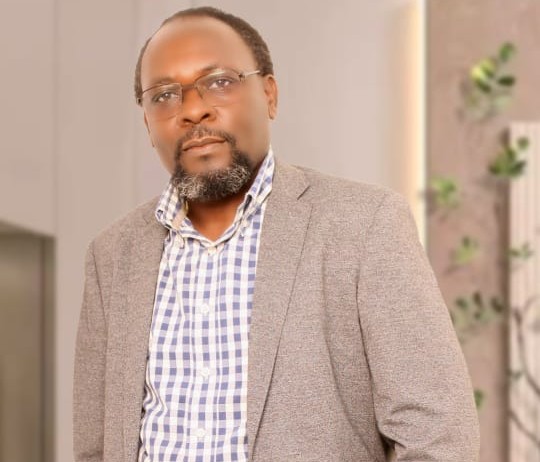
By Twiine Mansio Charles, CEO and Founder, The ThirdEye Consults (U) Ltd.









 English
